

Mireuk : Korea’s Creator Deity and Future Buddha
Listen
At a glance
| Description | |
|---|---|
| Origin | Korean Mythology |
| Classification | Gods |
| Family Members | N/A |
| Region | South Korea |
| Associated With | Creation, Buddha |
Mireuk
Introduction
Mireuk (미륵), often romanised as Miruk, stands as one of the most fascinating figures in Korean mythology because he merges two powerful identities: a creator deity in indigenous shamanic cosmology and the future Buddha Maitreya in Buddhist tradition. The result is a being who embodies both the origins of the universe and the promise of future salvation. His role is especially prominent in Changsega, a shamanic creation myth from Hamhung, where he constructs the cosmos by lifting the sky away from the earth and anchoring the world with immense copper pillars. This portrayal differs from mainstream Buddhist narratives, yet it coexists naturally within Korean spiritual culture, demonstrating the deep syncretism that shaped Korean religious history. Mireuk therefore symbolizes both a divine beginning and a divine future, a figure who shaped the world and will one day return to transform it again.
Physical Traits
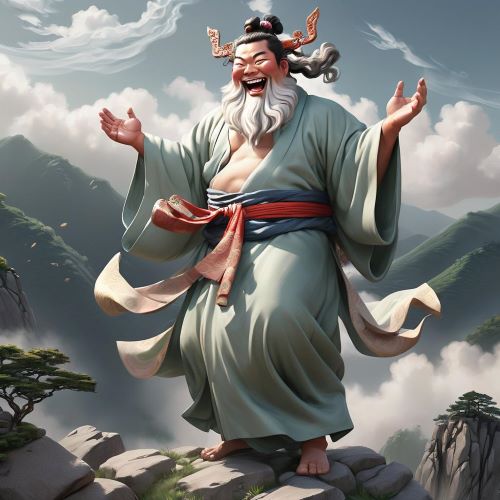
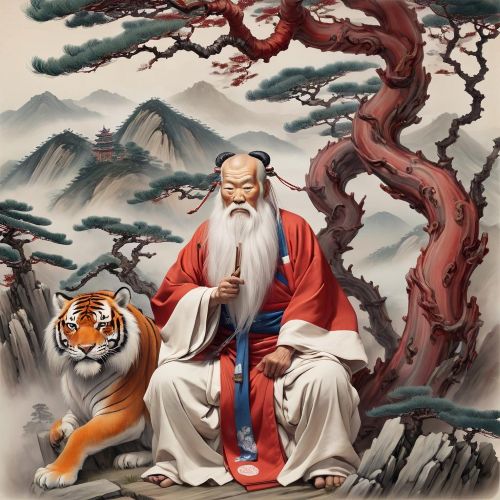
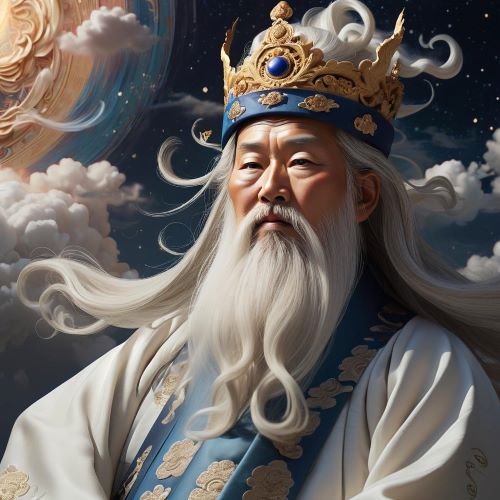
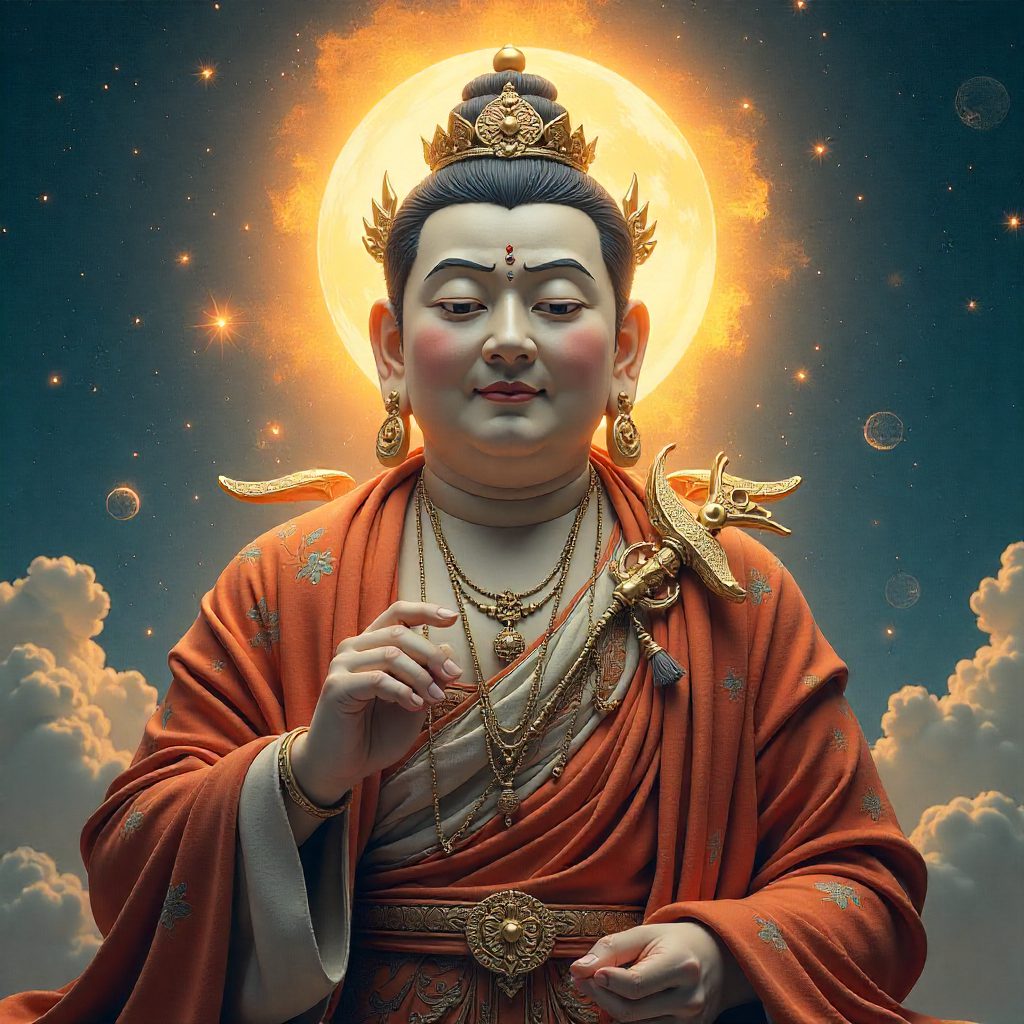
Descriptions of Mireuk depend heavily on the tradition referencing him. In ancient shamanic storytelling, he is envisioned as a colossal being whose physical form is tied directly to the mechanics of creation. His immense strength and towering presence allow him to hold up the heavens, rearrange cosmic structures, and mould the foundations of the earth. This mythic giant form stands in contrast with Buddhist depictions of Mireuk as a serene, contemplative bodhisattva. In Buddhist art, he is often shown seated in a semi-meditative pose—commonly known from the famous Mireuk Bosal statues—characterized by a gentle smile, elongated earlobes symbolizing wisdom, and a soft radiance that reflects compassion. These differing portrayals, one cosmic and one spiritual, mirror his dual identity: a deity who commands the universe and a Buddha who guides humanity toward enlightenment.
Family
Unlike many Korean deities whose stories interweave with large familial pantheons, Mireuk’s origins are solitary in the Changsega myth. He appears without parents, siblings, or descendants, functioning instead as an independent architect of the world. His role is defined by action rather than lineage. In Buddhist cosmology, however, Mireuk’s “family” is symbolic rather than genealogical. He belongs to the lineage of Buddhas, serving as the destined successor to Śākyamuni, the historical Buddha of our era. This connection situates him within an eternal spiritual cycle rather than a household of divine relatives. Mireuk’s lack of familial ties in Korean mythology, paired with his spiritual lineage in Buddhism, reinforces his role as a cosmic constant—one who stands outside human structures yet guides human destiny.
Other names
The multiplicity of names for Mireuk reflects Korea’s layered religious development. Miruk (미륵) is the common Korean pronunciation, widely used in shamanic narratives and Buddhist temples alike. Maitreya, the Sanskrit origin of the name, highlights his Buddhist identity as “the benevolent one” who will appear in a future age to bring enlightenment. Titles such as Mireuk Bul (“Mireuk Buddha”) and Mireuk Sejon (“World-Honoured Mireuk”) emphasize his sacred stature, while Korean folk traditions sometimes use variations like “Mireuk Jonja” to underscore his revered status. These names collectively illustrate how Mireuk bridges the mythic and the religious, embracing roles that span cosmic creation, moral leadership, and future salvation.
Powers and Abilities
Mireuk’s abilities are among the most expansive in Korean mythology. As the architect of the world in the Changsega myth, he establishes cosmic order by lifting the sky, securing the earth, and defining the boundaries of existence. His strength is portrayed as immeasurable, enabling him to shape creation itself. In Buddhist belief, his powers take on a more spiritual dimension. Mireuk is destined to appear when the world has fallen into deep moral decay, offering teachings capable of renewing humanity. His compassion is said to be infinite, his wisdom boundless, and his presence transformative. He represents the hope of a perfected world—one free from suffering, injustice, and spiritual ignorance. Whether viewed as a cosmic sculptor or a future Buddha, Mireuk stands as a figure whose abilities reshape worlds and restore balance.
Modern Day Influence
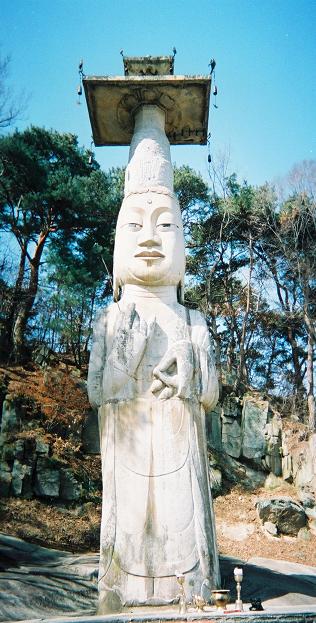
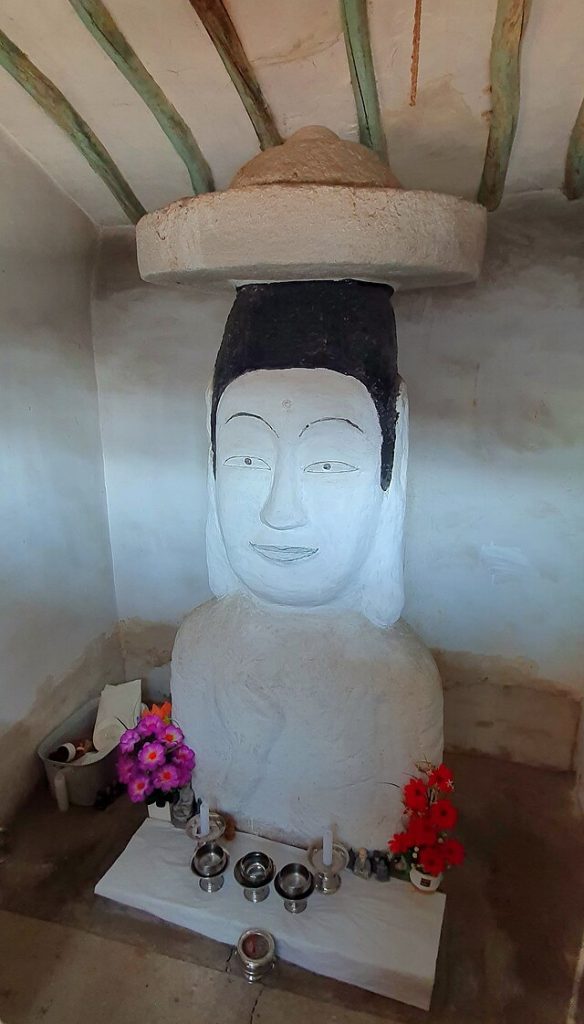
Despite originating in ancient mythology and Buddhist prophecy, Mireuk’s presence remains strong in Korean culture. Temples dedicated to him, such as the historic Mireuksa site in Iksan, preserve his importance in Korean Buddhism and archaeology. Statues of the contemplative Mireuk Bosal continue to attract pilgrims and visitors, symbolizing hope for the age to come. In shamanic regions, especially in Korea’s northeast, rituals still appeal to Mireuk as a guardian and cosmic stabilizer. Modern literature, comics, and television occasionally reinterpret him as a figure of destiny or transformation, reflecting ongoing interest in mythic renewal. Even in discussions of Korean philosophy and social ideals, Mireuk is invoked as a symbol of a better, more just world—a reminder of the aspiration for harmony and enlightenment that has shaped Korean identity for centuries.
Related Images


Source
Berg, S. (2023). Korean mythology: Folklore and legends from the Korean Peninsula. Independently published.
Clayton, M. (2020). Korean mythology: Captivating myths and legends of Korea. Captivating History.
Fenkl, I., & Fenkl, B. (2024). The Korean myths. Tuttle Publishing.
Hyun, Y. (2005). Korean mythology. Jimoondang Publishing.
Kang, K. (2022). Korea’s representative myths. Academy of Korean Studies. https://www.aks.ac.kr/cefia/webzine/2205/focus_eng.html
García, T. (2025, January 5). Mireuk (미륵): The Korean god and the myth of Changsega (창세 가). Universo Korea. https://universokorea.com/mireuk-%eb%af%b8%eb%a5%b5/
Dreams and Mythology. (n.d.). 13 Most Powerful Korean Mythology Gods and Goddesses. https://dreamsandmythology.com/korean-mythology/
Grayson, J. H. (2002). Korea: A Religious History. Routledge.
Kim, T. H. (2018). Shamanism and the Myth of Creation in Korea. Seoul National University Press.
Lee, P. H. (1984). Sourcebook of Korean Civilization: Volume One. Columbia University Press.
Kendall, L. (1985). Shamans, Housewives, and Other Restless Spirits: Women in Korean Ritual Life. University of Hawaii Press.
Choi, G. J. (2010). Buddhism in Korean Culture. Seoul: Jimoondang Publishing.
Wikipedia contributors. (2025). Korean creation narratives. Wikipedia. https://en.wikipedia.org/wiki/Korean_creation_narratives
Frequently Asked Questions
Who is Mireuk in Korean mythology?
Mireuk is a creator deity in Korean shamanic tradition and the future Buddha Maitreya in Buddhism, representing both cosmic origins and future salvation.
What role does Mireuk play in the Changsega myth?
In Changsega, Mireuk separates heaven and earth and stabilizes the world using colossal copper pillars, defining the structure of the universe.
Is Mireuk the same as Maitreya?
Yes. Maitreya is the Sanskrit name for the future Buddha, and Mireuk is the Korean adaptation of this figure.
How is Mireuk depicted in Korean art?
He appears either as a giant cosmic being in shamanic myths or as a serene bodhisattva with a meditative pose in Buddhist iconography.
Why is Mireuk important in modern Korean culture?
Mireuk symbolizes hope, moral renewal, and the blending of Korea’s indigenous and Buddhist traditions, influencing art, religion, and national identity.