

Griffin vs Sphinx: The Battle of Sky Guardian and Desert Sentinel
The comparison of Griffin vs Sphinx is more than a clash between two mythical beasts. It is a dialogue between civilizations. Both creatures are hybrids. Both stand guard. Both combine the strength of a lion with another powerful form. Yet their origins, symbolism, and mythological roles reveal fundamentally different cultural philosophies about power, wisdom, and authority.
When we examine Griffin vs Sphinx closely, we begin to see how the ancient world imagined protection, kingship, and divine mystery in dramatically different ways.
Origins Across Civilizations
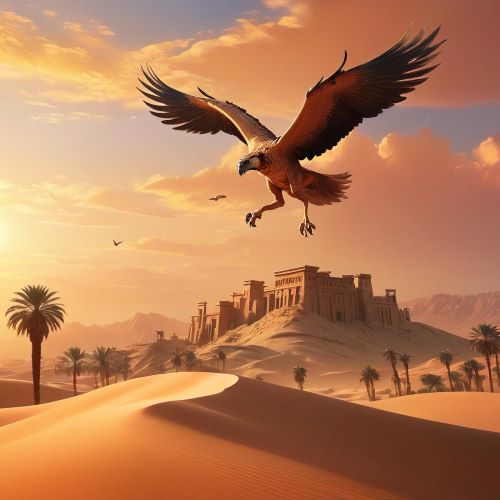
The Griffin emerges from the ancient Near East long before it becomes popular in Greece. Archaeological evidence places griffin-like creatures in Mesopotamian and Persian art as early as the second millennium BCE. By the time the Greeks adopted the image, the griffin had already become associated with guarding gold and sacred treasures in distant, untamed lands. Classical writers such as Herodotus describe griffins as fierce creatures protecting valuable resources in remote mountains. Over time, the griffin spread across Mediterranean and European cultures, eventually becoming a major symbol in medieval heraldry.
The Sphinx, however, is most powerfully rooted in ancient Egypt. The Great Sphinx of Giza, built during the reign of Pharaoh Khafre around 2500 BCE, stands as one of the oldest monumental sculptures in the world. Unlike the roaming griffin of legend, the Egyptian sphinx is architectural and immovable. It is carved from living rock, aligned with the rising sun, and integrated into royal funerary complexes. Its purpose was not to roam but to endure.
Yet the Sphinx also evolves in Greek tradition. There, it transforms into a winged female monster who terrorizes the city of Thebes by posing a deadly riddle. This divergence is critical in understanding Griffin vs Sphinx. The griffin’s identity remains relatively consistent across cultures as a guardian beast. The sphinx, however, splits into two personalities: the silent Egyptian guardian and the intellectual Greek challenger.
Physical Form and Symbolic Fusion
The griffin combines the lion and the eagle, two apex predators ruling land and sky. The lion’s muscular body symbolizes strength and sovereignty, while the eagle’s wings and head represent vision, vigilance, and celestial authority. This fusion creates a creature that dominates multiple realms. It is not merely powerful; it is elevated. The griffin’s ability to fly suggests transcendence and divine oversight.
The sphinx merges the lion’s body with a human head. In Egypt, that human face often represents the reigning pharaoh, emphasizing divine kingship. The lion signifies power; the human head signifies intelligence and governance. The Greek sphinx adds wings, but retains the human face as its defining feature. This shift makes intellect central to its symbolism.
In the Griffin vs Sphinx comparison, the difference becomes philosophical. The griffin fuses two powerful animals, magnifying raw dominance. The sphinx fuses animal strength with human consciousness, elevating intellect as a divine attribute.
Guardianship: Treasure vs Knowledge
Both creatures function as guardians, but what they guard reveals their deeper meaning.
The griffin is most famously associated with treasure. In Greek lore, it protects gold deposits in distant lands. In medieval Europe, griffins guard coats of arms, cathedrals, and royal insignia. The creature symbolizes watchfulness, courage, and divine protection. Its role is external and defensive. It keeps danger away from valuable objects or sacred spaces.
The sphinx, particularly in Greek mythology, guards something less tangible: knowledge. The riddle posed to Oedipus is not about material wealth. It is about understanding human life itself. “What walks on four legs in the morning, two at noon, and three in the evening?” The answer — man — reflects the stages of existence. The sphinx tests intellectual maturity. Failure results in death, making wisdom a matter of survival.
In Egyptian tradition, the sphinx guards royal tombs and sacred spaces, similar to the griffin. However, its stillness conveys permanence and cosmic order rather than aggression. It does not attack intruders through riddles or flight; it asserts dominance through monumental presence.
Thus, in Griffin vs Sphinx symbolism, the griffin protects wealth and power, while the sphinx protects wisdom and kingship.
Movement vs Monumentality
One of the most striking contrasts in the Griffin vs Sphinx discussion is movement.
The griffin is dynamic. It flies across mythic landscapes, inhabits mountains, and appears in stories involving distant travel and adventure. Its wings give it mobility and a sense of freedom. It belongs to the mythic frontier.
The sphinx, especially in Egypt, is anchored. The Great Sphinx of Giza does not move. It is carved directly from bedrock. Its power lies in endurance, not motion. Even the Greek sphinx, though winged, remains fixed at Thebes until its defeat. The sphinx represents a threshold. It marks a boundary that must be intellectually crossed.
The griffin symbolizes expansion and vigilance. The sphinx symbolizes stability and trial.
Cultural Legacy and Influence
The griffin’s influence spread widely across Europe, appearing in medieval heraldry, Renaissance art, and even modern fantasy literature. It became a symbol of nobility and divine guardianship. Because of its adaptable symbolism, it traveled easily across cultures.
The sphinx’s legacy is more monumental and iconic. The Great Sphinx of Giza remains one of the most recognizable ancient monuments on Earth. Its image represents mystery, antiquity, and lost wisdom. In Western imagination, the sphinx became synonymous with riddles and enigmatic knowledge.
In artistic terms, the griffin became decorative and symbolic. The sphinx became monumental and philosophical.
Griffin vs Sphinx: Two Archetypes of Power
At its core, the Griffin vs Sphinx comparison reveals two archetypes of authority. The griffin represents protective strength enhanced by divine vision. It is outward-facing, aggressive when necessary, and associated with guarding wealth and sacred power. The sphinx represents authority grounded in intellect and cosmic order. It tests, judges, and embodies permanence.
Both creatures are hybrids. Both guard thresholds. But they guard different realms. The griffin protects the outer world of treasure and territory. The sphinx protects the inner world of knowledge and kingship.
In comparing Griffin vs Sphinx, we are not choosing a winner. We are witnessing two civilizations expressing what they valued most: dominance over the physical world, or mastery of wisdom and destiny.
Together, they remain among the most powerful hybrid symbols ever imagined.

No posts were found.