
Bile : The Irish Ancestral Figure of Death and Sacred Trees
Listen
At a glance
| Description | |
|---|---|
| Origin | Irish Mythology |
| Classification | Gods |
| Family Members | Breogán (Father), Íth (Brother), Míl Espáine (Son), Danu (Wife), Dagda (Son in some traditions), Donn (Grandson in later traditions) |
| Region | Ireland |
| Associated With | Death, Ancestry, Sacred trees, Otherworld, |
The Mythlok Perspective
Kamohoaliʻi represents a departure from the traditional humanised deity. Within the Mythlok framework, he is understood less as a god who governs the sea and more as the ocean itself choosing to be known. Unlike Mediterranean deities such as Poseidon or Neptune, shaped in the human image to be bargained with, Kamohoaliʻi remains fundamentally elemental. While he shares the predatory divinity of the Fijian shark god Dakuwaqa, he is defined by his sacred role as a navigator, marking the limits of human dominion.
Bile
Introduction
Bile, sometimes rendered as Bilé, occupies a complex and layered position within Irish tradition, standing at the crossroads of mythology, ancestry, and sacred symbolism. He is best known from the medieval compilation Lebor Gabála Érenn, a text that blends mythic memory with Christian-era historiography to explain the origins of the Irish people. Within this narrative framework, Bile is presented as a patriarchal ancestor of the Gaels, firmly anchoring Irish identity in a mythic past that stretches across seas and generations.
According to the Lebor Gabála Érenn, Bile is the son of Breogán, a ruler associated with Iberia, and the father of Míl Espáine, from whom the Milesians, and by extension the Gaels, are said to descend. This lineage places Bile at the foundation of Irish ethnogenesis, transforming him into a symbolic forefather rather than a heroic figure active in narrative episodes. His importance lies not in deeds but in descent.
At the same time, earlier mythological interpretations and later scholarly reconstructions suggest that Bile may preserve the memory of a pre-Christian deity associated with death, the Otherworld, and sacred trees. This dual identity, one ancestral and one divine, reflects how Irish tradition often absorbs older religious concepts into genealogical frameworks. Rather than existing as a contradiction, these layers reveal how myth, memory, and identity evolved together in Ireland’s storytelling tradition.
Physical Traits
Irish sources provide no direct physical description of Bile, an absence that is both notable and meaningful. Unlike warrior heroes or visually distinct deities, Bile is defined almost entirely by function and symbolism. Medieval writers showed little interest in his appearance, focusing instead on his place within lineage and cosmology.
The name Bile itself offers the strongest visual clue. In Old Irish, “bile” refers to a sacred tree, often an ancient oak or yew associated with kingship, law, and the spiritual axis of a community. These trees stood at inauguration sites and were believed to connect the human world with the Otherworld. Through this linguistic connection, Bile is often understood less as a humanoid figure and more as an abstract, enduring presence rooted in the land itself.
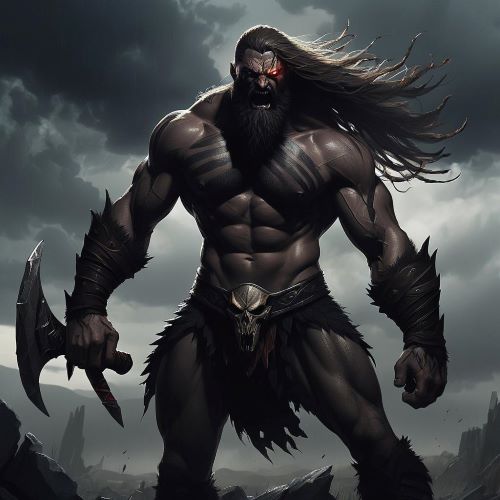
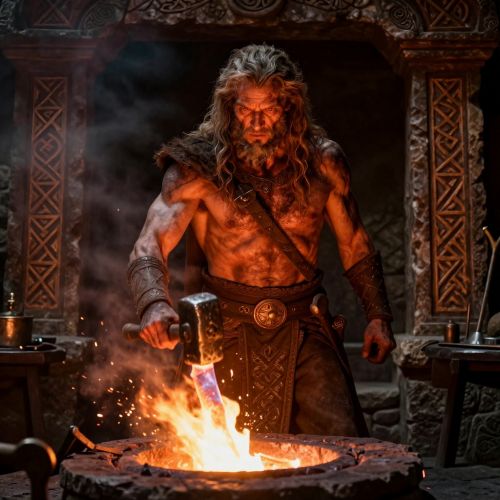
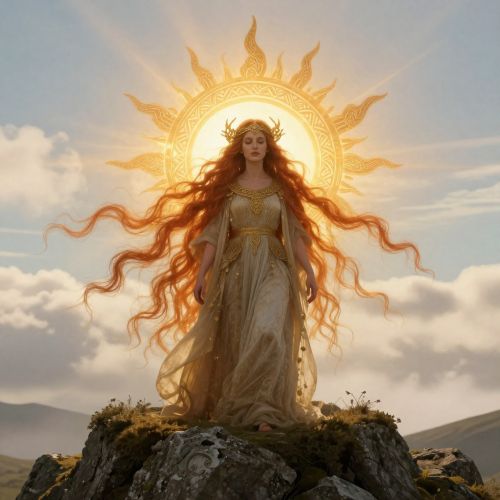
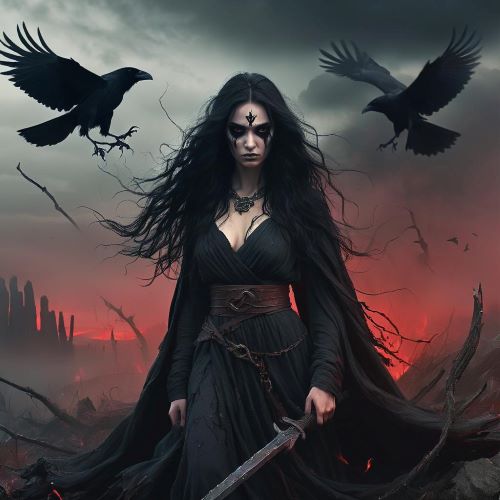
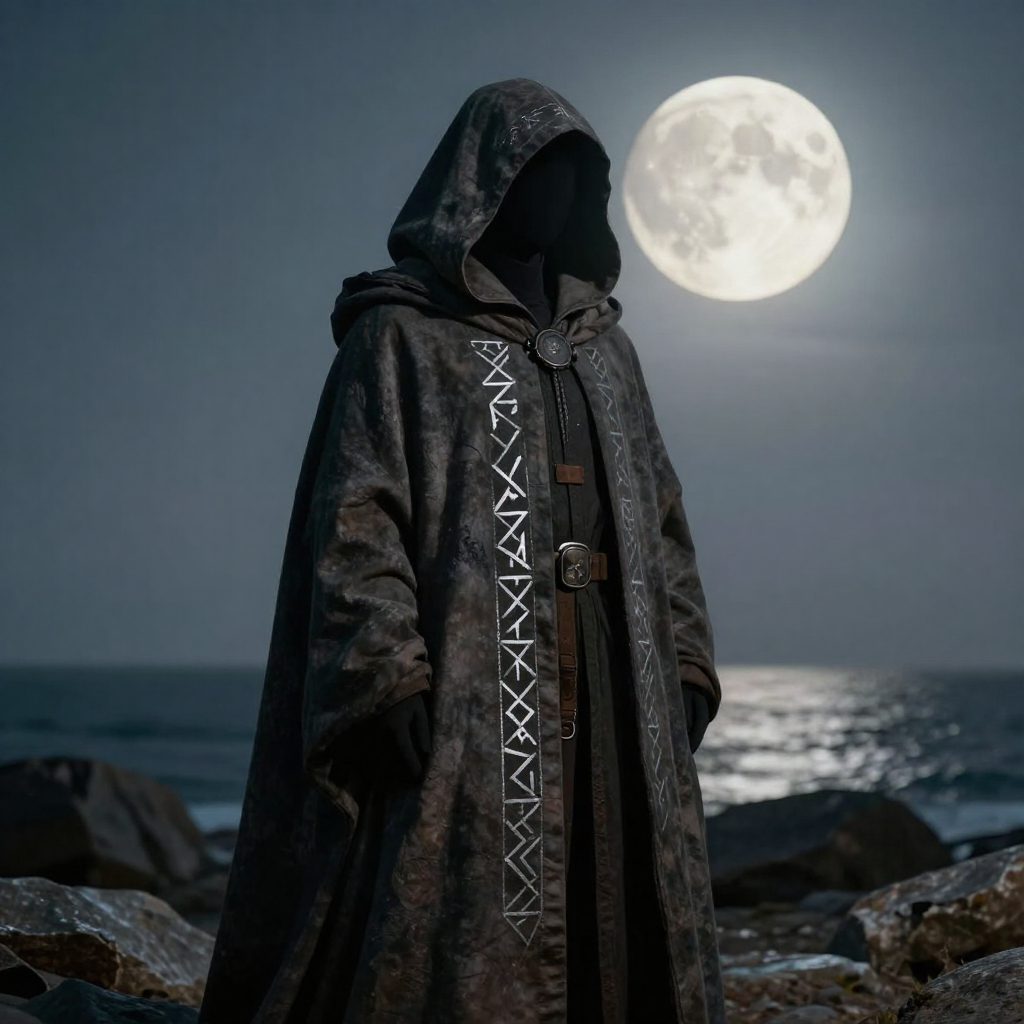
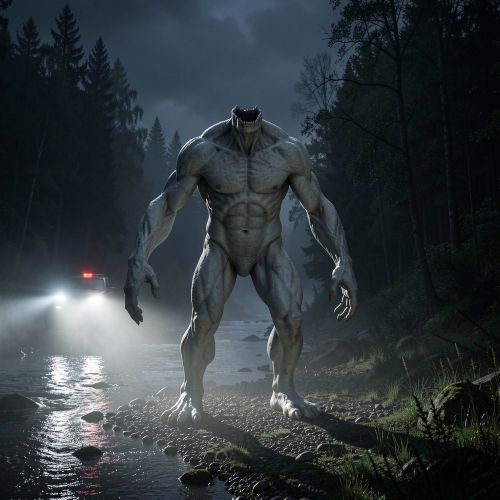
Later interpretive traditions, particularly within modern paganism, sometimes imagine Bile as shadowed, arboreal, or liminal in form, but these images are symbolic rather than textual. In classical Irish material, Bile remains deliberately undefined, reinforcing his role as an ancestral constant rather than a character shaped by narrative detail.
Family
Bile’s significance in Irish tradition rests heavily on his familial connections, which position him as both a mortal ancestor and a divine progenitor depending on the interpretive layer being examined. In the Lebor Gabála Érenn, he is named as the son of Breogán and the brother of Íth, linking him to the Iberian origins of the Milesians. As the father of Míl Espáine, Bile becomes the immediate source from which the Gaelic peoples are said to descend.
Some traditions extend his familial role beyond mortal genealogy into divine relationships. In mythological interpretations that align Bile with an older deity figure, he is described as the consort of Danu, the ancestral mother of the Tuatha Dé Danann. Through this pairing, Bile is sometimes presented as the father of the Dagda, the central leader figure of the Tuatha Dé Danann.
This blending of Milesian genealogy and divine ancestry is typical of Irish mythic structure, where gods become ancestors and ancestors retain divine qualities. In some strands, Bile is also placed as the grandfather of Donn, the lord of the dead, reinforcing his association with death and the western Otherworld. Whether viewed as human patriarch, divine consort, or liminal ancestor, Bile stands at the root of multiple mythic bloodlines.
Other names
The name Bile appears in several closely related forms across Celtic traditions, reflecting shared linguistic roots rather than direct narrative overlap. In Irish texts, he is most commonly called Bile or Bilé, with spelling variations shaped by manuscript tradition. The Old Irish word “bile,” meaning sacred tree or noble ancestor, strongly informs the symbolic weight of the name.
Comparative mythology has long drawn parallels between Bile and Beli in Welsh tradition, where Beli is the consort of Don, the Welsh counterpart of Danu. Nineteenth-century scholars further connected Bile to the continental Celtic god Belenus, interpreting them as regional expressions of a broader pan-Celtic figure associated with ancestry, sovereignty, and cosmic cycles. While modern scholarship treats these identifications cautiously, the linguistic and thematic echoes remain difficult to ignore.
Rather than functioning as aliases in a strict sense, these names illustrate how similar religious concepts traveled and adapted across Celtic-speaking regions, each shaped by local tradition and narrative need.
Powers and Abilities
Bile’s powers are never described in the explicit, action-driven manner typical of heroic figures. Instead, his influence operates on a structural and cosmological level. In interpretations that view him as a deity, Bile is associated with death and the Otherworld, acting as a sovereign presence governing transition rather than judgment. He represents the inevitability of death as a passage rather than an end.
Scholars such as John Rhys and Henri d’Arbois de Jubainville characterized Bile as a god of darkness and the underworld, sometimes positioning him as a counterpart to solar deities within Celtic belief systems. Later interpretations expanded this idea by suggesting that Bile embodies the subterranean or dormant phase of cosmic vitality, balancing life and decay in an eternal cycle.
As an ancestral figure, Bile’s primary power lies in origin. By fathering Míl Espáine, he becomes the mythic source of an entire people. This role transforms ancestry itself into a sacred force, where lineage carries spiritual legitimacy. His symbolic association with sacred trees further reinforces his function as an axis connecting worlds, linking gods, mortals, land, and the dead through a single enduring presence.
Modern Day Influence
Bile continues to resonate in modern contexts through scholarship, spirituality, and cultural symbolism. In academic study, he remains central to discussions of how Irish myth absorbed and reshaped pre-Christian belief under medieval authorship. His dual identity is often cited as a key example of mythological syncretism.
In contemporary Celtic paganism and reconstructionist traditions, Bile has experienced a revival as a liminal figure embodying death, rebirth, and ancestral memory. He is frequently honored alongside Danu during seasonal observances such as Samhain and Beltane, where the cycles of decay and renewal are ritually acknowledged. Modern interpretations emphasize his connection to sacred trees and ecological balance, aligning ancient symbolism with present-day environmental awareness.
Beyond ritual practice, Bile appears occasionally in modern literature and myth-inspired media as an underworld patriarch or ancestral lord, though he remains a subtle presence compared to more dramatized Irish figures. His endurance lies not in spectacle but in depth, as a reminder that identity, land, and ancestry are inseparable in Irish tradition.
Related Images
Source
MacKillop, J. (2004). Bile. In Encyclopedia Mythica. https://www.pantheon.org/articles/b/bile.html
Timeless Myths. (2003). Bile. https://timelessmyths.com/celtic/warrior-society/minor-celtic-characters/bile
ATC Canada. (2013). Meet Bilé, the World Tree and God of the Dead. https://www.atccanada.org/2013/10/meet-bile-the-world-tree-and-god-of-the-dead-of-ireland-and-the-danu-the-all-mother-in-her-dar
Queenmoon. (n.d.). Mother of the Gods and the Father of the Gael. https://queenmoon.tripod.com/motherofthegods.htm
Ó hÓgáin, D. (1991). Myth, legend & romance: An encyclopaedia of the Irish folk tradition. Prentice Hall Press.
Carey, J. (1994). A single ray of the sun: Religious speculation in early Ireland. Androphagos Press.
Lebor Gabála Érenn. (1956). (R. A. S. Macalister, Trans.). Dublin Institute for Advanced Studies.
Frequently Asked Questions
Who is Bile in Irish tradition?
Bile is a foundational ancestral figure in Irish tradition, known as the father of Míl Espáine and a symbolic link between the living, the dead, and sacred ancestry.
Is Bile a god or a mortal ancestor?
Bile exists as both, depending on interpretation. Medieval texts present him as an ancestor, while mythological scholarship identifies him as a pre-Christian deity linked to death and the Otherworld.
What does the name Bile mean?
The name comes from Old Irish “bile,” meaning a sacred tree, emphasizing his connection to kingship, ancestry, and cosmic order.
Is Bile connected to Danu and the Tuatha Dé Danann?
In mythological interpretations, Bile is paired with Danu as a divine consort and sometimes named as the father of the Dagda.
Why is Bile important in Irish cultural identity?
Bile represents the mythic origin of the Gaels, blending ancestry, land, and spiritual continuity into a single foundational figure.