

Yongwang : Korea’s Legendary Dragon King
Listen
At a glance
| Description | |
|---|---|
| Origin | Korean Mythology |
| Classification | Gods |
| Family Members | N/A |
| Region | South Korea |
| Associated With | Dragons, Seas, Storms |
Yongwang
Introduction
Yongwang, the Dragon King of Korean mythology, stands among the most enduring and influential deities in the peninsula’s spiritual landscape. Revered as the supreme ruler of all waters, he governs the seas, rivers, lakes, and the life-sustaining rains that shaped Korea’s agricultural and maritime civilizations. His mythology reveals a world where nature and divinity intertwine, and where water is both a blessing and a force demanding respect. Emerging from ancient Korean shamanism long before the arrival of Buddhism or Confucianism, Yongwang embodies the belief that dragons are benevolent guardians of order, fertility, and prosperity. Over centuries, his character absorbed Buddhist narratives and local folklore, transforming him into a deity whose presence influences everything from weather patterns to moral justice. Through rituals, stories, and temple worship, Yongwang remains a vivid reminder of Korea’s deep bond with the seas that surround it.
Physical Traits
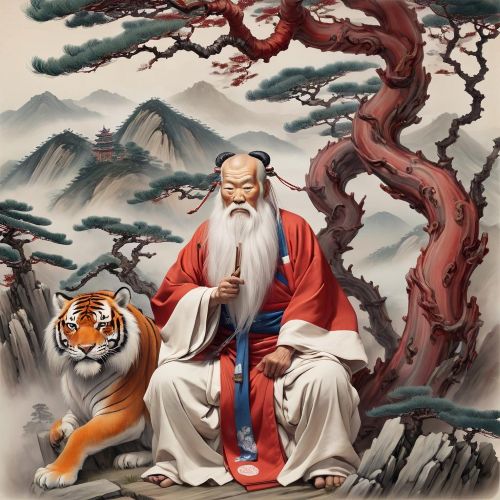
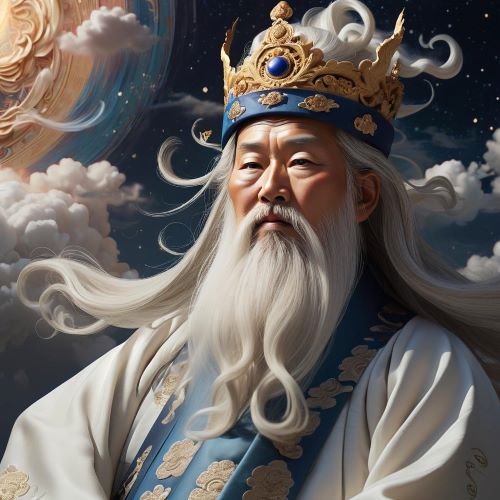
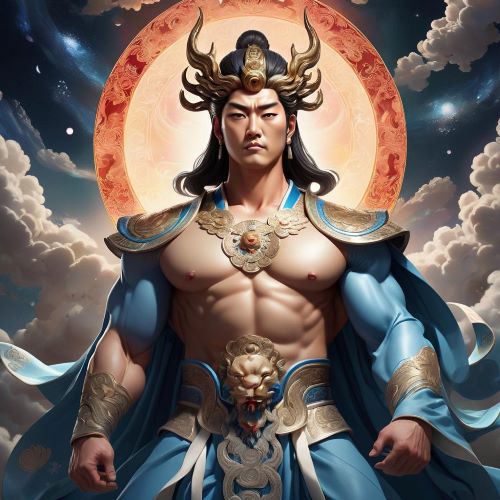
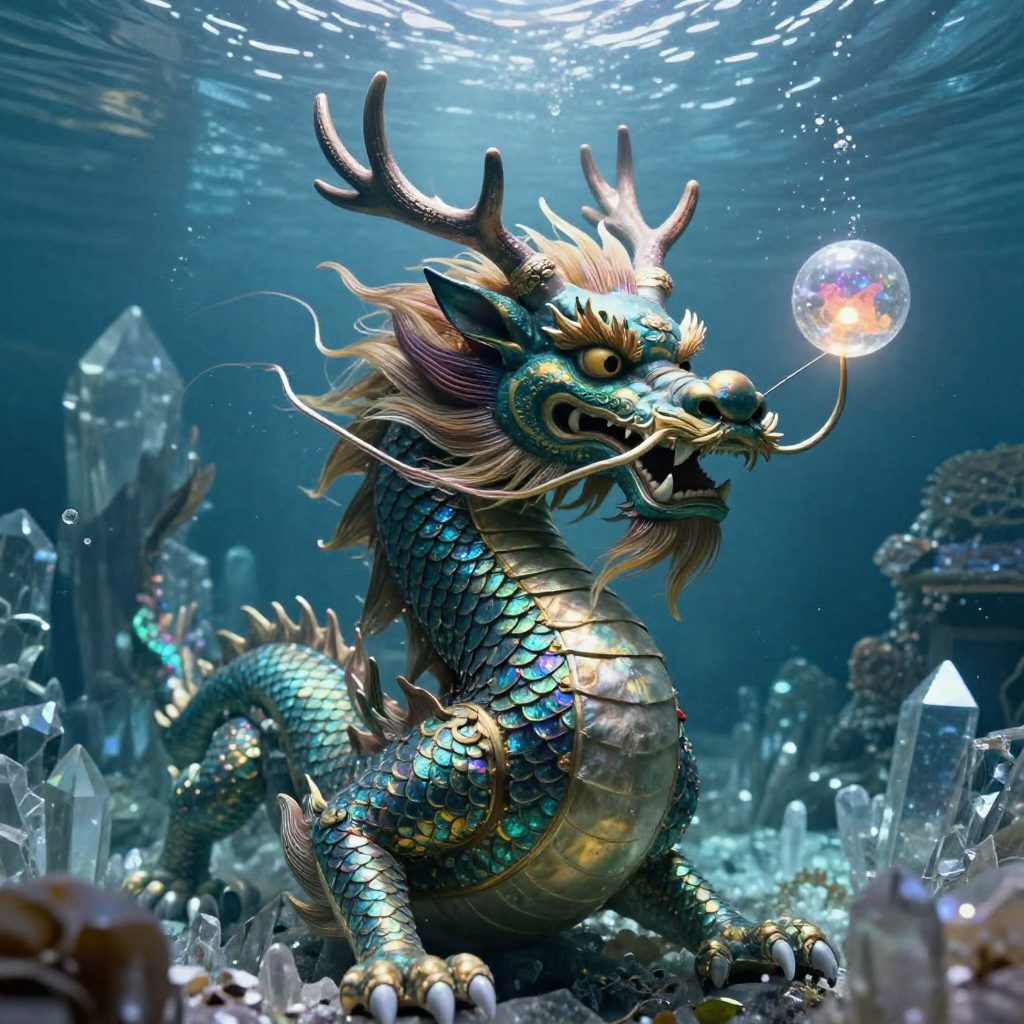
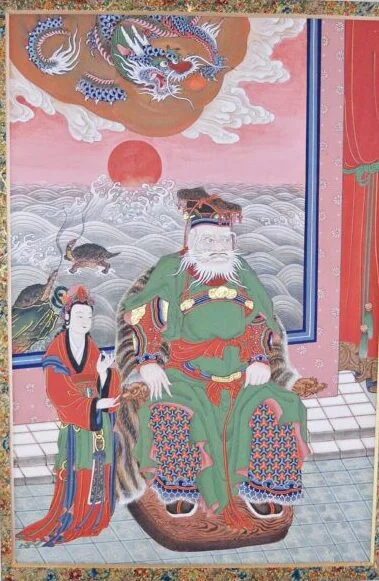
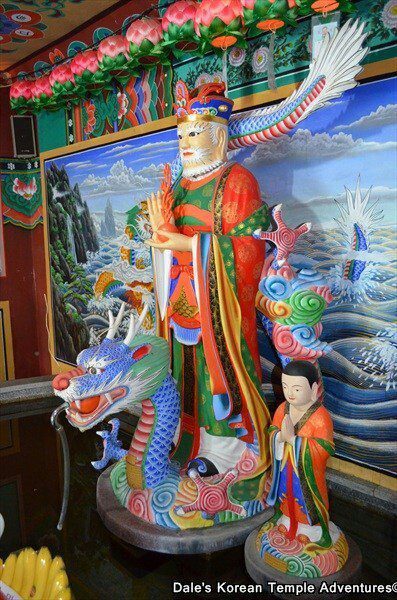
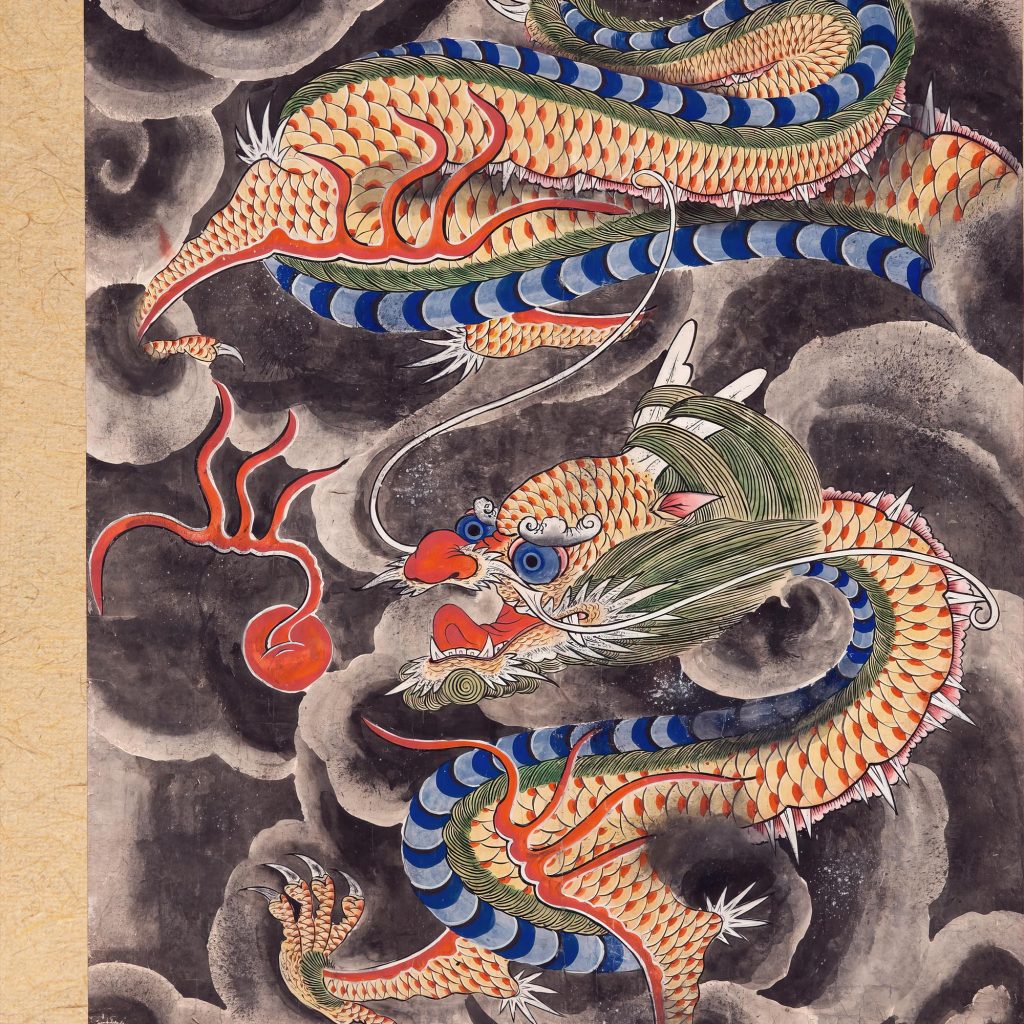
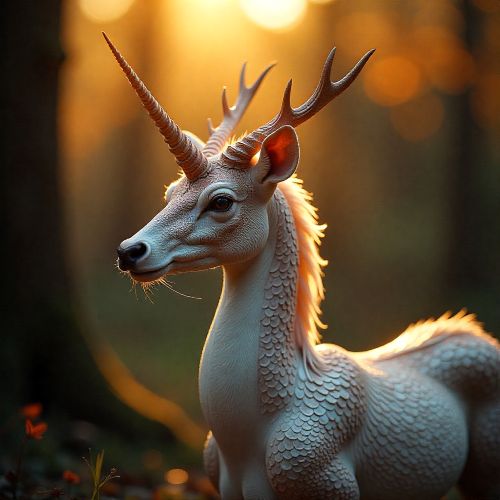
Korean depictions of Yongwang highlight the uniquely benevolent nature of East Asian dragons. He appears as a majestic, elongated dragon with flowing whiskers, gleaming scales, and elegant antlers—symbols of authority and good fortune. Artists frequently portray him seated in an underwater palace, surrounded by marine creatures that signify his rule over the aquatic realm. Although his true form is draconic, Yongwang is also known for his ability to assume a human appearance. When appearing to humans, he often takes the form of a dignified king wearing courtly robes and a crown, bridging the dramatic contrast between his monstrous majesty and his refined wisdom. His visage conveys not intimidation but sovereignty, reflecting the Korean tradition of dragons as protectors and bringers of harmony. His association with jewels—especially the yeouiju, the wish-granting orb—further symbolizes his control over rainfall, tides, and natural abundance.
Family
While Korean mythology does not present a rigid genealogical structure for Yongwang, various traditions describe him as part of a broader lineage of dragon rulers. Folk tales position him at the head of an underwater royal court filled with dragon princes, princesses, and sea spirits who administer different waterways or act as messengers between realms. Buddhist-influenced stories introduce figures such as the Dragon King’s daughter, Longnü, and other dragon children who interact with humans or sacred beings. These narratives suggest a vibrant divine household where loyalty, hierarchy, and moral responsibility mirror human society. In some versions, each sea surrounding the Korean peninsula has its own dragon king, with Yongwang presiding as the supreme figure. This flexible familial structure reinforces the idea that water deities operate as guardians of multiple regions while collectively maintaining the balance of the natural world.
Other names
Yongwang is known by several names across different cultural and religious contexts, each highlighting a distinct aspect of his identity. In Korean shamanic traditions, he is often referred to as Yongsin, meaning Dragon God, emphasizing his role as a living spirit of water. Coastal communities call him Haewang, the Sea King, while inland regions recognize him as the guardian of local rivers. Buddhist texts sometimes equate him with the Nāgarāja, the serpent-dragon kings of India and China, linking him to a broader pan-Asian mythology. Across East Asia, parallels exist with the Chinese Longwang, the Japanese Ryūō, and the Vietnamese Long Vương, demonstrating how the archetype of the dragon king travelled and transformed alongside cultural exchanges. Despite these variations, the core attributes—wisdom, power, protection, and mastery over water—remain consistent.
Powers and Abilities
As the divine master of all waters, Yongwang wields a vast range of supernatural abilities. His primary power is absolute control over rainfall, storms, and the movement of tides. When communities suffer drought or turbulent seas, they offer prayers requesting his intervention, trusting in his ability to bring harmony back to the natural world. He also possesses authority over marine life, from the smallest fish to colossal sea creatures, and commands an underwater army that enforces order across his realm.
Yongwang is equally revered as a moral judge. Myths describe him rewarding those who respect nature, show honesty, or act with courage, while punishing individuals who pollute rivers, harm sea creatures, or behave unjustly. His capacity for shapeshifting enables him to interact with mortals without revealing his divine nature, allowing him to teach important lessons through disguised encounters. The yeouiju he carries symbolizes omnipotence, enabling him to bestow wealth, favorable weather, or supernatural aid, reflecting his dual role as a protector and disciplinarian.
Modern Day Influence
Yongwang continues to shape cultural identity, religious traditions, and modern storytelling in Korea. Many fishing communities still perform Yongwangje, rituals dedicated to the Dragon King, offering food and prayers for safe voyages and abundant catches. Shrines known as Yongwang-dang appear in numerous Buddhist temples, where worshippers seek blessings for rainfall, health, and good fortune. These practices reveal how deeply the deity’s presence is woven into everyday life, particularly in coastal and agricultural regions.
His image evolves further in contemporary culture. From murals and animations to novels and video games, dragons inspired by Yongwang serve as symbols of Korean pride, resilience, and environmental harmony. Sites such as Haedong Yonggungsa Temple attract thousands of visitors who pay homage to the Sea Dragon King while appreciating the breathtaking ocean scenery. Environmental activists also invoke Yongwang as a metaphor for the sacredness of water, encouraging conservation and respect for marine ecosystems. Through tradition, art, and modern reinterpretation, Yongwang remains a timeless guardian whose mythology continues to resonate across Korea and beyond.
Related Images

Source
Deyerin Storytellers. (n.d.). Yongwang. https://deyerinstorytellers.com/yongwang/
Classminds. (2025, October 4). Who is Yongwang in the Korean mythology? https://classminds.com/who-is-yongwang-in-the-korean-mythology/
StorytellingDB. (2025, October 7). Korean mythology 101: The ultimate guide. https://storytellingdb.com/korean-mythology-101/
Ethnoscopes. (2018, March 1). Yong-wang, king of the dragons. https://ethnoscopes.blogspot.com/2018/03/yong-wang-king-of-dragons.html
Wikipedia contributors. (2025, April 10). Dragon King. Wikipedia. https://en.wikipedia.org/wiki/Dragon_King
Wikipedia contributors. (2003, September 26). Korean mythology. Wikipedia. https://en.wikipedia.org/wiki/Korean_mythology
Yokwe/Yokai of Korea Wikia. (2007, December 31). Yongwang. https://yokwe-yokai-of-korea.fandom.com/de/wiki/Yongwang
Choi, G. J. (2012). Korean mythology and folklore. Seoul: Ewha Womans University Press.
Kim, H. S. (2018). Dragons of the East: Comparative mythology in Korea, China, and Japan. Journal of East Asian Studies, 15(2), 145‑167.
Kendall, L. (1985). Shamans, housewives, and other restless spirits: Women in Korean ritual life. Honolulu: University of Hawai‘i Press.
Lee, P. H. (2003). Sourcebook of Korean civilization: Volume I. New York: Columbia University Press.
Frequently Asked Questions
Who is Yongwang in Korean mythology?
Yongwang is the Dragon King who rules all waters, controlling seas, rainfall, weather, and marine life while acting as a protector of fishermen and sailors.
What does Yongwang look like?
He is depicted as a benevolent East Asian dragon with antlers, whiskers, and shimmering scales, often appearing in human form as a regal king.
What powers does Yongwang have?
He controls storms, tides, rain, marine creatures, and can shapeshift. He also judges human actions and grants blessings or punishments.
Is Yongwang worshipped today?
Yes. Festivals like Yongwangje and shrines in Buddhist temples continue to honor him, especially in coastal communities.
How is Yongwang different from Chinese Dragon Kings?
While related in concept, Yongwang is uniquely tied to Korean shamanism and folklore, emphasizing benevolence, community protection, and agricultural harmony.