

Wakea : The Sky Father of Hawaiian Sacred Tradition
Listen
At a glance
| Description | |
|---|---|
| Origin | Hawaiian Mythology |
| Classification | Gods |
| Family Members | Papahānaumoku (Wife), Hoʻohōkūkalani, Hāloa (Children) |
| Region | Hawaii |
| Associated With | Creation, Sky, Sacred law |
The Mythlok Perspective
From the Mythlok perspective, Wākea represents an elemental interpretation of sky rather than a distant patriarchal god. His presence is relational, defined by what emerges from his union with earth and lineage rather than command or conquest. Similar sky fathers appear across cultures, such as Rangi in Māori tradition or Anu in Mesopotamian thought, yet Wākea remains distinctive for grounding cosmology in agriculture and kinship. Where other traditions elevate the heavens above humanity, Wākea binds sky, land, and people into a single ancestral continuum.
Wakea
Introduction
In Hawaiian tradition, Wākea stands as the primordial Sky Father, a being whose presence defines the relationship between heaven, earth, and humanity. His story forms the backbone of Hawaiian cosmogony, explaining not only how the islands came into existence but also why the Hawaiian people view the land as an ancestor rather than a possession. Through his union with Papahānaumoku, the Earth Mother, Wākea becomes the generative force behind islands, plants, and people, weaving genealogy into geography. Unlike distant creator figures found in many traditions, Wākea is embedded directly into chiefly lineages, making cosmology inseparable from social order. His myths clarify how divine origins justify aliʻi authority, while simultaneously reminding all people of their obligation to live in balance with the ʻāina.
Physical Traits
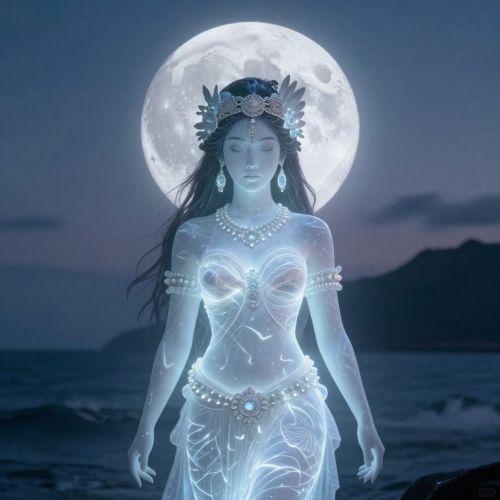
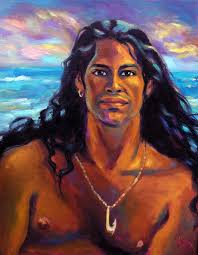
Wākea is not defined by fixed physical features in the way Greco-Roman gods often are. Hawaiian tradition presents him as an elemental presence rather than a humanoid figure. His name translates to “expansive space” or “zenith,” emphasizing immensity, height, and celestial openness. In chants and oral poetry, he is associated with light, clarity, rain-bearing skies, and the vast dome above the world. Any visual form attributed to him is symbolic, reflecting breadth and luminosity rather than individual anatomy. This approach aligns with broader Polynesian thought, where divine beings are experienced through natural phenomena. Wākea is felt in the sky that nourishes the land, not seen as a personalized god walking among mortals.
Family
Genealogy is where Wākea’s importance becomes unmistakable. He is born into an ancestral divine line, often named as the son of Kahiko, the Ancient One, placing him close to the beginning of cosmic time. His principal consort, Papahānaumoku, represents the fertile earth, and together they generate the Hawaiian Islands themselves. Their union also produces Hoʻohōkūkalani, whose story explains the sacred origin of humanity. From her comes Hāloa-naka, a stillborn child buried in the earth and reborn as the first kalo plant, followed by Hāloa, the first human ancestor of the Hawaiian people. This narrative establishes a profound kinship ethic: humans are younger siblings to the taro plant, bound by duty and respect. Through other relationships attributed to Wākea, additional islands and chiefly lines emerge, reinforcing his role as both cosmic progenitor and social architect.
Other names
Unlike many deities who accumulate numerous titles, Wākea remains largely known by his primary name. English spellings such as “Wakea” appear frequently, though the diacritical form “Wākea” more accurately reflects Hawaiian pronunciation and meaning. Across Polynesia, closely related sky figures appear under names such as Atea, Vatea, or Makea, suggesting a shared ancestral concept carried across the Pacific. These linguistic parallels highlight migration patterns and cultural continuity, while Wākea’s Hawaiian identity remains distinct through his direct association with the islands and their people.
Powers and Abilities
Wākea’s powers are generative rather than martial. He participates in the formation of the cosmos, sometimes described through imagery of a sacred gourd whose parts become sky, sun, stars, rain, and land. Through his union with Papahānaumoku, islands rise from the sea, transforming abstract space into inhabitable world. He establishes genealogical authority by anchoring aliʻi descent in divine origin, granting rulers legitimacy through bloodline rather than conquest. Wākea is also associated with the kapu system, the sacred laws governing balance and separation, which structure society and ritual life. His influence extends into the spiritual realm as well, as souls were believed to journey upward toward the sky domain after death. These abilities frame him as a maintainer of cosmic order, ensuring continuity between generations, realms, and elements.
Modern Day Influence
Wākea’s presence remains deeply felt in contemporary Hawaiʻi. Genealogical chants such as the Kumulipo continue to be studied, performed, and honored, preserving ancestral knowledge through language and rhythm. Environmental movements draw heavily on the story of Hāloa and the kalo plant, emphasizing sustainability, reciprocity, and respect for the land as a living relative. Debates surrounding sacred spaces, particularly Maunakea, often reference Wākea as a celestial ancestor, reinforcing the mountain’s spiritual significance. Artists, writers, and educators revisit his story to affirm cultural identity in a modern world shaped by globalization. Far from fading into abstraction, Wākea functions as a moral and cosmological compass guiding contemporary Hawaiian values.
Related Images



Source
Beckwith, M. W. (1970). Hawaiian mythology. University of Hawaii Press.
Fornander, A. (1880). An account of the Polynesian race: Its origins and migrations. Trübner & Co.
Kalakaua, D. (1888). The legends and myths of Hawaii. C. E. Tuttle Co. (Reprint)
Kamakau, S. M. (1991). Ka poʻe kahiko: The people of old (M. K. Pukui, Trans.). Bishop Museum Press.
Pukui, M. K., Elbert, S. H., & Mookini, E. T. (1974). Place names of Hawaii. University of Hawaii Press.
https://manoa.hawaii.edu/hawaiiancollection/legends/subjectsearch.php?q=Wakea
Tregear, E. R. (1891). Maori-Polynesian comparative dictionary. Lyon and Blair.
Wikipedia. (2026). Wākea. https://en.wikipedia.org/wiki/W%C4%81kea
Westervelt, W. D. (1916). Hawaiian legends of ghosts and ghost-gods. Sacred Texts Archive.
https://sacred-texts.com/pac/hm/hm03.htm
Frequently Asked Questions
Who is Wakea in Hawaiian tradition?
Wakea is the Sky Father who forms the heavens and becomes the ancestor of the Hawaiian islands, people, and chiefly lineages.
Why is taro sacred in Hawaiian culture?
Taro is believed to be the elder sibling of humanity, born from Wakea’s lineage, making it a sacred source of life.
What is Wakea associated with?
He is associated with the sky, creation, genealogy, sacred law, and the balance between heaven and earth.
How are humans connected to Wakea?
Through Hāloa, the first human ancestor, Hawaiians trace their lineage directly back to Wakea.
Is Wakea still important today?
Yes, his story influences cultural identity, environmental ethics, astronomy, and Hawaiian sovereignty movements.