


Namarrkon : The Lightning Man of Kunwinjku Tradition
Listen
At a glance
| Description | |
|---|---|
| Origin | Kunwinjku Mythology |
| Classification | Spirits |
| Family Members | N/A |
| Region | Australia |
| Associated With | Lightning, Thunder, Storms, Sacred law |
Namarrkon
Introduction
Namarrkon, also known as Mamaragan, is one of the most powerful ancestral beings in the spiritual worldview of the Kunwinjku people of western Arnhem Land in northern Australia. Revered as the Lightning Man, Namarrkon embodies the violent energy of storms while simultaneously acting as an enforcer of sacred law. His presence belongs to the Dreaming, a living cosmology in which land, seasons, morality, and ancestry are inseparable. Far from being a distant mythic figure, Namarrkon remains an active force whose movements are read in thunder, lightning, and the changing rhythms of the wet season. Through him, the Kunwinjku interpret both the dangers of nature and the ethical responsibilities required to live in balance with it.
Physical Traits
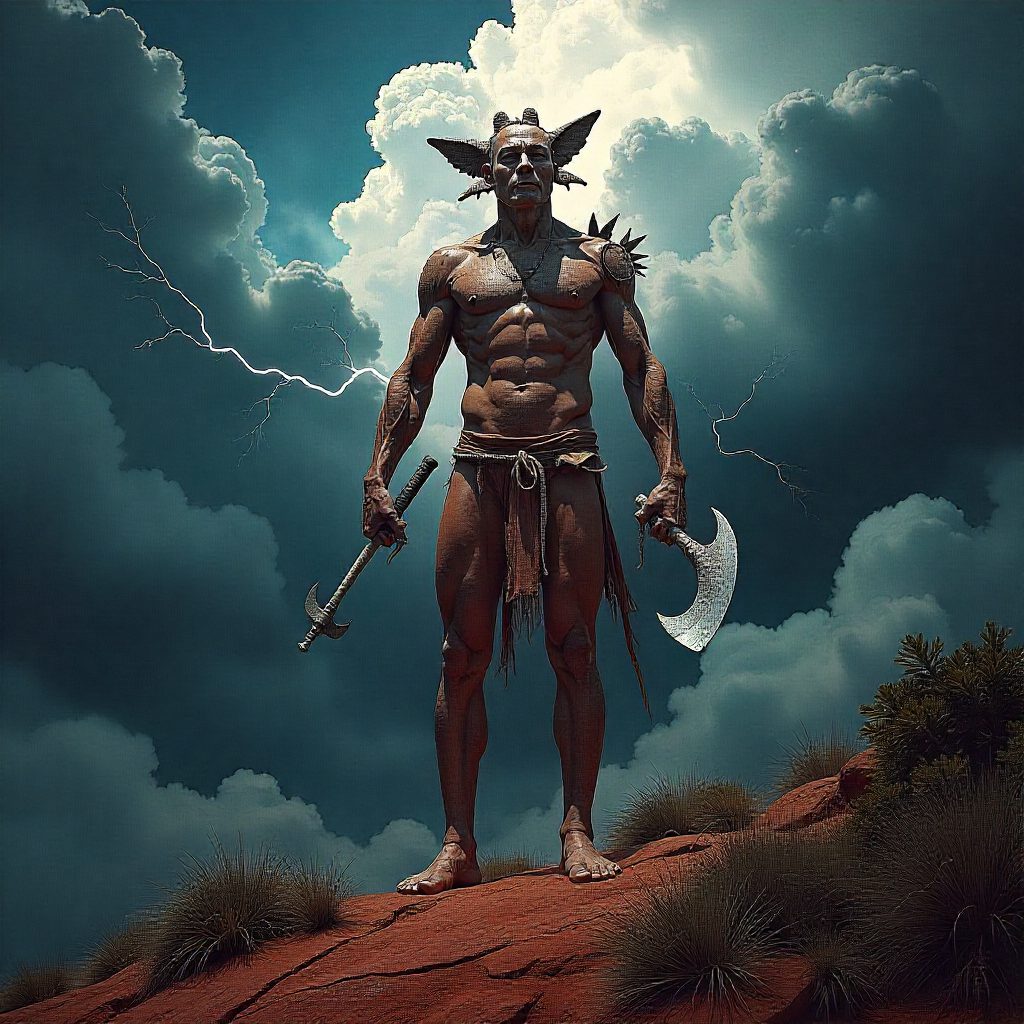
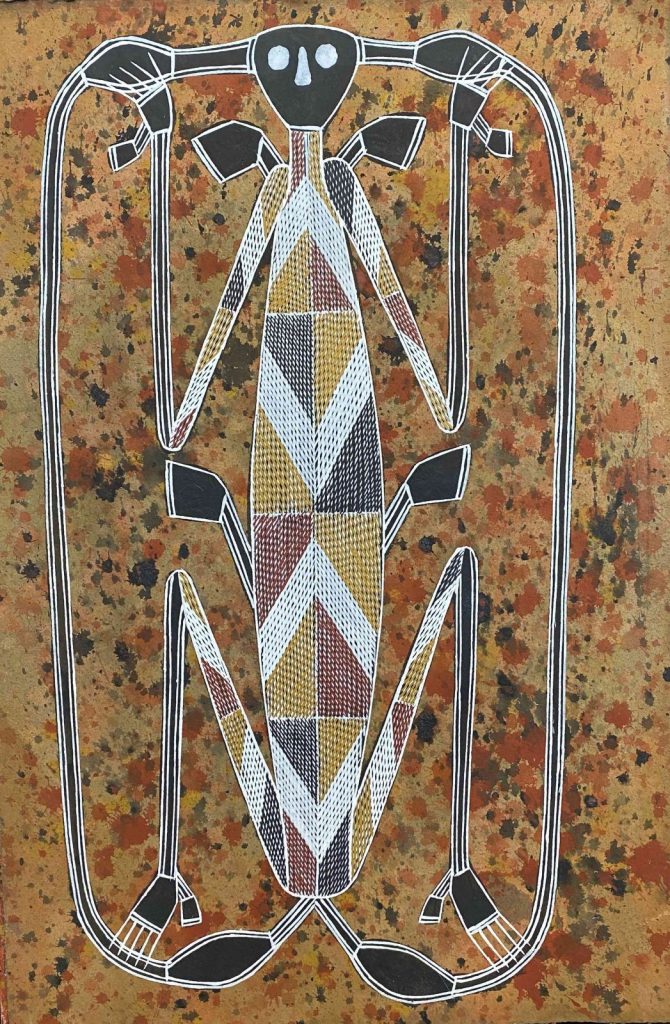
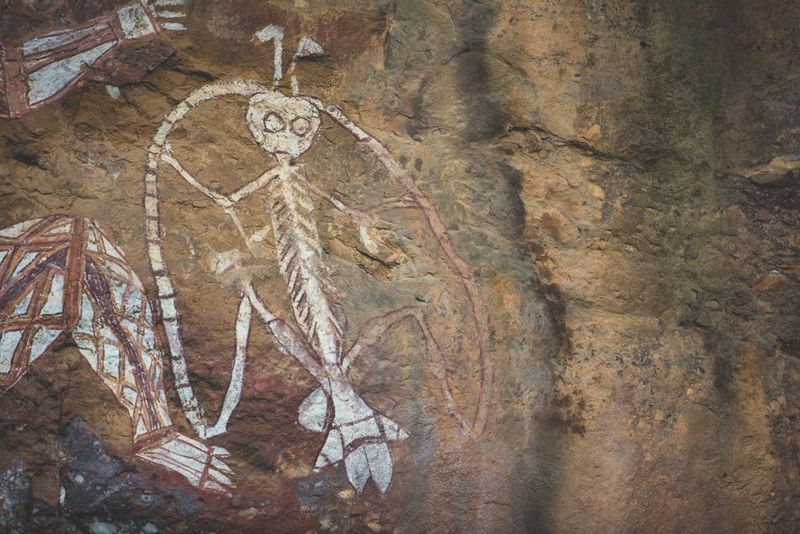
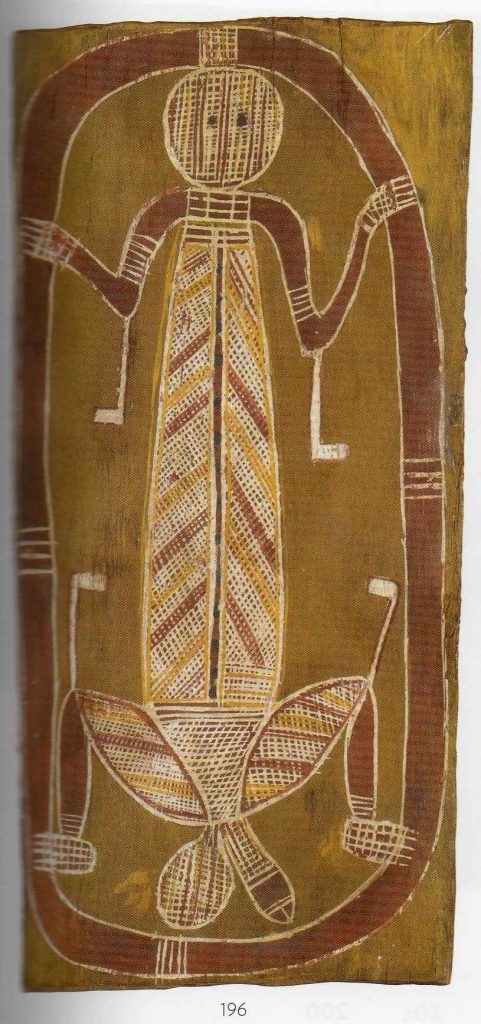
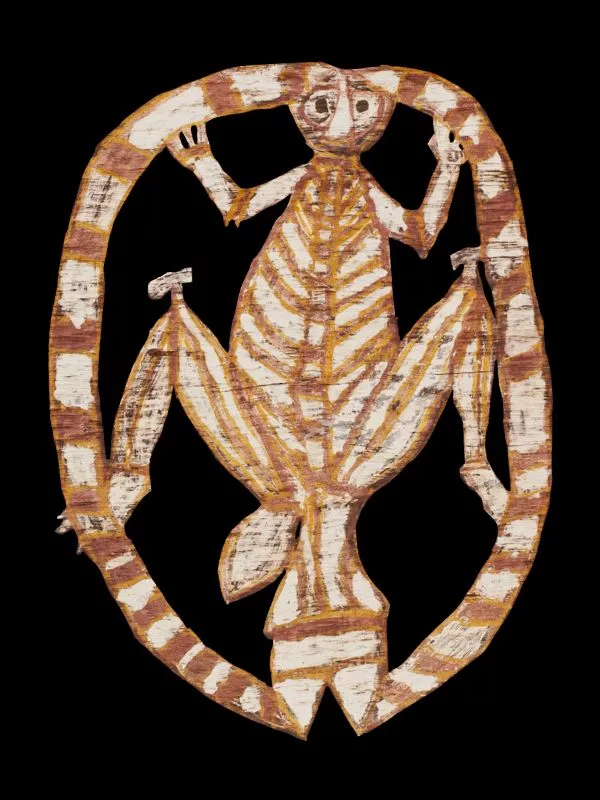
Namarrkon’s appearance is among the most striking in Aboriginal cosmology and is vividly preserved in rock shelters and ceremonial art throughout western Arnhem Land, particularly in areas now protected within Kakadu National Park. He is typically depicted as a lean, almost skeletal figure with stone axes protruding from his head, elbows, and knees. These axes are not decorative but functional, striking the sky to generate thunder. Bands of radiant energy or arcs of lightning are often shown crossing his body, representing sunlight absorbed and released as electrical force. Although Namarrkon is rarely seen directly, his presence is unmistakable in the blinding flash of lightning and the sharp crack of thunder that follows, reinforcing his role as both unseen watcher and undeniable power.
Family
Unlike many ancestral beings whose stories revolve around extended kinship networks, Namarrkon is often portrayed as largely solitary. This isolation reflects his role as a cosmic regulator rather than a domestic or nurturing figure. In some regional traditions, he is loosely connected to broader ancestral forces associated with rain and creation, but these ties are secondary to his authority as an enforcer of law. Certain narratives mention a distant or estranged wife linked to seasonal winds or rain-bearing forces, yet these relationships are not central to his identity. What matters most in Kunwinjku tradition is not Namarrkon’s lineage, but his responsibility to maintain balance between people, land, and the volatile energies of the sky.
Other names
Namarrkon is known by several names across Arnhem Land, reflecting linguistic diversity and the oral nature of Aboriginal tradition. Mamaragan is the most widely used alternative name and often emphasizes his thunderous voice rather than his lightning. Variations such as Namarrgon or related regional names appear in ethnographic records, each shaped by local pronunciation and storytelling conventions. These differences do not indicate separate beings but rather the same ancestral force understood through multiple cultural lenses. The consistency of his core attributes across names underscores how deeply embedded the Lightning Man is within northern Australian cosmology.
Powers and Abilities
Namarrkon’s powers are inseparable from storms and seasonal change. He generates thunder by striking the clouds with his stone axes and releases lightning as fiery spears that punish those who break sacred law. His arrival marks the Kunumeleng season, the build-up period before the monsoon, when heat intensifies and storms begin to form. Through lightning strikes, he splits trees, ignites fires, and reshapes the land, actions that are both destructive and renewing. Namarrkon’s thunder is understood as communication, a warning that reminds people to follow djang, the ancestral law governing conduct, ceremony, and respect for country. His power teaches restraint, awareness, and humility in the face of nature’s volatility.
Modern Day Influence
Namarrkon continues to hold deep cultural relevance in contemporary Aboriginal life. His image remains prominent in rock art sites, bark paintings, and modern Indigenous artworks that preserve ancestral knowledge while engaging new audiences. Artists from Arnhem Land have depicted him using traditional techniques such as rarrk cross-hatching, ensuring continuity between past and present. Beyond art, Namarrkon’s story plays a role in education, cultural tourism, and environmental awareness programs, where his association with storms reinforces Indigenous perspectives on climate, land stewardship, and responsibility. In an era of increasing climate uncertainty, the Lightning Man stands as a reminder that natural forces are bound to moral obligation. Through him, ancient law continues to speak to modern challenges, affirming that respect for nature is inseparable from respect for culture.
Related Images

Source
Gunn, R. G., & Whear, R. L. (2008). A singular beeswax representation of Namarrkon, the Lightning Man, from western Arnhem Land. Australian Aboriginal Studies, (2), 99-107. https://go.gale.com/ps/i.do?id=GALE%7CA191905598
Mamaragan. (n.d.). In Wikipedia. https://en.wikipedia.org/wiki/Mamaragan
Namarrkon (Lightning Man). (n.d.). Injalak Arts. https://injalak.com/product/1733-23-namarrkon-lightning-man/
Namarrkon the Lightning Spirit. (n.d.). Aboriginal Bark Paintings. https://www.aboriginal-bark-paintings.com/namarrkon-2/
Namarrkon, the lightning spirit. (n.d.). National Gallery of Victoria. https://www.ngv.vic.gov.au/explore/collection/work/2300/
Namarnyilk, I. (2022). NAMARRKON [Film]. NT Travelling Film Festival. http://www.nttravellingfilmfestival.com/films/2022/namarrkon
Taylor, L. (2017). Aboriginal rock art and the telling of history. Cambridge University Press. https://www.cambridge.org/core/books/aboriginal-rock-art-and-the-telling-of-history/
Berndt, R. M., & Berndt, C. H. (1989). The Speaking Land: Myth and Story in Aboriginal Australia. Ringwood, VIC: Penguin Books.
Taylor, L. (1996). Seeing the Inside: Bark Painting in Western Arnhem Land. Oxford: Clarendon Press.
Allen, L. (2010). Time and the Dreaming: Mythology in Aboriginal Australia. Sydney: University of New South Wales Press.
Kakadu National Park. (2025). Rock Art and Ancestral Beings. Parks Australia. Retrieved December 21, 2025, from https://parksaustralia.gov.au/kakadu/discover/culture/rock-art
Peterson, N. (1993). Aboriginal Dreamings and the Symbolism of Nature. Canberra: Australian Institute of Aboriginal Studies.
Frequently Asked Questions
Who is Namarrkon in Aboriginal belief?
Namarrkon is the Lightning Man, an ancestral being of the Kunwinjku people who controls storms and enforces sacred law.
What does Namarrkon represent?
He represents lightning, thunder, seasonal change, and moral authority tied to the Dreaming.
Where is Namarrkon traditionally worshipped or depicted?
He is associated with western Arnhem Land, especially rock art sites within Kakadu National Park.
Is Namarrkon still important today?
Yes, his stories remain central to cultural education, art, and environmental understanding among Aboriginal communities.
What season is linked to Namarrkon?
Namarrkon is most active during Kunumeleng, the pre-monsoon build-up to the wet season.
