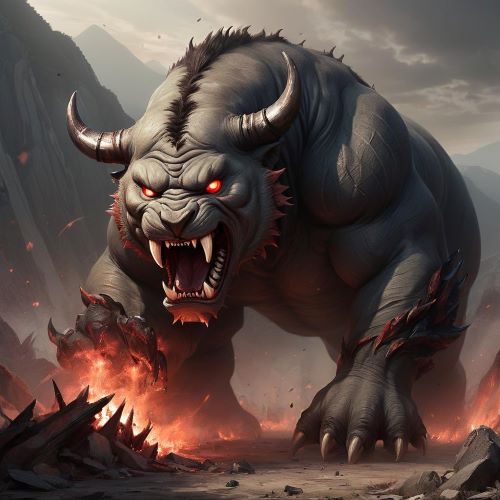


Girin : The Korean Celestial Beast of Divine Kingship
Listen
At a glance
| Description | |
|---|---|
| Origin | Korean Mythology |
| Classification | Hybrids |
| Family Members | N/A |
| Region | South Korea, North Korea |
| Associated With | Unicorn, Peace, Royalty |
Girin
Introduction
Girin (기린), Korea’s interpretation of the East Asian Qilin, stands as one of the most revered mythical creatures in Korean folklore. Although its conceptual origins trace back to China, the Girin evolved a distinctly Korean identity rooted in kingship, sacred landscapes, and moral legitimacy. Within Korean cultural history, the appearance of a Girin is not merely a supernatural event—it signals a transformative moment, often associated with the rise of wise rulers, the establishment of dynasties, or the arrival of spiritually elevated individuals. Its presence represents a perfect harmony between heaven and earth, emphasizing that just governance and moral virtue invite celestial approval. Over centuries, the Girin became an emblem of divine favor, ethical leadership, and cultural continuity, blending pan-East Asian symbolism with uniquely Korean interpretations.
Physical Traits
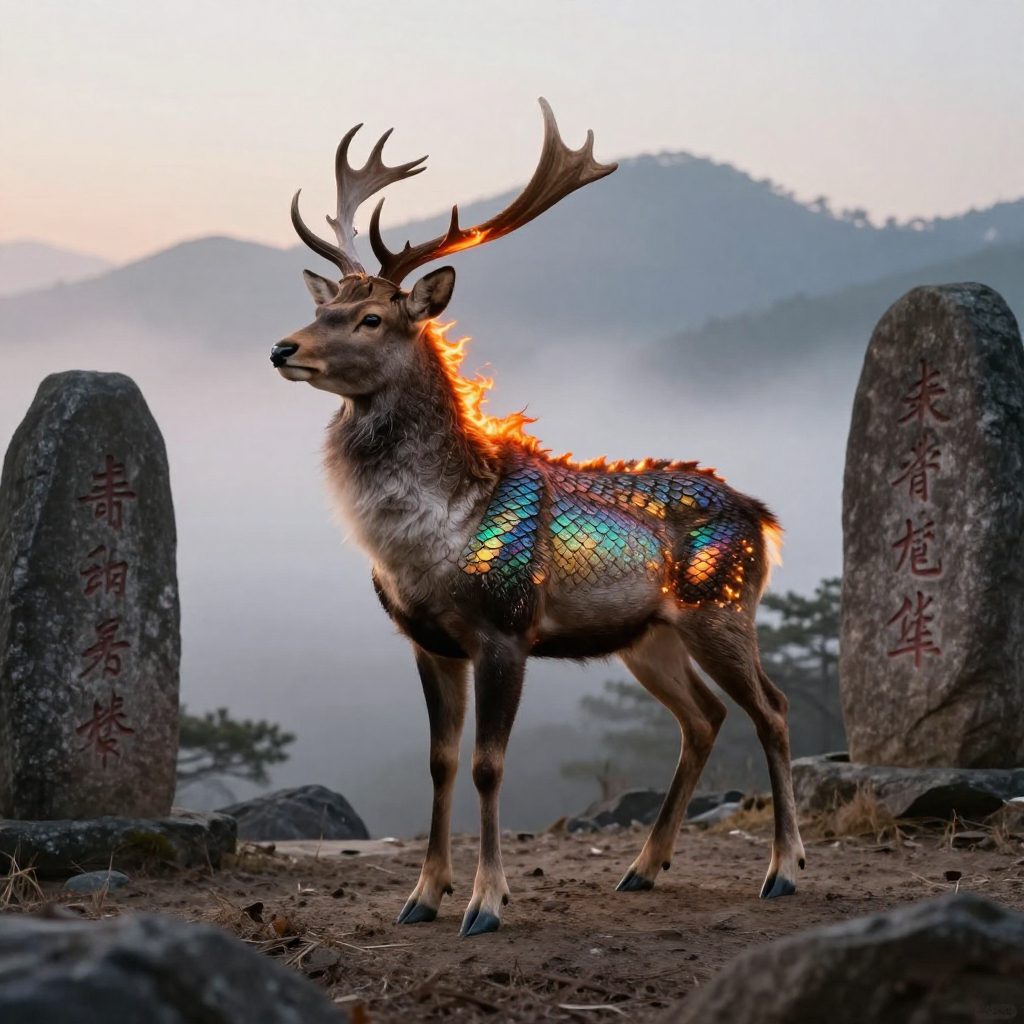
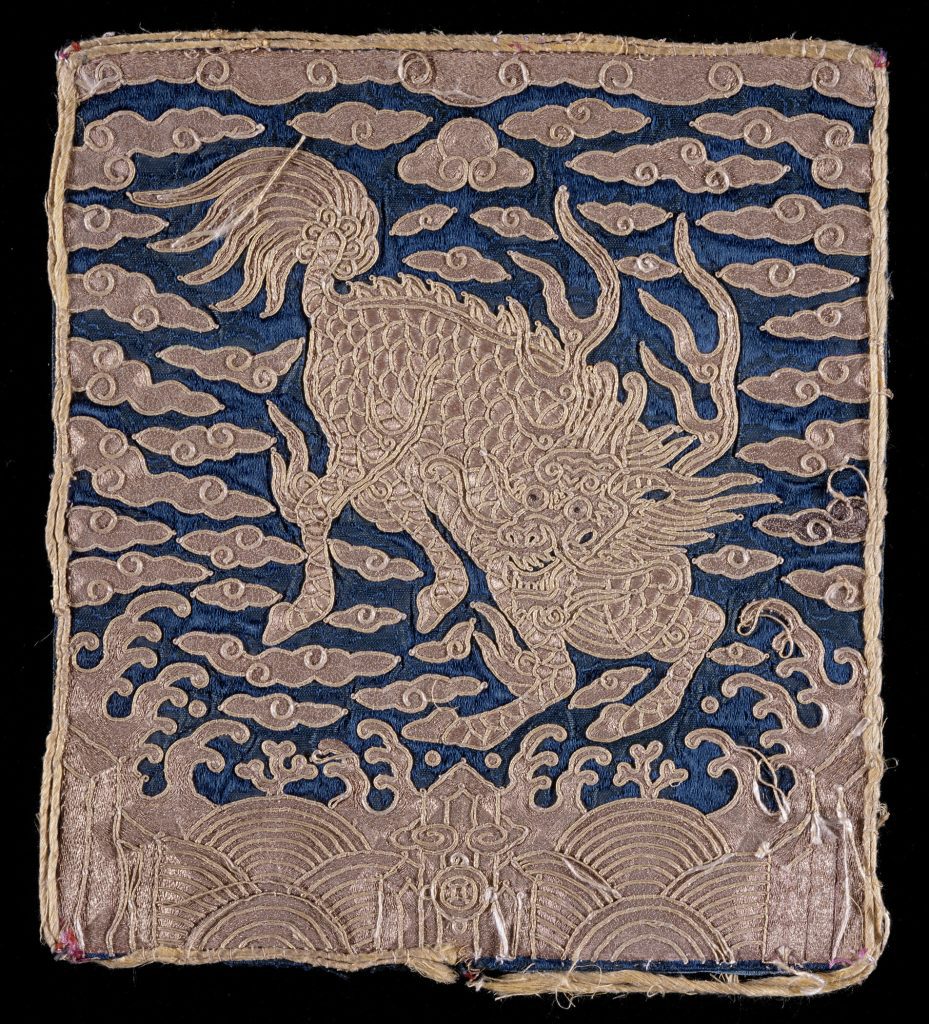
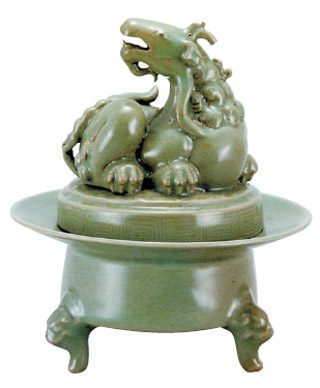
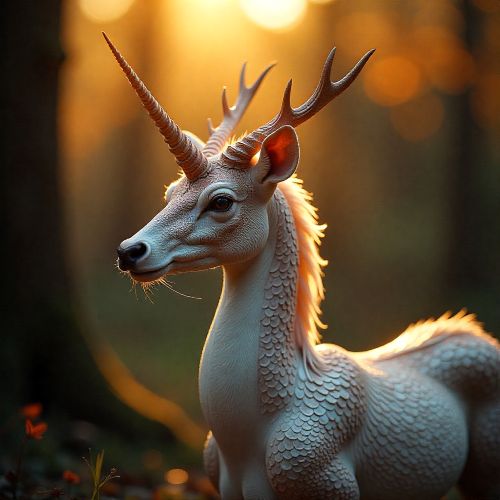
The Girin is renowned for its composite, awe-inspiring form that unites features from multiple animals to express purity, divinity, and strength. Most accounts describe it with the graceful body of a deer, reflecting elegance and moral purity, while dragon-like scales shimmer across its form, marking its connection to heavenly forces. Its hooves resemble those of a horse, giving it a noble stance and suggesting swift, effortless movement. A long tail reminiscent of an ox adds a sense of stability and grounded power, balancing the otherwise ethereal impression of the creature.
One of the most distinctive characteristics of the Girin is its radiant aura. Ancient tales describe it as having a fiery mane or a luminous presence that illuminates its surroundings, symbolizing enlightenment and the presence of heavenly truth. Unlike predatory mythological beings, the Girin is strictly gentle and vegetarian, walking with such extraordinary lightness that it neither bends grass nor disturbs even the smallest insect. This unique detail elevates the Girin from a mere magical creature to a divine guardian, whose very nature upholds life and purity.
Family
In Korean tradition, the Girin does not possess a conventional familial structure but instead belongs to a cosmological family of auspicious beings. It is often categorized among the Four Divine Creatures—Dragon, Phoenix, Tortoise, and Girin—each representing cosmic order and heavenly protection. While dragons channel elemental power and phoenixes embody renewal, the Girin’s authority stems from its moral purity and ability to judge character without violence.
The creature’s symbolic connection to Korean royalty is particularly significant. Legends associate the Girin with King Dongmyeong (Jumong), founder of Goguryeo, reinforcing his semi-divine origins and right to rule. Through such narratives, the Girin becomes more than a mythical beast: it is a political emblem, used to articulate the concept that righteous rulers draw the attention and favor of celestial beings. This role distinguishes the Girin within East Asian mythology as a creature whose power lies not in force, but in virtue.
Other names
Across East Asia, the Girin shares linguistic and cultural ties with similar mythical creatures. Its closest counterpart is the Chinese Qilin (麒麟), from which the Korean term derives, yet Korea’s depiction emphasizes local spiritual and political meanings. In Japan, the same creature appears as the Kirin, though often interpreted through Shinto and artistic contexts that differ from Korea’s royal associations.
An important related term in Korean lore is Kiringul (기린굴), meaning “Kirin’s Grotto.” Located in present-day Pyongyang, the cave has been cited in modern political narratives to reinforce historical continuity with the ancient kingdom of Goguryeo. Though debated by historians, the site reflects how deeply the Girin is woven into Korean identity and heritage.
Powers and Abilities
The Girin’s abilities are largely symbolic, reflecting Korea’s emphasis on moral governance. Traditionally, it appears only in eras of peace, justice, and social harmony, making its presence a celestial endorsement of a ruler’s virtue. Because of this, the Girin is seen as a legitimizing force, confirming that a leader is guided by wisdom and righteousness.
The creature’s spiritual sensitivity allows it to distinguish between good and evil with absolute clarity. In some traditions, it avoids the wicked entirely, while in others, it delivers divine judgment without inflicting harm on the innocent. Its protective influence extends to communities and natural environments, ensuring fertility, prosperity, and social stability wherever it dwells. The Girin is also a messenger between earthly realms and the divine, bridging spiritual and human worlds with unwavering purity.
Rather than functioning as a warrior or destructive force, the Girin embodies harmony, enlightenment, and peace. Its rarity and selective appearances reinforce the belief that true moral leadership draws the attention of heaven itself.
Modern Day Influence
In contemporary times, the Girin remains a powerful cultural symbol in Korea. It appears frequently in traditional art, sculpture, folklore studies, and museum exhibitions, representing national heritage and ethical ideals. In 2012, North Korea declared the discovery of the ancient Kiringul cave, using the Girin to support historical claims tied to Goguryeo and strengthen narratives of ancestral legitimacy.
The creature also thrives in modern entertainment. Korean dramas, webtoons, and video games often portray the Girin as a guardian spirit, protector of heroes, or embodiment of ancient wisdom. These portrayals maintain the creature’s gentle yet majestic qualities while adapting it for contemporary fantasy storytelling. International audiences often compare the Girin to the Western unicorn, helping bridge Korean mythology with global pop-culture familiarity.
Whether appearing in national symbolism, historical discourse, or modern media, the Girin remains a timeless emblem of peace, justice, and cultural pride—an enduring guardian of Korea’s mythic imagination.
Related Images

Source
Korea Cultural Heritage Administration. (n.d.). Goguryeo and its mythological symbolism. https://english.cha.go.kr
Encyclopedia Britannica. (n.d.). Qilin (Chinese mythology). https://www.britannica.com/topic/qilin
National Folk Museum of Korea. (n.d.). Myths and creatures of Korean folklore. https://www.nfm.go.kr
Kendall, L. (2010). Korean shamanism: The cultural paradox. University of Hawaii Press.
Lee, P. H. (Ed.). (2003). Sourcebook of Korean civilization: From antiquity to the sixteenth century (Vol. 1). Columbia University Press.
Littleton, C. S. (Ed.). (2002). Handbook of Asian mythology. Oxford University Press.
Kim, H. J. (2014). The Qilin (Girin) in East Asian political mythology: Symbolism, kingship, and cultural adaptation in Korea. Journal of Asian Studies, 73(2), 245–268.
Nelson, S. (2000). Korean Mythology: Narratives and Symbolism. Seoul: Hollym International.
Lee, P. H. (1984). Sourcebook of Korean Civilization, Volume I: From Early Times to the Sixteenth Century. New York: Columbia University Press.
Frequently Asked Questions
What is the Girin in Korean mythology?
The Girin is a celestial creature symbolizing peace, virtue, and the rise of just rulers. It appears only during eras of harmony and wise leadership.
How is the Girin different from the Chinese Qilin?
While based on the Chinese Qilin, the Korean Girin is strongly tied to kingship and national legends, especially the founding of Goguryeo.
What does the Girin look like?
It has a deer-like body, dragon scales, horse hooves, an ox-tail, and a radiant or fiery mane, often depicted with a single horn.
What powers does the Girin possess?
The Girin symbolizes moral judgment, prosperity, protection, and divine approval of righteous rulers rather than wielding offensive powers.
Does the Girin appear in modern Korean culture?
Yes. It appears in dramas, games, literature, national symbolism, and even political narratives connected to ancient royal history.