


Eileithyia : Goddess of Childbirth
Listen
At a glance
| Description | |
|---|---|
| Origin | Greek Mythology |
| Classification | Gods |
| Family Members | Zeus (Father), Hera (Mother), Ares (Brother), Hebe (Sister), Sosipolis (Son) |
| Region | Greece |
| Associated With | Midwifery, Childbirth |
Eileithyia
Introduction
Eileithyia, alternatively known as Ilithyia, holds a significant role in Greek mythology, revered as the goddess overseeing childbirth and midwifery. Her influence was paramount in ancient Greece, where she was invoked to assist women through the monumental and perilous moments of childbirth. In the rich tapestry of Greek mythology, Eileithyia emerges as a crucial figure, revered for her domain over childbirth and the pains associated with labor. Her presence weaves into the very essence of life itself, navigating the delicate balance between creation and mortality. As both Eileithyia and Ilithyia, she commands a central position in Greek mythology. In her role as the goddess presiding over childbirth and labor, she wields immense power over one of life’s most fundamental experiences.
Physical Traits
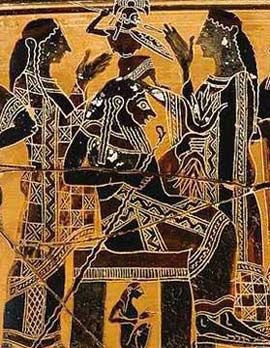
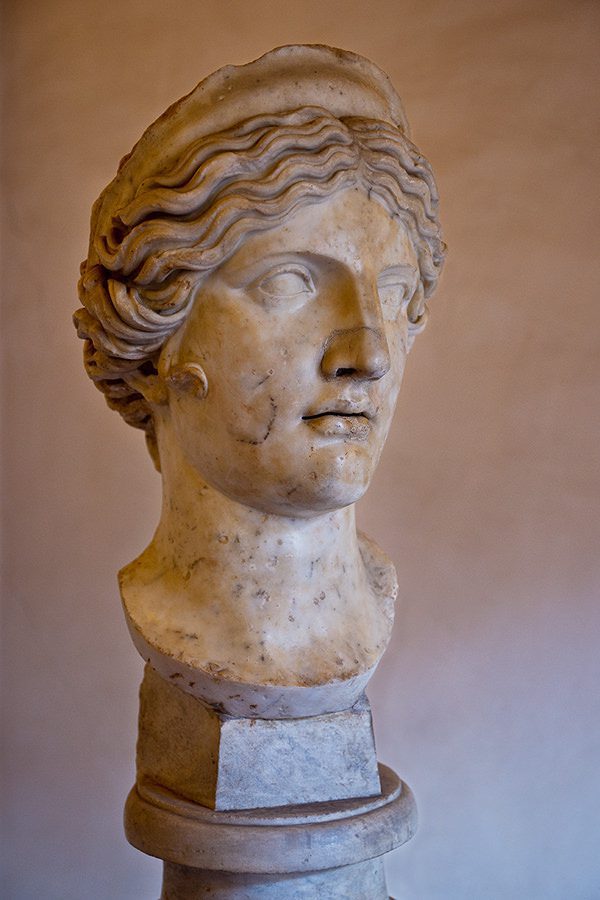
Eileithyia’s physical portrayal serves as a poignant symbol of her divine purpose. Often depicted as a graceful figure draped in flowing robes, her presence exudes both compassion and strength. Artists of antiquity crafted her with delicate features, her gaze reflecting a profound understanding of human experiences. With a serene countenance, she possesses the ability to offer solace and comfort to those immersed in the rigors of childbirth.
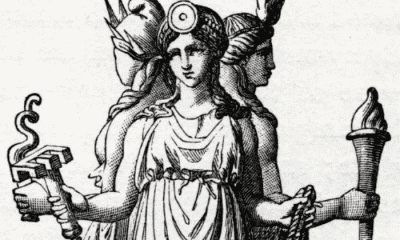
Unlike many prominent figures in Greek mythology, Eileithyia’s physical attributes remain open to interpretation, with few definitive descriptions. Nonetheless, artistic renditions hint at her essence, often portraying her holding a torch, symbolizing the fiery ordeal of labor. In other representations, her uplifted arms symbolize the act of ushering new life into the world, casting light upon the birthing process.
Family
Eileithyia’s lineage links her closely to the divine hierarchy of Olympus. She is widely acknowledged as the offspring of Zeus, the paramount ruler of the gods, and Hera, the esteemed goddess of women and marriage. Among her siblings are illustrious figures of Greek mythology, including Ares, the formidable god of war, and Hebe, the eternal symbol of youth.
Moreover, Eileithyia is known to have a son named Sosipolis, adding depth to her familial connections and perpetuating her legacy through future generations. While her parentage firmly establishes her status within the pantheon of Olympian deities, alternate versions of her origin tale exist. In some interpretations, she is depicted as one of the Moirai, the Fates, accentuating her association with the inexorable cycle of life and death.
Other names
Eileithyia is revered under a myriad of epithets and alternative appellations throughout the vast expanse of Greek mythology. These diverse names encapsulate various facets of her divine essence and are invoked in prayers and hymns with distinct reverence. Among these epithets are “Eileithyiaia,” “Ilithyia,” and “Lucina,” each resonating deeply within the realms of childbirth and maternal protection.
Across different regions of worship, Eileithyia assumes different monikers, enriching her multifaceted identity. In addition to the aforementioned names, variations such as Eleuthyia, Eleutho, Eleitho, and Elysia emerge, each reflecting the nuanced cultural interpretations of her divine presence. In Roman mythology, her counterpart is revered under the name Lucina, further emphasizing her universal significance.
Eileithyia’s name itself holds profound meaning, derived from the Greek word “eleuthô,” signifying “to come to aid” or “to relieve.” This etymological essence encapsulates her pivotal role in facilitating childbirth and alleviating the pains associated with labor. Intriguingly, her name undergoes regional adaptations across Greece, with designations such as Eleuthyia in Crete, Eleuthia or Elysia in Laconia and Messene, and occasionally Eleutho in literary contexts.
Powers and Abilities
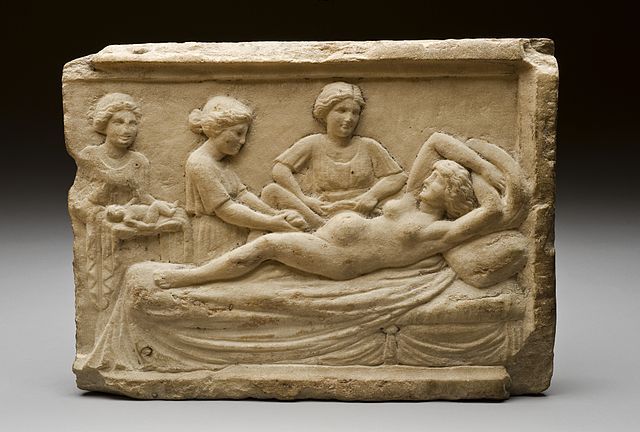
Eileithyia’s dominion over childbirth endowed her with a unique array of powers and abilities, setting her apart from her fellow Olympian deities. Her paramount role was to oversee the safe delivery of infants, ensuring that mothers traversed the threshold of labor with minimal hardship. Revered as a beacon of comfort and relief, her divine presence eased the burdens of laboring women, guiding them through the birthing process with celestial grace.
In addition to her nurturing role, Eileithyia was believed to wield the gift of prophecy, granting her insight into the destinies of mortal beings. Expectant mothers sought her counsel and protection, seeking her divine intercession to safeguard both themselves and their unborn children. In moments of crisis, her wisdom and foresight provided solace, instilling hope amidst the uncertainties of childbirth.
However, Eileithyia’s influence was not solely benevolent. As the goddess of childbirth, she held the power to either facilitate or obstruct the birthing process. Some traditions depict her as the bestower of sharp labor pains, while others delineate her as a dual entity—one who eases labor and another who prolongs it, embodying the dichotomy inherent in childbirth itself.
One of Eileithyia’s most renowned roles unfolded during the birth of Heracles (Hercules), where her involvement was catalyzed by Hera’s jealousy. Delaying the birth, she became a harbinger of maternal anguish, underscoring the intricate dynamics between herself and Hera. Despite their shared association with childbirth, Hera’s involvement often manifested as apprehension and adversity.
Moreover, Eileithyia’s influence extended beyond the physical realm, delving into the realm of destiny and fate. Believed to shape a child’s future and character, she held sway over the determination of their sex, emphasizing the profound interplay between birth and destiny within ancient Greek culture.
Evident across Greece, the widespread reverence for Eileithyia underscored her enduring significance. From the Neolithic era to Roman times, her cult persisted, with shrines dotting the landscape as testament to the unwavering faith placed in her ability to ensure safe childbirth. Women in labor invoked her name, offering prayers and tributes to secure her favor and facilitate a smooth delivery.
Notably, Eileithyia’s association with Artemis, the goddess of the hunt and childbirth, added depth to her mythos. Their juxtaposition likely stemmed from Artemis’ affinity with wild animals, whose instinctual birthing processes mirrored the desired outcome of human childbirth—swift, natural, and unimpeded.
Modern Day Influence
Though Eileithyia may not command the same recognition as some other goddesses in contemporary times, her enduring influence permeates the modern world. Her guardianship over infants and new mothers resonates deeply with the contemporary emphasis on maternal health and safe birthing practices. The iconic imagery of Eileithyia, depicted as a woman bearing a torch to symbolize the travail of childbirth, serves as a potent reminder of women’s fortitude and resilience in confronting adversity.
Despite the passage of ages, Eileithyia’s legacy remains palpable in today’s culture and society. As the timeless embodiment of childbirth, her presence has inspired countless artistic creations, literary works, and musical compositions, offering solace and inspiration to expectant mothers across the globe. In the contemporary era, her influence reverberates through childbirth rituals and traditions, as well as in the enduring reverence for the sacred journey of bringing forth new life.
Furthermore, Eileithyia’s essence of compassion and maternal protection continues to resonate within the realms of healthcare and wellness. From the compassionate care provided by midwives to the advancements in obstetrics and maternal healthcare, her divine archetype continues to inform our approach to the miracle of childbirth. Though formal worship of Eileithyia has waned over time, her legacy endures, finding echoes in the childbirth goddesses of other cultures worldwide. Moreover, the perennial anxieties and aspirations surrounding childbirth persist, bridging ancient traditions with contemporary experiences.
Eileithyia’s portrayal as a multifaceted deity mirrors the inherent uncertainties entwined with childbirth, a phenomenon that modern medical advancements have undoubtedly ameliorated. Yet, the emotional and physical intensity of childbirth remains a formidable force, perpetuating the need for compassionate support and guidance. In this regard, the roles of midwives and doulas echo the benevolent presence of Eileithyia, offering invaluable assistance and reassurance during the birthing process. By delving into the intricacies of Eileithyia’s mythos and understanding the ancient anxieties surrounding childbirth, we garner a deeper appreciation for the strides in modern medicine and the enduring significance of emotional sustenance during this profound journey.
Related Images





Sources
Britannica. (n.d.). Eileithyia: Greek goddess of childbirth. In Encyclopaedia Britannica. Retrieved November 5, 2025, from https://www.britannica.com/topic/Eileithyia
History Cooperative. (2023, April 12). Eileithyia: Greek goddess of childbirth and labor pains. History Cooperative. https://historycooperative.org/eileithyia/
National Library of Medicine. (2022). Eileithyia: The goddess of labour. Journal of Obstetrics and Gynecology History Review, PMC9168567. https://pmc.ncbi.nlm.nih.gov/articles/PMC9168567/
Theoi Project. (n.d.). Eileithyia – Greek goddess of childbirth (Roman Lucina). Retrieved November 5, 2025, from https://www.theoi.com/Ouranios/Eileithyia.html
Wikipedia. (2025, October 30). Eileithyia. In Wikipedia: The Free Encyclopedia. https://en.wikipedia.org/wiki/Eileithyia
World History Encyclopedia. (2024, July 15). Eileithyia. World History Publishing. https://www.worldhistory.org/Eileithyia/
Greek Gods and Goddesses.net. (2023). Eileithyia – Greek goddess of childbirth. GreekGodsAndGoddesses.net. https://greekgodsandgoddesses.net/goddesses/eileithyia/
Study.com. (2022). Eileithyia in Greek mythology: Goddess of childbirth. Study.com. https://study.com/academy/lesson/eileithyia-greek-mythology-goddess-childbirth.html
Frequently Asked Questions
Who is Eileithyia in Greek mythology?
Eileithyia is the Greek goddess of childbirth and midwifery, revered as the divine protector of mothers and newborns. She was believed to control the pains and timing of labor, ensuring safe deliveries. As the daughter of Zeus and Hera, she played a vital role in Greek mythology as the goddess who oversaw the sacred act of bringing new life into the world.
What are Eileithyia’s powers and abilities?
Eileithyia possessed the power to both ease and prolong childbirth. Her presence could bring relief to laboring mothers or, if angered, delay birth indefinitely. She also symbolized compassion and divine insight, sometimes associated with prophetic powers concerning the destiny of newborns. Her dual nature represented both the pain and miracle of creation.
What symbols are associated with Eileithyia?
Eileithyia is often depicted holding a torch, symbolizing the light that guides life into the world and the fiery trials of labor. In some depictions, she raises her arms, representing the act of aiding childbirth. These symbols capture her role as both guide and guardian during one of life’s most transformative moments.
What is the story of Eileithyia and the birth of Heracles?
According to myth, when Alcmene was giving birth to Heracles, Hera sent Eileithyia to delay the delivery out of jealousy. Eileithyia sat with her legs crossed and fingers intertwined, magically preventing the birth. Only when a maid tricked her into standing did the spell break, allowing Heracles to be born. This story reflects Eileithyia’s immense power over life and birth.
Is Eileithyia still worshipped or remembered today?
While formal worship of Eileithyia has faded, her legacy continues through modern childbirth rituals and the reverence for midwives and doulas. Her name still appears in archaeological sites, art, and even hospitals across Greece and Crete. She remains a symbol of compassion, feminine strength, and the timeless miracle of childbirth.