

Draugr : The Undead Warriors of Norse Legend
Listen
At a glance
| Description | |
|---|---|
| Origin | Norse Mythology |
| Classification | Ghosts |
| Family Members | N/A |
| Region | Norway, Iceland, Finland |
| Associated With | Death, Shapeshifting, Strength |
Mythlok Perspective
From the Mythlok perspective, the Draugr represents death as resistance rather than transition. Its power does not arise from the spirit world, but from the refusal to release earthly identity. Strength, memory, and rage persist beyond life, turning the corpse into a vessel of stagnation instead of renewal. When compared cross-culturally, the Draugr mirrors figures such as the Slavic Upir and the Japanese Onryō, yet differs in embodiment. Where the Onryō manifests emotional vengeance and the Upir reflects contamination and fear, the Draugr remains physically present. This contrast highlights a worldview in which imbalance is not symbolic, but tangible, capable of poisoning land, community, and memory itself.
Draugr
Introduction
The Draugr, alternatively referred to as draug, dréag, draugar, draugur, dreygur, or draugen, emerges as a prominent undead entity within Norse mythology and Scandinavian folklore. With origins deeply rooted in ancient Norse tales, these creatures are steeped in haunting legends, possess supernatural abilities, and harbor a gruesome appetite for human flesh. Unlike conventional ghostly apparitions, the Draugr transcend mere specters; they are reanimated corpses propelled by vengeful spirits and animated by an insatiable hunger for the living.
Physical Traits
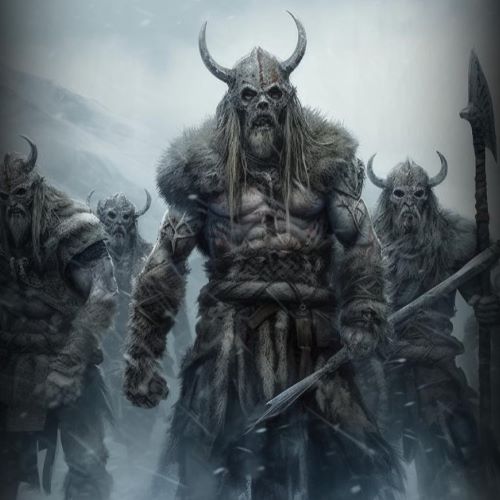
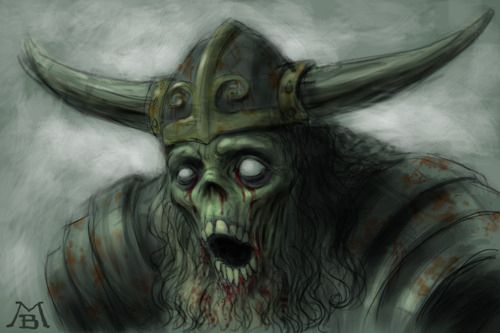
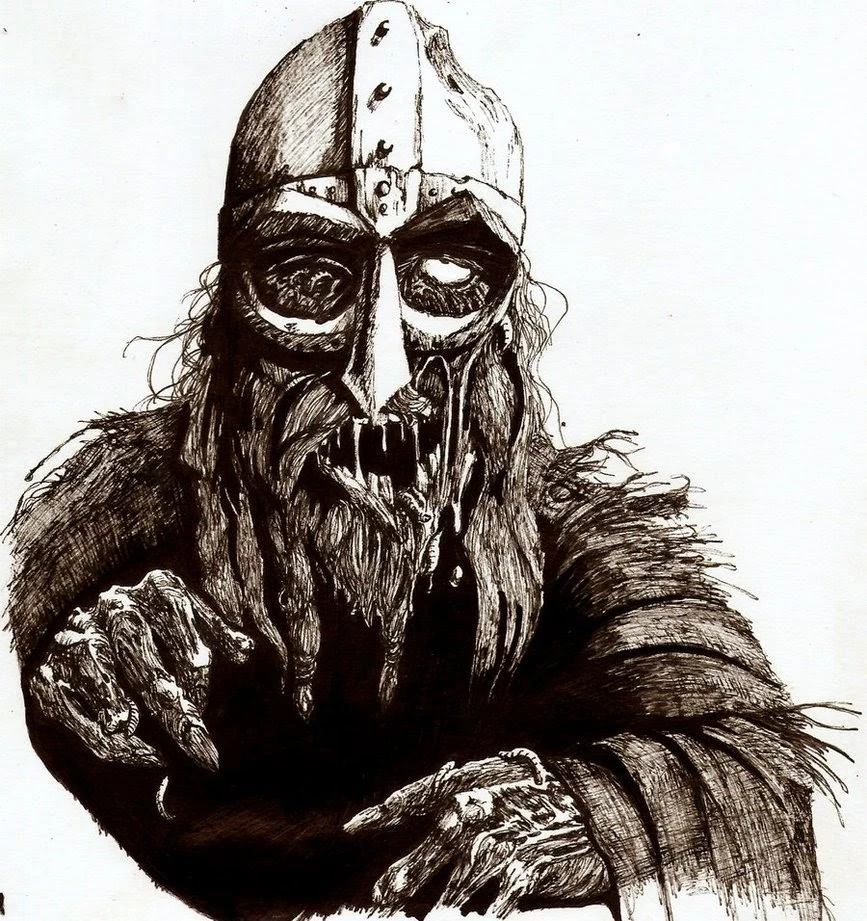
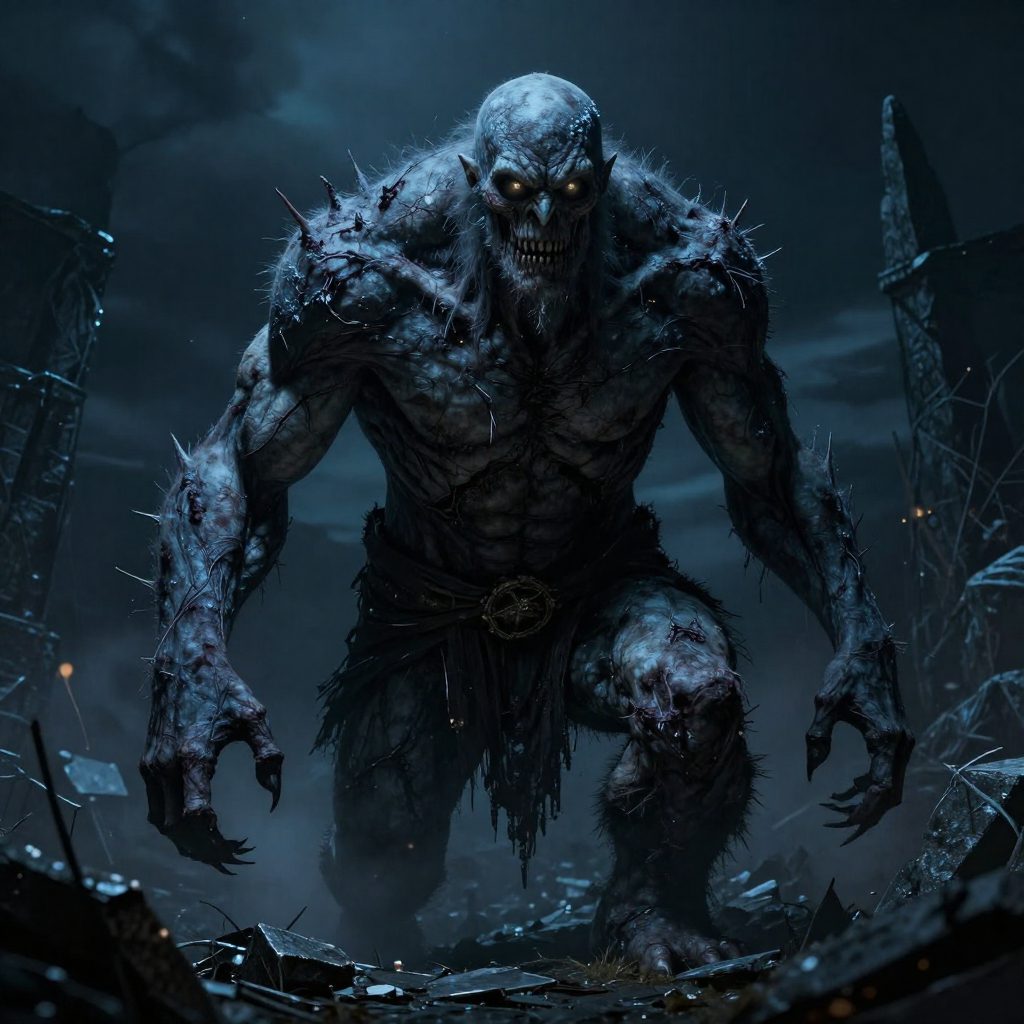
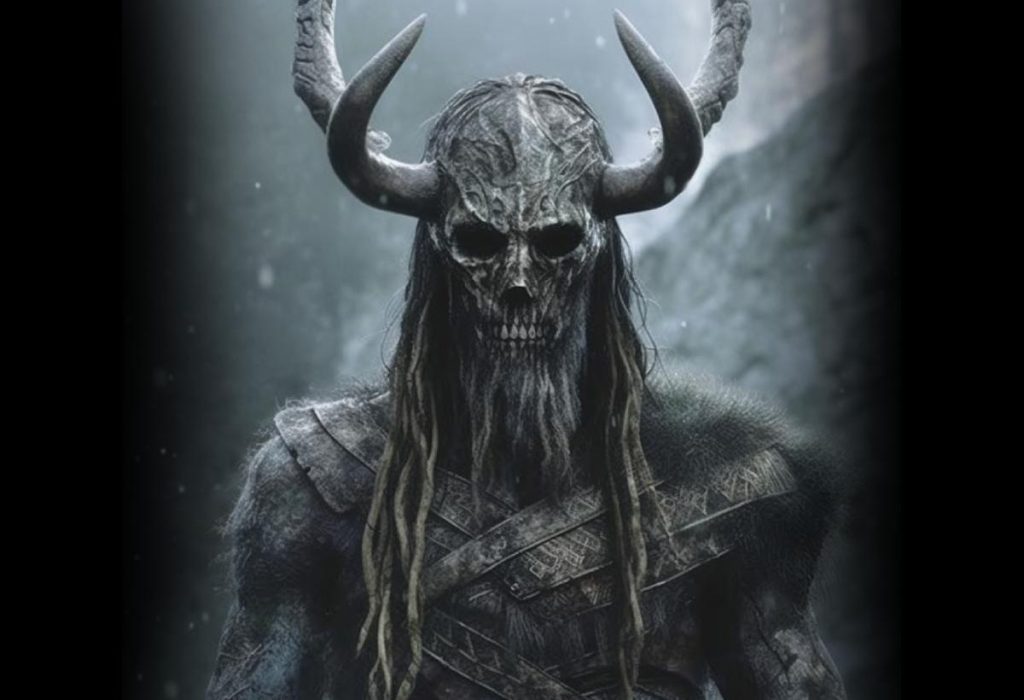
Draugar are commonly portrayed as corporeal entities, a stark departure from the intangible spiritual forms of ghosts. As revenants or animated corpses, they inhabit their graves or regal abodes, frequently guarding treasures interred alongside them in burial mounds. These creatures are described as fearsome and grotesque in their physical manifestation. Once buried and in a state of decomposition, their bodies undergo reanimation, trapped in a perpetual state of decay. Their flesh is often depicted as black or bluish, emitting a putrid stench of death. Their eyes, when present, gleam like glowing embers, radiating an otherworldly luminescence. Possessing superhuman strength, they can shatter bones and wield cumbersome weapons effortlessly. Legends also attribute to them the ability to shapeshift, assuming more monstrous forms to intimidate their adversaries when provoked.
Family
The draugr are not a distinct species within Norse mythology but rather the twisted embodiment of individuals who have met an unfortunate fate. Those who died dishonorable deaths, were not properly buried, or were cursed, were more susceptible to becoming draugr. This fate could befall warriors who died in battle but were not deemed worthy of Valhalla, the resting place for honored heroes. It could also encompass those who committed heinous crimes in their living days, condemned to return as vengeful spirits. Interestingly, draugr were not always portrayed as solely malevolent. In some sagas, they appear as protectors of their burial mounds and their treasures, lashing out only at those who dared to disturb their final resting places.
Other names
In the language of Old Norse, the term “draugr” held multiple meanings, including a tree trunk or dried dead wood, and in poetic contexts, it could denote a man or warrior. The 1869 translation of Grettis saga referred to the Draugr as “barrow-wight.” In Swedish, “draug” is a more recent borrowing from West Norse, as the native Swedish term “drög” has evolved to signify “a pale, ineffectual, and slow-minded person who drags himself along.” While commonly known as “draugr,” these undead entities boast various names depending on the specific region and era within Norse mythology. In addition to “draugr,” Old Norse texts also use terms like “draug,” “dréag,” or “dreygur.” Other appellations include “haugbúi” (barrow-dweller) and “aptrganga” (again-walker), underlining their association with burial mounds and their restless existence.
Powers and Abilities
Draugar are renowned in ancient Norse narratives for their possession of supernatural powers and capabilities. They are famed for their extraordinary strength, shape-shifting prowess, and insatiable craving for human flesh. Additionally, they are known to hoard treasures within their tombs. Exhibiting a diverse array of potent abilities, Draugar stand as formidable adversaries. Their superhuman strength grants them dominance over most humans effortlessly, while their near invulnerability to conventional weapons renders them challenging to defeat in direct confrontations.
Certain accounts depict them as possessing the ability to morph into monstrous forms, instilling heightened fear and wreaking havoc. Among their most chilling attributes is their connection to the realm of the deceased. Allegedly, they possess the capability to drain the life force of the living, gradually sapping their vitality and ultimately leading to their demise. Moreover, they are believed to wield a degree of magical proficiency, enabling them to cast curses and inflict various forms of harm upon their victims.
Modern Day Influence
Draugar have left a significant mark on contemporary media, making appearances in popular video games such as Skyrim and Valheim. Game developers have skillfully brought to life their haunting visages, distinctive abilities, and behaviors, seamlessly weaving them into the fabric of the game’s narrative. This enduring presence of Draugar continues to captivate both audiences and creators in the modern era. Their iconic image finds its way into various forms of media, spanning fantasy literature, video games, and role-playing games. Whether portrayed as terrifying antagonists akin to those in J.R.R. Tolkien’s “The Hobbit” or as monstrous adversaries featured in acclaimed video games like “The Elder Scrolls V: Skyrim,” Draugar evoke both awe and dread. Their inclusion in these diverse works stands as a testament to their lasting impact and the enduring allure of Norse mythology.
Related Images
Sources
Lindow, J. (2001). Norse mythology: A guide to the gods, heroes, rituals, and beliefs. Oxford University Press. https://www.britannica.com/topic/draugr
National Museum of Denmark. (n.d.). Viking beliefs and burial traditions. https://en.natmus.dk/en/discover/history/viking-age/religion/
University of Oslo. (n.d.). Old Norse religion and death beliefs. https://www.hf.uio.no/ifikk/english/research/projects/prehistoric-religion/
McCoy, D. (2012). Draugr. Norse Mythology for Smart People. https://norse-mythology.org/creatures/draugr/
Byock, J. (1990). The Saga of the Volsungs. University of California Press.
Davidson, H. R. E. (1990). Gods and Myths of Northern Europe. Penguin.
Simek, R. (2007). Dictionary of Northern Mythology. D.S. Brewer.
Price, N. (2002). The Viking Way: Religion and War in Late Iron Age Scandinavia. Journal of Archaeological Research.
Frequently Asked Questions
Who were the Draugr?
Undead beings from Norse legend who rose from their graves with physical bodies and supernatural powers.
Were Draugr ghosts or zombies?
Neither. They were corporeal undead with intelligence and strength.
Why did Draugr rise from the dead?
Due to greed, rage, unfinished business, or attachment to worldly possessions.
What powers did Draugr have?
Superhuman strength, shapeshifting, size manipulation, curse spreading, and weather influence.
Are Draugr found in modern culture?
Yes. They heavily influenced fantasy literature, games, and undead archetypes.
