
Daltokki : The Immortal Moon Rabbit of Korea
Listen
At a glance
| Description | |
|---|---|
| Origin | Korean Mythology |
| Classification | Animals |
| Family Members | N/A |
| Region | South Korea |
| Associated With | Moon, Immortality |
Daltokki
Introduction
Daltokki, the beloved moon rabbit of Korean mythology, is one of the most enduring celestial figures in East Asian folklore. Appearing as a radiant white rabbit on the lunar surface, Daltokki is central to a tale that blends Buddhist compassion with Korean cultural symbolism. In the well-known story, a rabbit, a fox, and a monkey encounter a hungry beggar who asks for food. While the fox brings fish and the monkey offers fruit, the rabbit can find nothing meaningful to give. In an act of pure selflessness, it throws itself into a fire to provide its own body as nourishment. The beggar, revealed to be a heavenly emperor in disguise, rescues the rabbit, restores its life, and places it on the moon as a guardian whose image would inspire generations.
This narrative, adapted from Buddhist Jataka tales, became deeply rooted in Korean culture, where Daltokki symbolises virtue, sacrifice, and the rewards of moral integrity. During Chuseok, families often retell the moon rabbit story as part of seasonal traditions, linking the legend to themes of gratitude and abundance. Over centuries, Daltokki has transformed from a simple moral guide into a cultural emblem that continues to shape Korean identity, imagination, and artistic expression.
Physical Traits
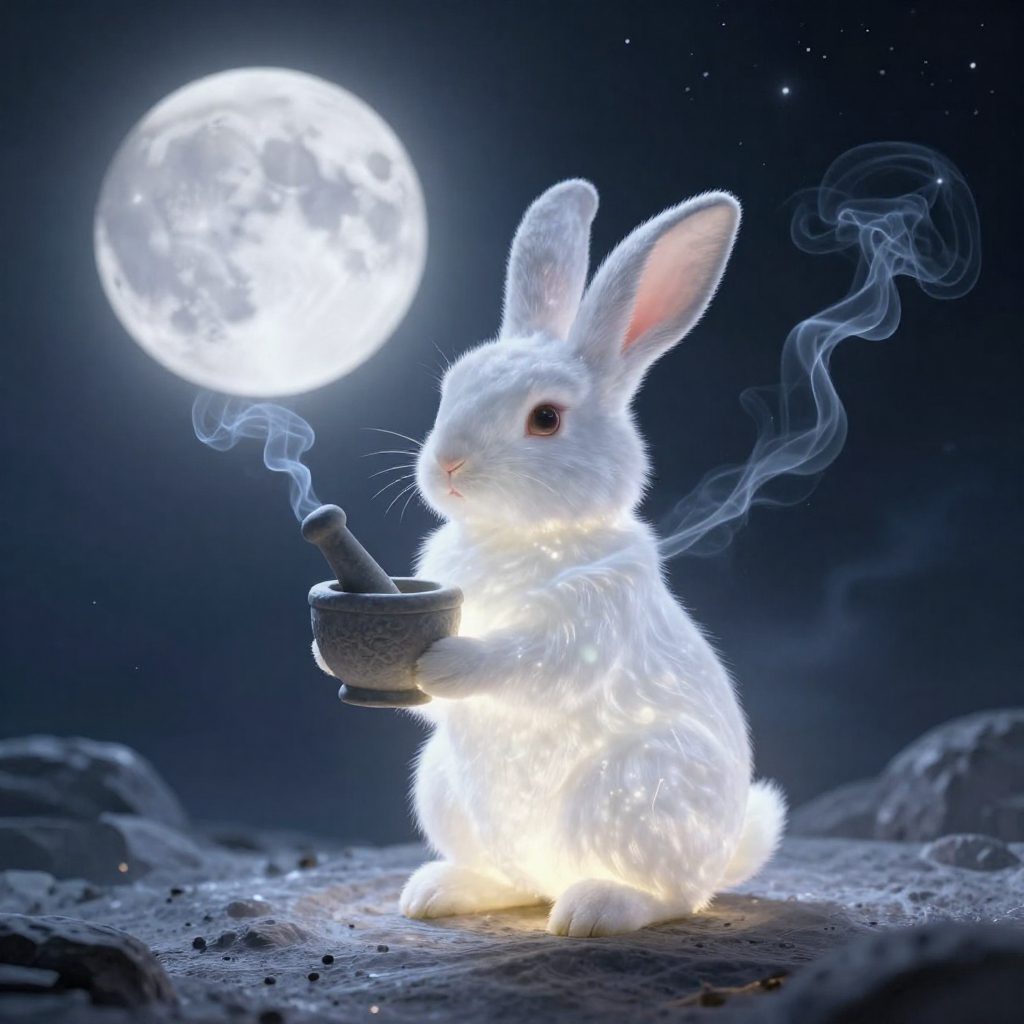
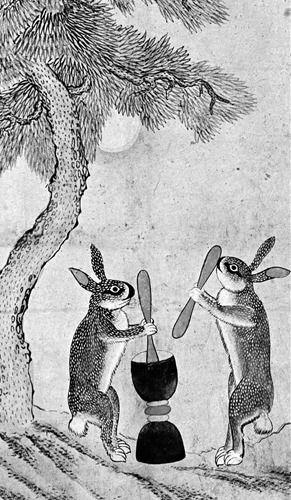
Daltokki is traditionally envisioned as a glowing white rabbit whose silhouette appears in the dark lunar plains—the mare—visible from Earth. Its defining posture shows it bent over a mortar and pestle, pounding tteok (rice cakes), a visual interpretation of the moon’s shaded patterns. Artists often place a faint veil of smoke or the branches of a gyesu tree around it, echoing the moment when the celestial emperor lifted the rabbit from the flames and immortalised its compassion.
Unlike earthly rabbits, Daltokki radiates calm luminosity, representing purity and gentle perseverance. In some modern interpretations, two rabbits appear together on the moon, symbolising unity and harmony during family-centred holidays. Whether depicted in traditional paintings or digital media, Daltokki remains an iconic lunar figure whose appearance reinforces ideas of fertility, renewal, and the timeless rhythm of the moon.
Family
Korean mythology does not assign Daltokki a family lineage or divine ancestry. Instead, the moon rabbit exists as an isolated guardian figure whose independence highlights the weight of its sacrifice. The animals in the origin tale—the fox and monkey—serve only as companions during the moral test and play no ongoing role in Daltokki’s celestial life.
While neighbouring cultures introduce variations, such as the Jade Rabbit living alongside the moon goddess Chang’e in Chinese mythology, Korean storytelling emphasises Daltokki’s solitary presence. Its lack of familial associations allows the rabbit to embody universal ideals rather than represent a specific mythic bloodline. Daltokki becomes an archetype of devotion and service, standing alone yet connected to all through its symbolic guardianship of the moon.
Other names
Although Daltokki is the most familiar Korean name, the moon rabbit shares related identities across East Asia. In China, it appears as the Jade Rabbit, Yùtù, associated with elixirs of immortality. Japanese tradition calls it Tsuki no Usagi, where it features prominently in folk tales and modern pop culture. Vietnam refers to the figure as Thỏ Ngọc, often linked to themes of purity and longevity.
Within Korea, alternate expressions such as “moon hare” or “the rabbit in the moon” appear in seasonal folklore, especially during Chuseok when families observe the lunar markings together. These naming variations highlight the widespread cultural resonance of the moon rabbit and how each region adapts the symbol to its own spiritual and social values.
Powers and Abilities
Daltokki’s abilities are not defined by physical strength but by spiritual significance. After being elevated to the moon, it gains a form of symbolic immortality, living eternally as a celestial presence. Its constant task of pounding tteok connects it to Korean themes of prosperity, celebration, and communal harmony. In some East Asian versions, the rabbit creates an elixir of eternal life, enhancing its association with purity, healing, and divine favour.
Its role as a lunar guardian also grants Daltokki an aura of protection. Koreans historically believed that the moon rabbit’s steady labour contributed to agricultural blessings and safe transitions through the moon’s phases. Although modern stories sometimes grant Daltokki more fantastical traits—agility, magic, or heightened perception—traditional Korean mythology portrays its power as symbolic, representing enduring goodness rather than supernatural force.
Modern Day Influence
Daltokki thrives in contemporary Korean culture, transitioning seamlessly from folklore to modern media. Children’s books and animated stories present the moon rabbit as an approachable figure teaching values of kindness and perseverance. During Chuseok, its imagery appears in decorations, songs, and festival activities centred around rice cakes, reinforcing its connection to abundance and gratitude.
In entertainment and pop culture, Daltokki has become a visual motif embraced by K-pop fandoms, artists, and illustrators. Its likeness appears in album art, music videos, character design, and social media symbolism. Beyond Korea, the moon rabbit influences global media: Sailor Moon draws inspiration from the Japanese variant, and numerous video games—from Cookie Run to role-playing titles—feature lunar rabbit characters rooted in the same mythology.
Daltokki’s symbolism extends even into science and technology. China named its lunar rover Yutu, reflecting the broader East Asian tradition of honouring the moon rabbit in space exploration. Korean webcomics and fantasy literature frequently reinterpret Daltokki as a cosmic being with deeper mystical roles, demonstrating how the ancient myth continues evolving through digital storytelling.
Today, Daltokki stands at the crossroads of heritage and innovation—a mythic figure thriving in modern imagination while preserving the values that shaped its earliest tales.
Related Images
Source
Chuseok.info. (2025). The story of the moon rabbit. https://www.chuseok.info/rabbit
Gwangju News. (2018). The moon rabbit (Daltokki, 달토끼). https://gwangjunewsgic.com/arts-culture/korean-culture/daltokki/
Hikaya.ph. (2025). Daltokki (the moon rabbit). https://www.hikaya.ph/products/daltokki
Lingopie. (2025). 12 Korean myths and legends everyone learning…. https://lingopie.com/blog/korean-myths/
Peterson, M. (2003). Korean mythology: Legends and folktales. Stone Bridge Press.
Wikipedia. (2025). Moon rabbit. https://en.wikipedia.org/wiki/Moon_Rabbit
Yoon, S. (2019). Korean folktales for children: Moon rabbit edition. Korean Cultural Center.
90 Day Korean. (n.d.). Korean myths – The most interesting legends and folktales. https://www.90daykorean.com/korean-myths/
Frequently Asked Questions
What is Daltokki in Korean mythology?
Daltokki is the moon rabbit believed to live on the lunar surface, pounding rice cakes and symbolising sacrifice, virtue, and prosperity.
Why is there a rabbit on the moon in Korean folklore?
The image comes from a tale where a rabbit sacrifices itself for a hungry traveller, earning a place on the moon as a celestial guardian.
Does Daltokki make tteok or an elixir?
Korean myths focus on tteok (rice cakes), while some East Asian versions describe the rabbit creating an elixir of immortality.
Is Daltokki connected to the Chinese Jade Rabbit?
Yes, both belong to the same pan-East Asian lunar tradition, though Korean stories emphasize selflessness rather than alchemy.
How is Daltokki celebrated today?
It appears in Chuseok traditions, children’s stories, K-pop imagery, video games, and modern reinterpretations of Korean folklore.