


Cheoyong : The Korean Guardian of Dance and Protection
Listen
At a glance
| Description | |
|---|---|
| Origin | Korean Mythology |
| Classification | Demigods |
| Family Members | Yongwang (Father) |
| Region | South Korea |
| Associated With | Protection, Dance, Healing |
Cheoyong
Introduction
Cheoyong is one of the most enduring figures in Korean mythology, embedded deeply in the cultural memory of the Unified Silla period (668–935 CE). His story first appears in the Samguk Yusa, where he is described as the son of the East Sea Dragon King who entered the human world during the reign of King Heongang. His arrival, shrouded in thick fog near Gaeunpo (modern-day Ulsan), signaled a rare moment when divine forces touched the earthly realm. Cheoyong soon became known not just as a visitor from the sea but as a symbol of protection, particularly against misfortune and disease.
His tale reaches its climax when he returns home to find a plague spirit lying beside his wife. Instead of reacting with violence, he chooses to sing and dance, demonstrating extraordinary emotional strength and spiritual refinement. This act so moves the spirit that it vows never to enter a home marked with Cheoyong’s image. From that moment onward, Cheoyong became a powerful talismanic figure, his visage adorning doors across the Silla capital as a guardian against evil. The narrative blends themes of forgiveness, artistic power, and harmony between humans and the supernatural—ideas that remain central to his legacy today.
Physical Traits
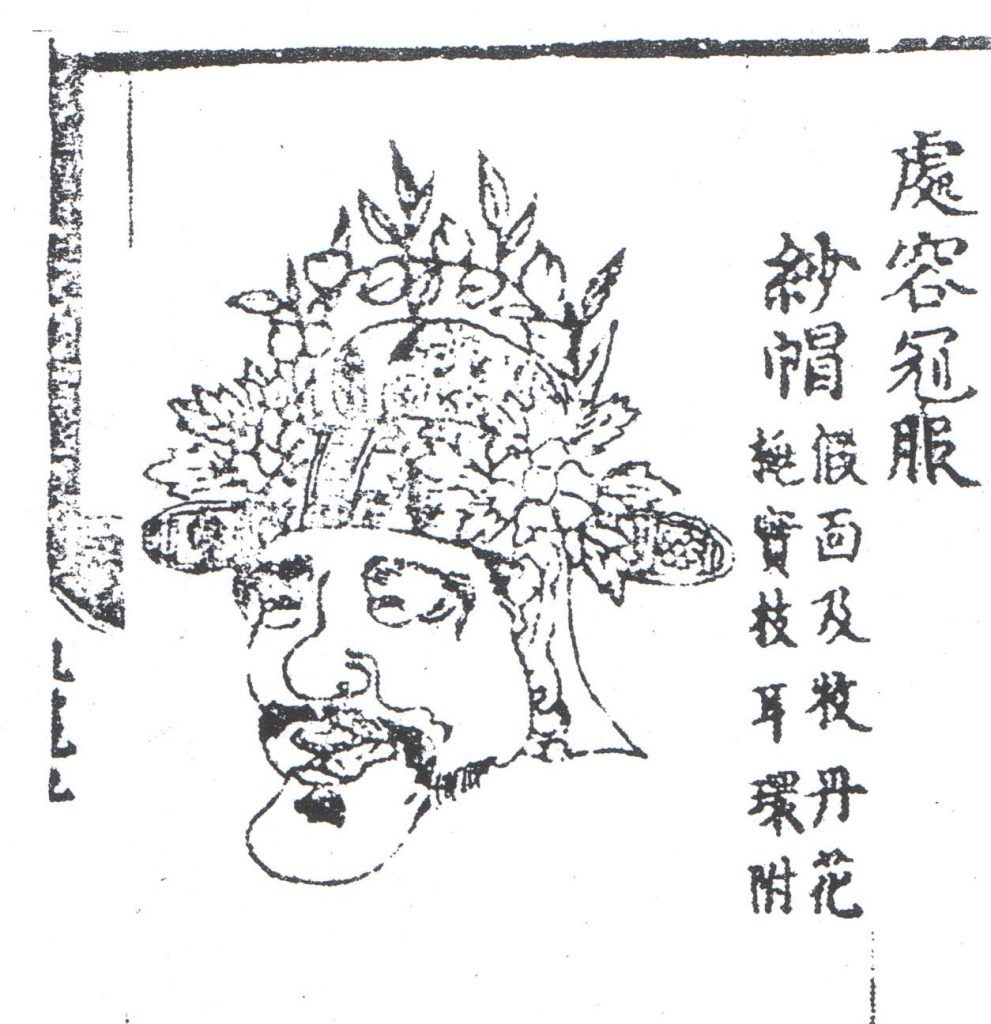
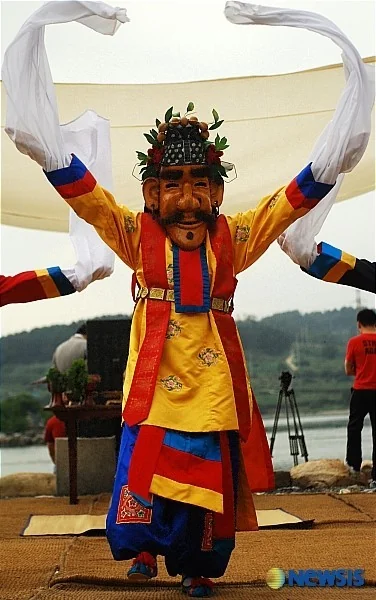
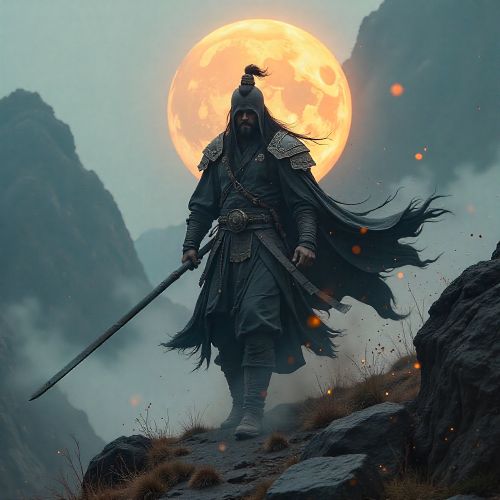
Descriptions of Cheoyong are drawn primarily from the masks and costumes used in Cheoyongmu, the traditional dance inspired by his legend. His depiction emphasizes charisma and spiritual authority rather than mortal physicality. The Cheoyong mask typically features a vivid red face, a wide smiling mouth, and expressive eyes, projecting vitality and confidence meant to repel hostile spirits. Facial hair—often a mustache and beard—adds maturity and dignity, while earrings and an official hat adorned with peony blossoms symbolize prosperity and long life.
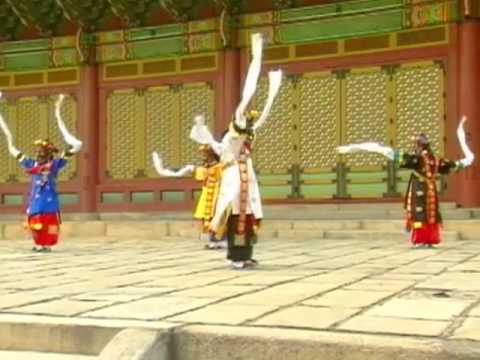
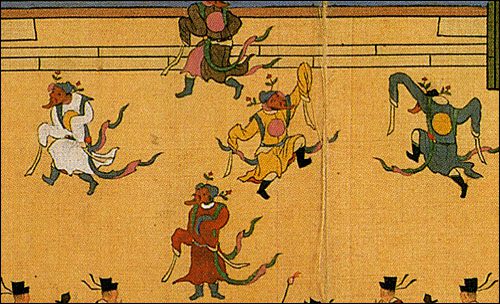
Dancers portraying Cheoyong wear costumes in the five elemental colors: blue, red, yellow, white, and black. These represent the cardinal directions and align him with cosmological balance in East Asian philosophy. The long, flowing sleeves and embroidered robes create sweeping movements meant to echo divine presence. This visual identity is inseparable from his mythic role: every color, gesture, and mask detail reinforces Cheoyong’s function as a protector capable of restoring order where disease or chaos threaten.
Family
Cheoyong’s lineage is rooted in the maritime realm, making him both a cultural hero and a divine emissary. As one of the sons of the East Sea Dragon King, he belongs to a lineage associated with control over weather, tides, and aquatic life—forces essential to Silla’s prosperity as a coastal kingdom. His father’s appearance after the construction of Manghaesa Temple frames Cheoyong as a gift to the king, a bridge between the ocean’s spiritual domain and the human world.
While his six brothers are mentioned in early texts, their names and individual stories remain unknown, highlighting Cheoyong as the one chosen for close interaction with humans. His marriage to a woman from the Silla capital symbolizes the union of two worlds—divine and mortal—and reinforces his position as a benevolent figure capable of living harmoniously among people while carrying the authority of the Dragon King’s realm.
Other names
The name Cheoyong (處容) is the most commonly used across historical and cultural sources, though variations appear depending on linguistic systems and contexts. In romanization, it may appear as Ch’ŏyong under the McCune–Reischauer system or Cheoyong in modern Korean romanization. When associated with his ritual performance, the term Cheoyongmu refers specifically to the dance that represents his legend.
Some early scholars proposed connections between Cheoyong and shamanic figures or regional spiritual guardians, but these associations remain speculative and are not supported by primary sources. What remains consistent is that all references emphasize his noble demeanor, his artistic expression, and his protective energy.
Powers and Abilities
Cheoyong is not a warrior deity nor a being of destructive force. Instead, his power manifests through artistic expression and spiritual presence. His most famous ability—driving away the plague spirit through song and dance—demonstrates a unique form of guardian energy based on emotional intelligence, ritual performance, and spiritual resonance.
His image became a talisman across Silla homes, signaling that his protective power extended beyond the moment of the legend into everyday life. As a divine son, Cheoyong also carries with him the elemental authority of the sea, symbolically connected to cleansing, renewal, and the ebb and flow of life forces. In shamanic interpretations, his dance represents purification and realignment with cosmic harmony, making him a cultural embodiment of peaceful but decisive spiritual defense.
Modern Day Influence
Cheoyong’s influence continues across multiple layers of Korean culture. The Cheoyongmu dance remains one of Korea’s most treasured traditional performances and was recognized by UNESCO in 2009 as an Intangible Cultural Heritage of Humanity. This court dance evolved from an exorcistic ritual into a refined ceremonial art, preserving the colors, movements, and musical styles associated with Silla aesthetics.
Ulsan, believed to be the location of Cheoyong’s earthly arrival, has long celebrated his legacy through festivals and cultural events. Even when festival names changed over time, elements honoring Cheoyong continued as part of local identity.
In modern storytelling, Cheoyong appears in novels, theatre, television, and visual art, often reimagined as a supernatural protector or mysterious outsider. His symbolic meaning—protection against chaos, dignity in adversity, and the transformative power of art—remains deeply relevant. Cheoyong’s mask is still used as a decorative talisman, bridging ancient belief and contemporary culture, demonstrating how mythology can adapt and endure without losing its essence.
Related Images

Source
Cultural Heritage Administration. (n.d.). The Dance of Cheoyong (Cheoyongmu). https://english.cha.go.kr/cop/bbs/selectBoardArticle.do?ctgryLrcls=&nttId=58142&bbsId=BBSMSTR_1205&uniq=0&mn=EN_03_01
Ilyon. (1281). Samguk yusa: Memorabilia of the Three Kingdoms (H. Lee, Trans.). UCLA International and Area Studies. (Original work published 1281)
NamuWiki. (2025, January 6). Cheoyong. https://en.namu.wiki/w/%EC%B2%98%EC%9A%A9
National Intangible Heritage Center. (2022, January 26). The Cultural Heritage Series – Episode 7 Cheoyongmu: The Dance of Cheoyong. https://www.inkocentre.org/the_cultural_heritage_series_episode7.html
Oppert, E. H. (2013). A forbidden nation: A history of Korea before Japan. Forgotten Books. (Discusses Silla folklore including Cheoyong)
Wikipedia contributors. (2025). Korean mythology. Wikipedia. https://en.wikipedia.org/wiki/Korean_mythology
Youn, M. (2009). Korean shamanism: The cultural paradox. Jimoondang Publishing.
Wikipedia contributors. (2025). Cheoyongmu. In Wikipedia. Retrieved from https://en.wikipedia.org/wiki/Cheoyongmu
UNESCO. (2009). Cheoyongmu. Intangible Cultural Heritage of Humanity. Retrieved from https://ich.unesco.org/en/RL/cheoyongmu-00189
Lee, P. H. (1981). Sourcebook of Korean Civilization: Volume One. Columbia University Press.
Grayson, J. H. (2002). Korea: A Religious History. Routledge.
Kendall, L. (1985). Shamans, Housewives, and Other Restless Spirits: Women in Korean Ritual Life. University of Hawaii Press.
Rhi, J. (1998). “Masks and Rituals in Korean Shamanism.” Asian Folklore Studies, 57(2), 211–230.
Nelson, S. (1996). Korean Shamanism: The Cultural Paradox. Seoul: Jimoondang Publishing.
Frequently Asked Questions
Who is Cheoyong in Korean mythology?
Cheoyong is the son of the East Sea Dragon King who became a protector against disease and evil spirits, famous for driving away a plague deity through dance.
What does the Cheoyong mask represent?
The mask symbolizes vitality, protection, and spiritual authority, designed to repel harmful forces through its bold colors and expressive features.
Why is Cheoyong associated with disease prevention?
According to legend, the plague spirit promised never to enter a home marked with Cheoyong’s image, making him a traditional guardian against illness.
What is the Cheoyongmu dance?
Cheoyongmu is a ritual court dance based on Cheoyong’s story, performed to purify spaces and drive away evil; it is recognized by UNESCO as cultural heritage.
Is Cheoyong still important in modern Korea?
Yes. Cheoyong appears in festivals, artworks, academic studies, and cultural performances, remaining a symbol of resilience and spiritual harmony.

