

Xilonen : The Aztec Goddess of Young Maize
Listen
At a glance
| Description | |
|---|---|
| Origin | Aztec Mythology |
| Classification | Gods |
| Family Members | Chicomecóatl (aspectal counterpart), Centeōtl (symbolic counterpart), Mictlantecuhtli |
| Region | Mexico |
| Associated With | Young maize, Fertility, Renewal, Sacrifice |
The Mythlok Perspective
In Mythlok’s perspective, Xilonen represents one of the most overlooked truths in mythic thought: civilizations do not survive because of strength, but because they protect what is weakest. As the goddess of young maize, she presides over a moment of risk rather than reward, when sustenance is visible but not yet secured. This places her closer to Persephone’s seasonal descent and Demeter’s early harvest aspects in Greek tradition, both of which focus on vulnerability rather than abundance. Across cultures, youthful grain deities serve as reminders that growth demands care, restraint, and responsibility, not celebration alone. Reverence, in these myths, is not gratitude for success but vigilance against loss.
Xilonen
Introduction
Xilonen stands among the most delicate yet vital divine figures of Aztec religious thought. Revered as the goddess of young and tender maize, she represented the earliest, most vulnerable stage of the crop that sustained the entire civilization. In a society where maize was not simply food but identity, economy, and cosmology intertwined, Xilonen embodied hope itself. Her presence marked the moment when planted seeds had survived long enough to promise nourishment, but not yet long enough to guarantee abundance. This liminal stage made her worship both urgent and solemn. Rituals dedicated to Xilonen reflected the Aztec understanding that agriculture depended not only on human labor, but on maintaining harmony with divine forces that governed growth, rain, fertility, and time.
Physical Traits
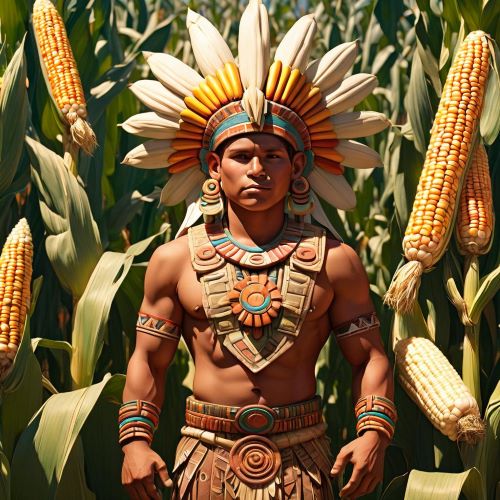
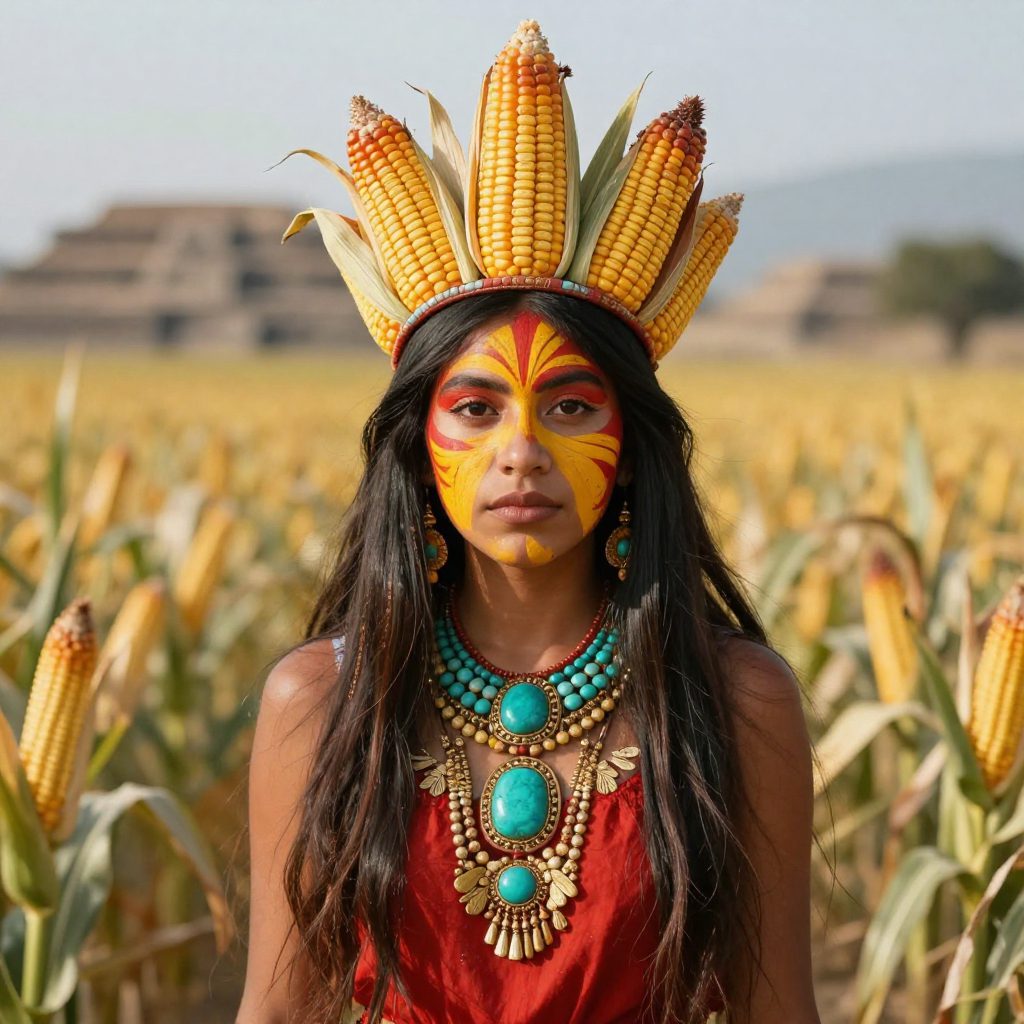
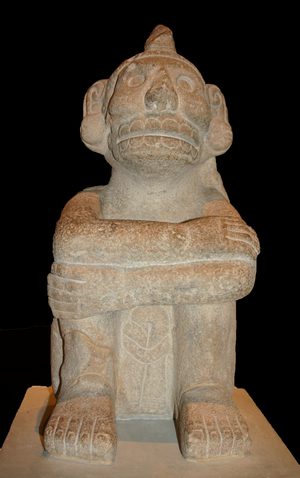
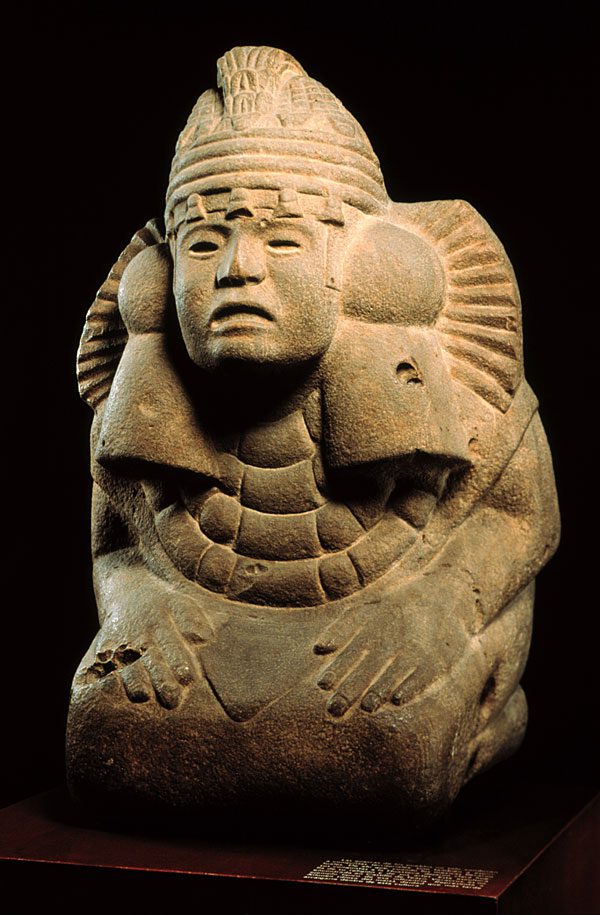
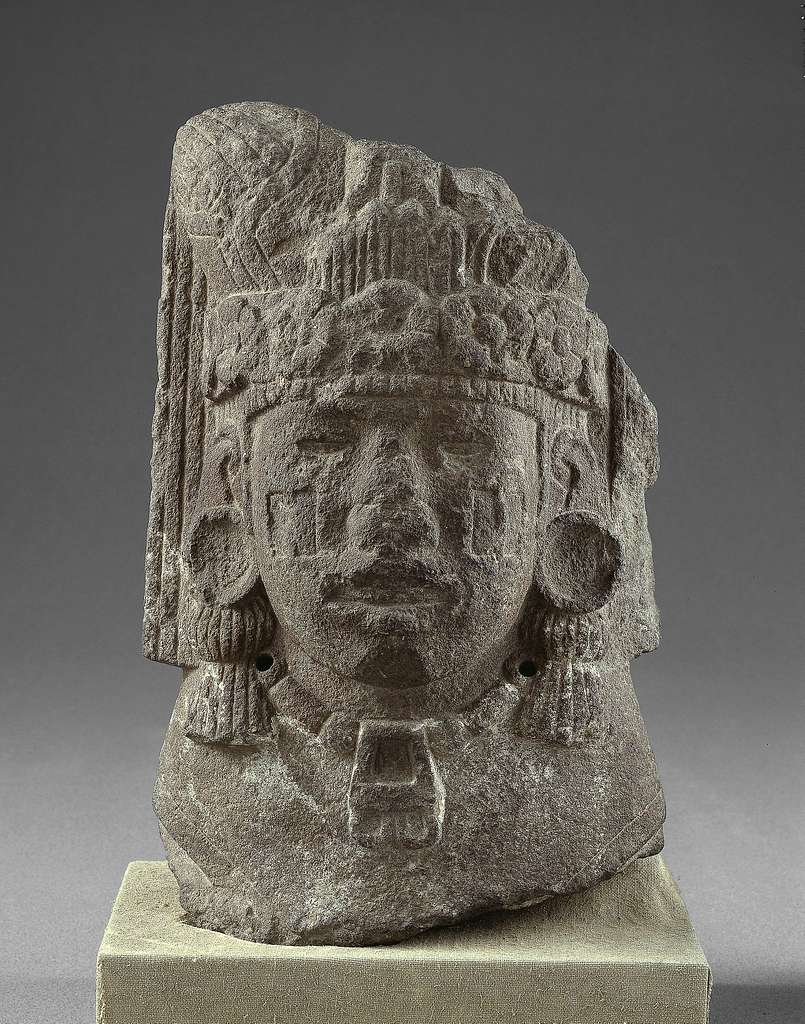
Artistic representations of Xilonen consistently emphasize her intimate connection with maize. She is typically portrayed as youthful, with a calm yet restrained expression that mirrors the fragility of new corn. Sculptural and codex imagery often show large ears of maize rising from her headdress or woven directly into it, with tassels flowing down her back like living extensions of the plant. Her face was commonly painted in red and yellow tones, colors associated with life, ripening grain, and sacrificial renewal. Archaeological finds, including basalt busts from Tenochtitlan dated to the late Postclassic period, depict fine incised details along her cheeks that likely once held turquoise or shell inlays. These visual elements were not decorative alone; they communicated fertility, nourishment, and the divine beauty of sustenance in its earliest form.
Family
Xilonen does not belong to a rigid family tree in the way many later mythologies define divine lineage. Instead, she exists within a symbolic network of maize deities that reflect agricultural cycles. She is most commonly understood as a youthful aspect or counterpart of Chicomecóatl, who embodied mature maize and completed nourishment. While Chicomecóatl represented abundance already secured, Xilonen represented abundance still in peril. In some traditions, Xilonen is paired with Centeōtl, the principal maize deity, functioning as his feminine expression during early growth. Less consistent sources associate her with underworld figures such as Mictlantecuhtli, a link scholars often interpret symbolically rather than literally, reflecting the seed’s burial in earth before rebirth.
Other names
The name Xilonen derives from Nahuatl and translates roughly to “she of the tender maize ear” or “young maize doll.” The word is connected linguistically to cornsilk, which resembles hair, reinforcing her identity as living, growing grain. Colonial-era spellings include Xīlōnen, Xillonen, and Xillone. Over time, her identity was sometimes absorbed into or conflated with Chicomecóatl, reflecting the Aztec tendency to treat deities as fluid manifestations rather than fixed personalities. This overlap does not diminish Xilonen’s importance but highlights her role as a seasonal and developmental expression of maize divinity.
Powers and Abilities
Xilonen’s power lay in fertility at its most fragile stage. She governed the successful emergence of young maize, ensuring that sprouts matured into sustaining crops. Her influence extended beyond agriculture into cosmic balance, as failed maize growth threatened social order, ritual calendars, and political stability. Ceremonies dedicated to her often took place during summer festivals, when the first ears appeared. These rites could include offerings of food, dance, music, and in some recorded cases, human sacrifice, underscoring how essential her favor was believed to be. Through Xilonen, the Aztecs acknowledged that life’s continuation demanded reciprocity between humans and the divine, especially when survival hung in the balance.
Modern Day Influence
Xilonen’s presence continues to echo through modern Mexican culture, indigenous practice, and academic study. She appears in museum collections and scholarly discussions as a symbol of pre-Columbian agricultural theology. In living traditions such as Danza Azteca, Xilonen represents rites of passage for young women, paralleling the transformation of maize from seedling to sustenance. Her name has also entered scientific discourse, notably in agricultural microbiology, where research projects studying maize fertility have adopted her name as a symbol of growth and renewal. In contemporary popular culture, Xilonen has inspired reinterpretations in games such as Genshin Impact, where her imagery blends Mesoamerican aesthetics with mythic storytelling, demonstrating how ancient agricultural goddesses continue to find relevance in modern myth-making.
Related Images

Source
Caso, A. (1958). The Aztecs: People of the Sun. University of Oklahoma Press.
Encyclopaedia Britannica. (n.d.). Chicomecóatl. https://www.britannica.com/topic/Chicomecoatl
Florentine Codex. (1994). Facsimile edition (Vol. 3). Club Internacional del Libro.
López Austin, A. (1997). The Myth of Quetzalcoatl (T. Ortiz, Trans.). University Press of Colorado.
Mathews, S. S. (2001). The Sad Night: The Story of an Aztec Victory and a Spanish Loss. Houghton Mifflin.
Mexicolore. (2017, January 29). The feast for Xilonen. https://www.mexicolore.co.uk/aztecs/ask-us/what-items-symbolized-the-xilonen-celebration
Soustelle, J. (1961). Daily Life of the Aztecs on the Eve of the Spanish Conquest. Stanford University Press.
Wired Humanities Project. (n.d.). Xilonen. Nahuatl Dictionary. https://nahuatl.wired-humanities.org/content/xilonen
Frequently Asked Questions
Who is Xilonen in Aztec belief?
Xilonen is the Aztec goddess of young and tender maize, representing early agricultural growth and renewal.
What does Xilonen symbolize?
She symbolizes fertility, sustenance, and the fragile beginnings of the maize harvest.
Is Xilonen the same as Chicomecóatl?
They are closely related; Xilonen represents young maize, while Chicomecóatl represents mature, nourishing corn.
How was Xilonen worshipped?
Her worship involved seasonal festivals, offerings, ceremonial dances, and ritual sacrifices tied to agricultural success.
Why is Xilonen still important today?
She remains relevant as a cultural symbol of food sovereignty, indigenous agricultural knowledge, and ecological balance.