
Tiwi Mythology
Tiwi mythology reflects the unique spiritual traditions of the Tiwi people, who live on Bathurst and Melville Islands north of mainland Australia. Isolated for thousands of years, the Tiwi developed a distinct cultural identity, language, and worldview shaped by their environment, community life, and relationship with ancestral spirits. Their mythology is rich with creation narratives, ceremonial customs, and stories that continue to define Tiwi culture today.
At the heart of Tiwi mythology is the creation figure Mudungkala, the ancient mother who emerged from the earth carrying three children. As she travelled across what would become the Tiwi Islands, she carved out the land, created water sources, and established the first families. Her journey symbolizes birth, growth, and the continuity of life — values central to Tiwi community identity.
Another significant figure is Purrukapali, one of the most important ancestral men in Tiwi traditions. His story explains the origins of death and the transformation of his son Jinani into the moon. Purrukapali’s grief and anger shaped the cycle of life and death, while his conflict with the trickster spirit Tapara established moral lessons about responsibility, loyalty, and the consequences of human actions. This narrative is central to Tiwi ceremonial life and continues to be retold through performance and ritual.
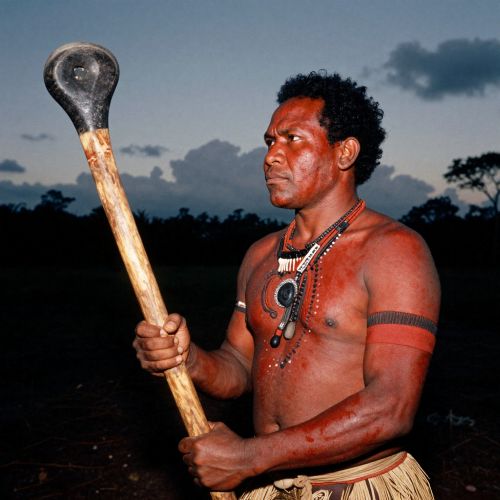
Ceremony plays a vital role in Tiwi mythology. The Pukamani (mortuary) ceremony is one of the most iconic elements of Tiwi culture. It honors the dead through dance, song, body painting, and the creation of Pukamani poles — tall carved and painted burial posts that embody spiritual presence and artistic mastery. These ceremonies reinforce Tiwi beliefs about the transition between life, spirit, and the afterlife.
Animal spirits, environmental forces, and island geography also influence Tiwi mythology. The islands’ dense forests, coastlines, and wetlands are tied to ancestral actions, with many sites considered sacred. Dreaming stories describe how animals gained their features, how clans were formed, and how spiritual laws were established.
Despite modernization and outside influence, Tiwi mythology remains central to cultural life. Art, dance, storytelling, and ceremony continue to carry ancestral knowledge forward. Tiwi artists are internationally recognized for their bold designs and myth-inspired works, which help preserve and share spiritual traditions.
Tiwi mythology stands as a powerful reflection of resilience, creativity, and spiritual connection. It embodies the identity of the Tiwi people and keeps alive the ancient stories that have shaped their islands for millennia.