
Goibniu : The Irish Divine Smith of the Tuatha Dé Danann
Listen
At a glance
| Description | |
|---|---|
| Origin | Irish Mythology |
| Classification | Gods |
| Family Members | Dian Cécht (Brother), Nuada (brother) |
| Region | Ireland |
| Associated With | Smithing, Weapon forging, Brewing |
The Mythlok Perspective
From the Mythlok perspective, Goibniu is not merely a divine blacksmith but a reflection of how civilizations understood survival itself. He represents the belief that endurance is forged, not inherited, shaped through skill, repetition, and quiet mastery rather than spectacle. His power lies in making continuity possible when chaos threatens to erase order. Across cultures, similar figures emerge. Like Hephaestus in Greece or Tvastar in early Indian tradition, Goibniu embodies creation through fire and discipline. Yet unlike them, his myth binds craftsmanship to nourishment, reminding us that weapons alone do not sustain worlds. Creation, in Celtic thought, must also heal and preserve.
Goibniu
Introduction
Goibniu stands among the most important divine craftsmen of early Irish tradition, revered as the master smith of the Tuatha Dé Danann and a figure whose power extended far beyond the forge. In Irish cultural memory, Goibniu represents the sacred relationship between skill, sustenance, and survival. His work did not merely arm the gods but ensured their continued vitality, protection, and endurance.
Linguistically, his name descends from the Proto-Celtic goben- or gobannos, meaning “smith,” a root shared across the Celtic world. This places Goibniu within a broader pan-Celtic tradition of divine metalworkers, closely related to the Welsh Gofannon and the Gaulish Gobannus. These connections suggest that Goibniu was not a localized deity alone, but part of an older, shared mythic archetype rooted in the essential role of metallurgy in early societies.
Irish mythological texts such as Cath Maige Tuired describe Goibniu as indispensable during the wars between the Tuatha Dé Danann and the Fomorians. His forge supplied weapons that never failed, while his feast preserved the gods from aging, sickness, and decay. Through these dual roles, Goibniu emerges not simply as a craftsman, but as a guardian of cosmic balance, ensuring that divine order could be defended and sustained.
Physical Traits
Early Irish myth offers no fixed or canonical physical description of Goibniu. Unlike later literary traditions that dwell on divine appearance, Irish sources prioritize function and deed over form. Goibniu is defined by what he does rather than how he looks, reinforcing the cultural emphasis on skill and contribution rather than spectacle.
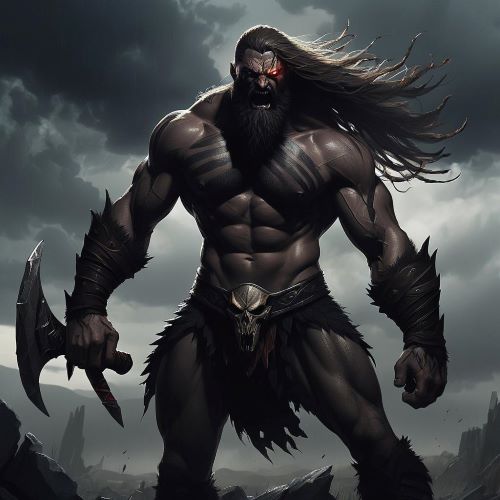
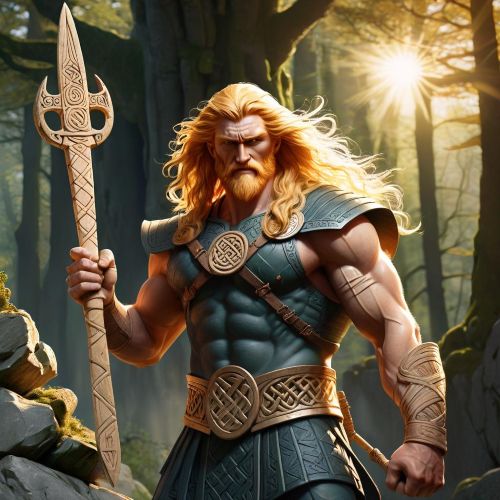
References in Cath Maige Tuired suggest durability and resilience rather than beauty or deformity. He survives direct injury during battle, notably when wounded by a poisoned spear, an episode that underscores his endurance rather than his physical stature. Later speculative depictions that assign him extraordinary height, strength, or bodily measurements originate from modern fiction and comics rather than authentic mythological material.
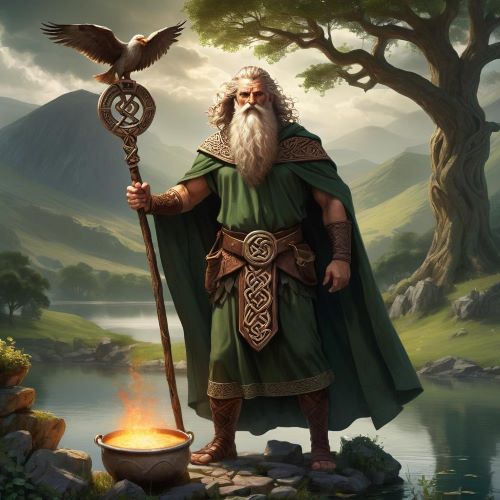
In traditional imagination, Goibniu is best understood as a figure inseparable from his tools. The hammer, anvil, forge-fire, and brewing vessel define his presence. His physicality is implied through tireless labor, precision, and the controlled violence of metal shaped by fire, making his body an extension of the craft itself.
Family
Goibniu belongs to a powerful network of divine artisans central to the success of the Tuatha Dé Danann. He is most frequently grouped with Credne, the metalworker, and Luchta, the carpenter, forming the Trí Dé Dána, the three gods of craft. Together, they represent the complete process of weapon creation, from forging to fastening, ensuring that no divine armament could fail.
His parentage varies across sources. Some traditions name Esarg, while others identify Tuirbe Trágmar, famed for hurling enchanted weapons, suggesting a lineage deeply tied to martial skill and supernatural craftsmanship. In Cath Maige Tuired, Goibniu is also described as a brother of Dian Cécht, the god of healing, and Nuada, the king of the Tuatha Dé Danann, linking creation, restoration, and rulership within a single divine family.
Folklore preserves references to an unnamed wife associated with a cave near Drogheda, though details remain sparse. His familial web emphasizes function over genealogy, reinforcing the idea that Goibniu’s importance lies in what he provides rather than whom he descends from.
Other names
Goibniu appears under several names and variants across regions and periods. In modern Irish, he is commonly rendered as Gaibhne, while older forms retain the Old Irish pronunciation closer to Goibniu. Across the Celtic world, his cognates include the Welsh Gofannon, son of Dôn, and the Gaulish Gobannus, both divine smiths sharing the same linguistic root.
Irish folklore preserves additional names such as Gavida, Gavigan, and Gaibhlen, often associated with tales of the magical cow Glas Gaibhnenn. Over time, his divine identity was partially absorbed into legendary human figures such as Gobán Saor, the master builder of medieval tradition. This transformation reflects the Christianization of earlier myths, where gods became saints, heroes, or craftsmen of exceptional ability.
Place names and personal names across Britain and Gaul, including ancient Gobannium, further attest to the widespread cultural memory of the smith god and his enduring influence.
Powers and Abilities
Goibniu’s power lies in perfection of craft. His weapons, forged for the Tuatha Dé Danann, were said to strike unerringly and kill without fail. During the Second Battle of Moytura, he promised that every broken spear or shattered sword would be replaced instantly, ensuring that the divine host could never be disarmed.
His resilience is equally legendary. When wounded by Ruadán, the son of Brigid, Goibniu removed the spear from his own body and used it to kill his attacker, demonstrating both physical endurance and lethal precision. This act reinforces his role as a craftsman who understands weapons so completely that even injury becomes an extension of skill.
Beyond warfare, Goibniu presided over the Fled Goibhnenn, the Feast of Goibniu. The ale served at this divine banquet, prepared with the assistance of Manannán mac Lir, granted immortality and protected the gods from disease and age. Through this, Goibniu becomes a figure of nourishment and renewal, not merely destruction.
He is also associated with the Glas Gaibhnenn, the miraculous cow whose milk provided endless abundance, further tying him to themes of sustenance, survival, and prosperity.
Modern Day Influence
Goibniu continues to resonate in modern culture as a symbol of craftsmanship, resilience, and creative mastery. Neo-pagan traditions often invoke him as a patron of smiths, brewers, and artisans, while modern literature and fantasy settings reinterpret him as the archetypal divine blacksmith.
The transformation of Goibniu into Gobán Saor within Irish folklore allowed his legacy to persist through medieval and early modern storytelling, embedding divine craftsmanship into human history. His name survives indirectly in institutions, brands, and scholarly discourse, reinforcing the deep cultural association between skill, tradition, and identity.
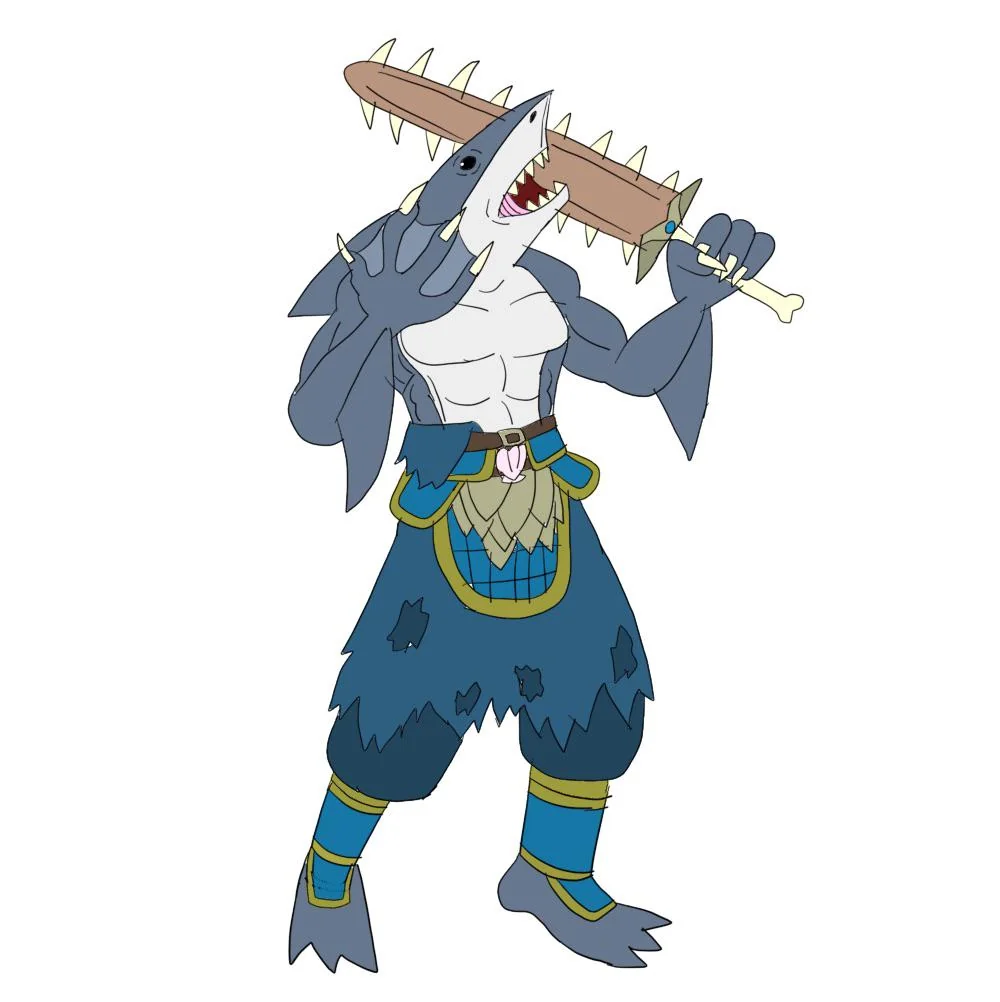
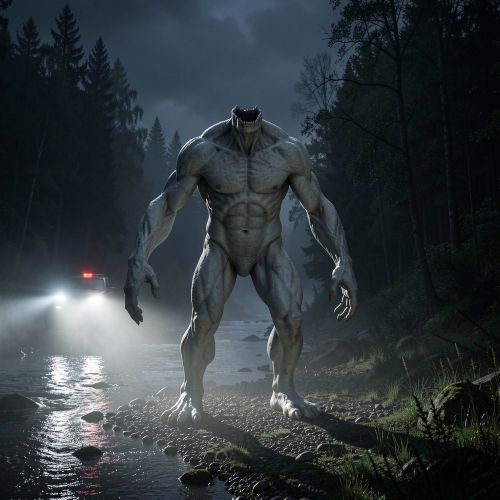
In contemporary storytelling, games, and comics, Goibniu is frequently portrayed with exaggerated physical power, but these representations remain symbolic rather than mythologically accurate, reflecting modern fascination with ancient figures rather than historical belief.
Related Images

Source
Gray, E. (1982). Cath Maige Tuired: The second battle of Mag Tuired. Irish Texts Society.
Britannica Editors. (n.d.). Goibhniu Irish God, Smithcraft & Brewing. Encyclopaedia Britannica. Retrieved February 5, 2026, from https://www.britannica.com/topic/Goibhniu
Monaghan, P. (2014). The encyclopedia of Celtic mythology and folklore. Facts on File.
O hOgain, D. (2006). The lore of Ireland: An encyclopedia of myth, legend & art. University of Oklahoma Press.
Smyth, D. (1998). A guide to Irish mythology. Irish Academic Press.
Stokes, W., & Strachan, J. (1903). Thesaurus Palaeohibernicus. Cambridge University Press.
Wikipedia contributors. (2026). Goibniu. Wikipedia. https://en.wikipedia.org/wiki/Goibniu
Atlas Mythica. (2023). Goibniu: Irish Celtic God of Blacksmithing and Beer. Retrieved February 5, 2026, from https://atlasmythica.com/goibniu
Frequently Asked Questions
Who is Goibniu in Irish tradition?
Goibniu is the divine smith of the Tuatha Dé Danann, responsible for forging their weapons and providing the immortal feast that protected them from decay.
What is Goibniu the god of?
He is associated with smithing, metalwork, brewing, hospitality, and divine sustenance.
Is Goibniu related to Gobán Saor?
Gobán Saor is widely understood as a folkloric transformation of Goibniu into a legendary human craftsman.
What is the Feast of Goibniu?
The Fled Goibhnenn was a divine banquet where Goibniu’s ale granted immortality and freedom from illness.
Is Goibniu part of a larger Celtic tradition?
Yes, he is closely related to the Welsh Gofannon and the Gaulish Gobannus, reflecting a shared Celtic smith-god archetype.