
Dr. Siraporn Nathalang : Thailand’s Foremost Folklore Scholar
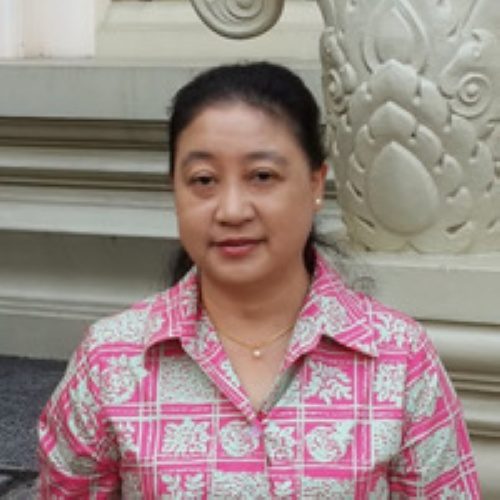
Dr. Siraporn Nathalang
Introduction
Dr. Siraporn Nathalang is widely regarded as one of the most influential voices in the study of Thai folklore, oral narratives, and cultural identity. As a senior scholar at Chulalongkorn University’s Faculty of Arts, she has spent decades documenting the stories, beliefs, and traditions that shape Thailand’s cultural memory. Her work goes far beyond classification; it interprets how folktales act as mirrors of social values and change, revealing how communities understand family, morality, power, and their own place in the world. Through her research, Dr. Nathalang has helped transform folklore from an informal storytelling tradition into a respected academic discipline, bridging generational knowledge and modern cultural understanding. She remains a central figure in Southeast Asian ethnology and an anchor for scholars exploring Thailand’s mythological and narrative heritage.
Area of Expertise
Dr. Siraporn Nathalang’s expertise spans the full spectrum of Thai oral traditions, from folktales and myths to folksongs, ghost stories, Jataka narratives, and local belief systems. Her scholarship frequently explores how these stories express deeper themes such as family hierarchy, social duties, and the tensions between personal desire and communal expectations. One of her core research contributions is her analysis of how Buddhist, Brahmanical, and indigenous belief structures coexist and merge within Thai myths, particularly in creation stories and rice-origin narratives. These interpretations highlight cultural syncretism among Thai-speaking groups and shed light on how ancient cosmologies continue to influence modern identity.
She is equally known for her study of media adaptations, especially the transformation of folktale narratives on Thai television. By comparing traditional oral versions with televised retellings, she demonstrates how changing social norms—such as the shift from polygamous relationships to monogamous ideals or the emergence of more assertive female protagonists—reshape the folklore landscape. Her comparative methodology also places Thai cultural narratives alongside broader Tai, Southeast Asian, and Buddhist traditions, creating a framework for understanding how myths speak to shared regional histories.
Books & Publications
Dr. Nathalang’s most influential publication is Thai Folklore: Insights into Thai Culture, released by Chulalongkorn University Press in 2000 and reprinted in 2004. As both editor and contributor, she curated ten pivotal studies on oral traditions, helping English-language audiences access Thai folklore research at an academic level previously unavailable. Her contributions to the volume—including essays on family roles in folktale interpretation, television adaptations, and creation myths—remain essential references for scholars worldwide.
She also authored Creative Folklore in Thailand Today, which examines how traditional expressions evolve in response to modern influences such as urbanization, media, and education. Beyond her major books, Dr. Nathalang has published work in journals like Asian Folklore Studies, where she explored topics ranging from the Siang Miang trickster cycle to the symbolism embedded in shadow puppet performances. Her extensive academic footprint includes analyses of rice myths, indigenous-Buddhist intersections, and the preservation of smaller folktale subgenres such as in-law tales, jokes, and belief stories tied to plants and animals. Through these works, she has shaped the foundations of folklore scholarship in Thailand and beyond.
Research & Contributions
The core of Dr. Nathalang’s contribution lies in her ability to reveal how folklore reflects lived experience. Her studies of northeastern trickster tales such as the Siang Miang cycle highlight how humor and satire serve as subtle commentaries on rural hardship, social inequality, and power dynamics. She shows that folklore functions not only as entertainment but as a safe space to critique authority and express frustration.
Her work on narrative adaptations in Thai television illustrates how folklore adapts to new cultural expectations. She documents how plotlines are reshaped to appeal to younger audiences, aligning traditional values with shifting social ideals. This includes the portrayal of stronger female characters, reduced emphasis on polygamy, and more relatable family structures. Additionally, her comparative studies of creation narratives illuminate cultural ties among Tai ethnic groups, offering evidence of ancient migrations, agricultural traditions, and cosmological beliefs.
Dr. Nathalang has also played an important role in advocating for expanded ethnological research. She emphasizes the importance of studying underrepresented groups, nonverbal folklife practices, and everyday cultural expressions, ensuring folklore remains a vibrant and comprehensive field of study. Her work continues to influence both academic research and public understanding of Thailand’s cultural heritage.
Awards & Recognitions
Although formal awards for Dr. Nathalang are not widely documented in English-language sources, her scholarly influence is unmistakable. Her edited collections are often cited alongside foundational works such as Phya Anuman Rajadhon’s classic folklore essays, placing her among Thailand’s most respected authorities on traditional culture. Within Chulalongkorn University, her long-standing involvement with the Thai Studies Center reflects her academic leadership and her role in mentoring new generations of folklore scholars. Her research is frequently referenced in international studies on Southeast Asian identity, demonstrating her continued impact on global folklore discourse.
Social Media Profiles
In keeping with many traditional academics, Dr. Nathalang maintains a minimal online presence. She does not appear to engage actively on platforms such as Facebook or LinkedIn, and her public profile is primarily visible through academic sources. Most information about her work can be found on Chulalongkorn University’s Thai Studies Center website, library catalogs, research databases like JSTOR and WorldCat, and published volumes referencing her scholarship. Despite a limited digital footprint, her influence remains strong through the citations and discussions her work generates.
Sources
Anderson, W. W. (2001). Thai folklore: Insights into Thai culture. Asian Ethnology, 60(2), 371-373. https://asianethnology.org/downloads/ae/pdf/a1408.pdf
Anderson, W. W. (2001). Thai folklore: Insights into Thai culture (Thailand). Journal of Folklore Research Reviews, 38(2). https://go.gale.com/ps/i.do?id=GALE%7CA85241384
Nathalang, S. (n.d.). Creative folklore in Thailand today. Chulalongkorn University Press. http://www.marymartin.com/web/selectedCatalog?catalogno=2126
Nathalang, S. (Ed.). (2000). Thai folklore: Insights into Thai culture. Chulalongkorn University Press. https://search.worldcat.org/title/Thai-folklore-:-insights-into-Thai-culture/oclc/46367867
Nathalang, S. (Ed.). (2004). Thai folklore: Insights into Thai culture (2nd printing). Chulalongkorn University Press. https://www.car.chula.ac.th/display7.php?bib=b1679186
Nathalang, S. (n.d.). Thai folklore: Insights into Thai culture. National Library of Australia Catalogue. https://catalogue.nla.gov.au/catalog/541729
Jonsson, H. R. (2024). Thailand’s plural identities: Contesting the national. Southeast Asian Studies, 13(2). https://englishkyoto-seas.org/wp-content/uploads/SEAS1302_Jonsson.pdf
Chulalongkorn University. (n.d.). Thai Studies Center publications. https://ttl.car.chula.ac.th/books/


Frequently Asked Questions
Who is Dr. Siraporn Nathalang?
Dr. Siraporn Nathalang is a Thai scholar and leading expert in folklore, oral traditions, and cultural studies, known for her influential work at Chulalongkorn University.
What is Dr. Siraporn Nathalang best known for?
She is best known for her research on Thai folktales, creation myths, and media adaptations, as well as her landmark book Thai Folklore: Insights into Thai Culture.
Has Dr. Siraporn Nathalang published books?
Yes, she has authored and edited several major works, including Thai Folklore: Insights into Thai Culture and Creative Folklore in Thailand Today.
Where can I learn more about her research?
Her publications are available through Chulalongkorn University Press, academic libraries, and databases such as JSTOR, WorldCat, and university research collections.