
Dr. Marija Gimbutas : Old Europe and Goddess Traditions
Mythlok Perspective
From the Mythlok perspective, Dr. Marija Gimbutas reshaped how ancient Europe is understood by restoring symbolism, spirituality, and mythic consciousness to prehistoric study. Her work challenged the idea that early societies were defined solely by warfare and hierarchy, proposing instead that many Neolithic cultures centred on fertility, regeneration, and reverence for the living earth. By interpreting figurines, burial patterns, and iconography as expressions of belief rather than decoration, Gimbutas reframed archaeology as a language of meaning. Her vision of Old Europe revealed myth not as invention, but as memory encoded in clay, stone, and ritual. In doing so, she advanced a central Mythlok insight: the earliest myths were not written in words, but in symbols shaped by how humanity understood life, death, and continuity with nature.
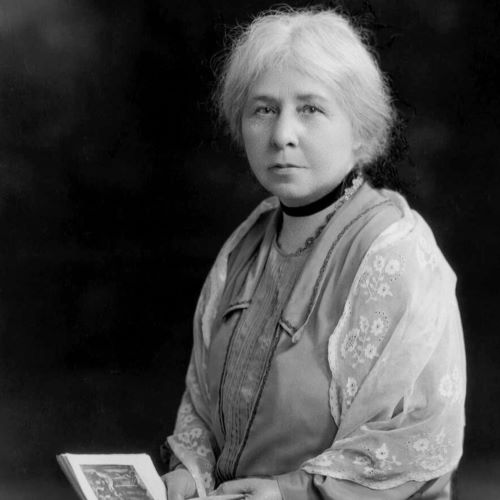
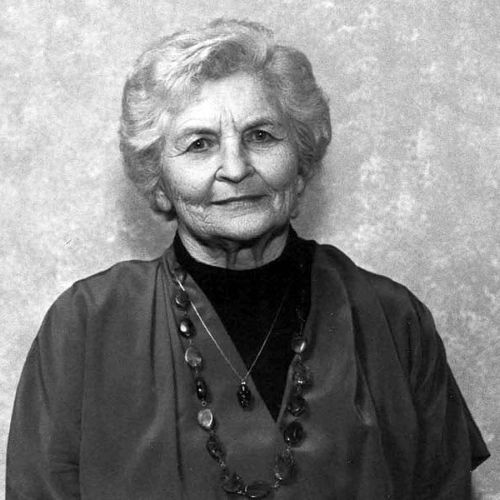
Dr. Marija Gimbutas
Introduction
Dr. Marija Gimbutas was a trailblazing Lithuanian-American archaeologist and anthropologist whose groundbreaking theories reshaped our understanding of prehistoric Europe. Born in 1921 in Vilnius, then part of Central Lithuania, she was raised in a culturally vibrant household steeped in national pride and artistic heritage. Her parents, both medical doctors, were influential in shaping Lithuania’s cultural and scientific identity, and they instilled in Marija a profound appreciation for folklore, traditional art, and intellectual rigor. These early influences fueled her passion for ancient history and mythology, laying the foundation for a lifelong academic journey that would span multiple disciplines and continents.
Following her early studies in linguistics and archaeology in Lithuania, Gimbutas fled her homeland during World War II, eventually settling in the United States. Despite the upheaval of war and displacement, she earned her doctorate in archaeology from the University of Tübingen and later became a respected academic figure in American and European institutions. Her research consistently pushed boundaries, weaving together archaeology, linguistics, mythology, and symbolism into a unified vision of Europe’s ancient past.
Area of Expertise
Dr. Marija Gimbutas’s scholarship focused on prehistoric Europe, particularly the Neolithic and Bronze Age cultures she termed “Old Europe.” She introduced this concept to describe a pre-Indo-European civilization that existed from around 6500 to 3500 BCE across the Balkans and Eastern Europe. Gimbutas believed these societies were matristic, emphasizing balance, community, and reverence for feminine power, rather than hierarchical or male-dominated.
Her interdisciplinary approach broke new ground. Trained in both archaeology and linguistics, she used comparative mythology and ethnography to interpret patterns found in artifacts and burial practices. She proposed that symbols found in prehistoric art—spirals, snakes, birds, and triangles—were part of a symbolic language connected to the worship of a life-giving goddess. These societies, she argued, saw divinity in the cycles of nature, particularly in the regenerative power of the feminine.
One of her most influential theories was the “Kurgan hypothesis,” suggesting that Indo-European speakers originated in the Pontic-Caspian steppes and expanded westward, bringing patriarchal and warlike cultures that replaced the peaceful, goddess-centric Old European societies. While initially controversial, the hypothesis gained scientific backing through later developments in genetic research, giving her ideas renewed relevance.
Books & Publications
Dr. Marija Gimbutas was a prolific writer, authoring over 20 books and more than 300 scholarly articles. Her publications, deeply rooted in archaeological evidence and comparative mythology, revealed a vision of prehistory that emphasized the spiritual and symbolic life of ancient communities.
One of her seminal works, The Goddesses and Gods of Old Europe, published in 1974 and later revised, cataloged cult images, sculptures, and religious artifacts to reconstruct the spiritual life of Neolithic Europeans. This book introduced readers to the symbolic richness of a world before Indo-European domination.
Her magnum opus, The Language of the Goddess (1989), offered a visual and interpretive exploration of over 2,000 symbolic artifacts. This volume served not just as a catalog but as a decoding of a lost symbolic language that revealed the spiritual and cosmological beliefs of Neolithic peoples.
In The Civilization of the Goddess (1991), Gimbutas presented a comprehensive overview of Old European culture, describing its egalitarian social structure, goddess-centered religion, and symbolic worldview. This book synthesized years of excavation data, iconographic interpretation, and mythological analysis into a singular narrative of a forgotten civilization.
The Living Goddesses, published posthumously in 1999, further explored her ideas about goddess traditions and their survival in folklore. Other influential texts like The Balts, The Slavs, and Bronze Age Cultures of Central and Eastern Europe offered detailed studies of specific regional histories and linguistic developments. Her writing influenced not only archaeologists but also scholars of religion, mythology, and feminist theory.
Research & Contributions
Gimbutas revolutionized the study of prehistoric Europe by introducing interpretive frameworks that highlighted symbolic and spiritual dimensions often overlooked in traditional archaeology. Her excavations in southeastern Europe—including major digs in Macedonia, Bosnia, and Greece—uncovered ritual objects, figurines, and domestic artifacts that suggested a complex, symbolic cosmology rooted in goddess worship.
Her research argued that the societies of Old Europe were not primitive but sophisticated cultures with shared symbols, myths, and spiritual systems. These communities, she claimed, operated with social and gender balance, without the dominance of warfare or rigid hierarchy. Gimbutas’s findings provided a stark contrast to the narrative of prehistoric societies as brutal or underdeveloped, emphasizing instead a worldview in harmony with nature and the feminine principle.
Through the development of “archaeomythology,” she fused archaeology with mythology, linguistics, and folklore, decoding the symbolic language embedded in prehistoric art and artifacts. Her method allowed her to see patterns and meanings where others saw only decorative motifs or fertility figures. She suggested that figurines of women with exaggerated features were not mere fertility symbols but representations of a complex and omnipresent goddess whose roles encompassed creation, destruction, and regeneration.
Her “Kurgan hypothesis” added a new dimension to Indo-European studies, asserting that the introduction of Indo-European languages and patriarchal systems in Europe resulted from invasions by Kurgan cultures. Genetic evidence in recent years has lent credibility to this idea, confirming the large-scale movement of steppe populations into Europe during the Bronze Age. This scientific validation cemented her place in the canon of influential thinkers in archaeology.
Awards & Recognitions
Dr. Marija Gimbutas received widespread acclaim for her pioneering work. In 1993, she was honored with the Anisfield-Wolf Book Award for The Civilization of the Goddess, a testament to her contribution to humanistic and cultural understanding. The same year, her alma mater Vytautas Magnus University awarded her an honorary doctorate, recognizing her lifetime of academic achievement and dedication to Lithuanian cultural heritage.
In 2021, UNESCO marked her centenary by including her in its list of commemorations, recognizing her role in promoting intercultural understanding and academic excellence. Her influence extended well beyond archaeology into feminist thought, spiritual studies, and cultural history, where her works continue to inspire reinterpretations of ancient beliefs and social structures.
Social Media Profiles
As Dr. Marija Gimbutas passed away in 1994, she did not leave behind personal social media accounts. However, her legacy thrives in the digital space through curated platforms and institutional tributes. Academic organizations, such as the OPUS Archives and Research Center in California, preserve her extensive body of work, including field notes, photographs, and unpublished materials.
Social media accounts dedicated to her memory, such as tribute pages on Facebook or mentions on Instagram, often share quotes, images, and interpretations of her work. These digital tributes keep her research accessible to new generations, sparking continued interest in goddess traditions and prehistoric spirituality. Institutions like the Institute of Archaeomythology, founded by her editor Joan Marler, further her legacy by promoting interdisciplinary research in the spirit of Gimbutas’s vision.
Bibliographic Sources
Gimbutas, M. (1974). The Goddesses and Gods of Old Europe. University of California Press.
Gimbutas, M. (1989). The Language of the Goddess. Thames & Hudson.
Gimbutas, M. (1991). The Civilization of the Goddess. HarperSanFrancisco.
Marler, J. (2011). Introduction: In Honor of Marija Gimbutas. Journal of Archaeomythology, 7. https://www.archaeomythology.org
Elster, E. S. (1994). Marija Gimbutas, 1921–1994. American Journal of Archaeology, 98(4), 755–757
Lelde Luika. (2024). The archaeologist Marija Gimbutas. « balticworlds.com. https://balticworlds.com/the-archaeologist-marija-gimbutas/

Frequently Asked Questions
Who was Dr. Marija Gimbutas?
Dr. Marija Gimbutas was a Lithuanian-American archaeologist and anthropologist best known for her research on prehistoric European cultures and goddess traditions.
What is Dr. Marija Gimbutas famous for?
She is best known for the Old Europe theory and for interpreting Neolithic figurines as evidence of goddess-centered belief systems.
What is the Old Europe theory?
The Old Europe theory proposes that pre–Indo-European societies in Europe were largely peaceful, agrarian, and spiritually focused before later patriarchal cultures emerged.
Did Marija Gimbutas believe in goddess worship?
Yes. She argued that many prehistoric European cultures expressed religious systems centred on feminine divinity, fertility, and regeneration.
Why is Marija Gimbutas important to mythology and archaeology?
Her work permanently influenced archaeology, feminist scholarship, and myth studies by integrating symbolism, religion, and cultural memory into prehistoric interpretation.