
Dr. Irving Finkel : Interpreting Ancient Mesopotamia, Texts, and Belief
Mythlok Perspective
From the Mythlok perspective, Irving Finkel represents the scholar as translator between worlds rather than gatekeeper of knowledge. His work treats ancient texts not as relics but as living conversations about fear, survival, and belief. Similar figures appear across cultures, from Chinese oracle bone interpreters to medieval Islamic scholars of Greek science. In each case, the act of preservation becomes an act of renewal, ensuring that humanity’s oldest questions continue to speak across time.
Dr. Irving Finkel
Introduction
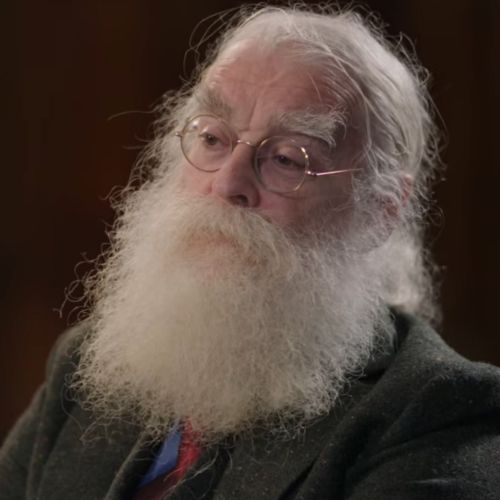
Dr. Irving Finkel is widely regarded as one of the most distinctive and influential voices in modern Assyriology. An English philologist and historian of the ancient Near East, he serves as Assistant Keeper of Ancient Mesopotamian script, languages, and cultures at the British Museum, where he works with the world’s largest collection of cuneiform tablets. Born in 1951 and raised in Palmers Green, North London, Finkel developed an early fascination with ancient objects and writing systems that shaped the trajectory of his life.
Raised in an Orthodox Jewish household, he later became an atheist during his teenage years, a personal transition that coincided with an increasingly analytical approach to ancient texts. By the age of nine, Finkel had already resolved to work at the British Museum, a childhood ambition that would eventually be fulfilled. After initially studying Egyptology, a sudden change in academic supervision redirected him toward cuneiform studies, a shift that proved decisive. He earned his PhD in Assyriology from the University of Birmingham with a dissertation on Babylonian exorcistic spells, followed by a research fellowship at the Oriental Institute in Chicago. In 1976, he returned to the UK to take up his post at the British Museum, beginning a career that would transform how ancient Mesopotamia is understood by both scholars and the public.
Area of Expertise
Dr. Irving Finkel’s primary area of expertise lies in the reading, translation, and interpretation of cuneiform inscriptions from ancient Mesopotamia. His responsibilities include curating and deciphering roughly 130,000 clay tablets, spanning administrative records, medical texts, religious rituals, myths, and personal correspondence. His work often involves identifying fragments that belong to the same manuscript and physically joining them, allowing lost texts to be reconstructed after millennia.
Beyond technical philology, Finkel is particularly known for his research into Mesopotamian medicine and magic. His studies reveal a world in which illness, demons, ghosts, and divine displeasure were closely intertwined, and where healing combined ritual incantations with practical remedies. He has also made significant contributions to the study of ancient games, most famously reconstructing the rules of the Royal Game of Ur, demonstrating how play, chance, and divination intersected in early civilizations.
Equally important is Finkel’s role as a public intellectual. Through lectures, documentaries, workshops, and media appearances, he has consistently worked to make the ancient Middle East accessible, showing how its ideas continue to echo through later religious and cultural traditions.
Books & Publications
Dr. Irving Finkel’s written work bridges academic rigor and narrative clarity, making complex material readable without oversimplification. His most influential book, The Ark Before Noah (2014), brought international attention to a previously overlooked Babylonian tablet containing a detailed flood narrative. The text describes the construction of a vast, circular, coracle-shaped ark and predates the biblical account by nearly a millennium. The book not only reshaped scholarly debates about flood traditions but also demonstrated how ancient technical texts could carry mythic weight.
In The First Ghosts (2021), Finkel explored Mesopotamian beliefs about death and the restless dead, drawing on incantations, letters, and ritual instructions to show that fear of ghosts is among humanity’s oldest anxieties. His editorial work includes volumes such as Ancient Board Games in Perspective and Disease in Babylonia, both of which remain key reference points in their fields. Alongside these academic works, Finkel has written children’s fiction, using storytelling to introduce younger readers to ancient themes without sacrificing historical integrity.
Research & Contributions
Finkel’s research has had a lasting impact on the study of ancient Mesopotamia. His decipherment of the so-called Ark Tablet revealed that Mesopotamian flood traditions were not vague myths but precise technical instructions, complete with measurements and materials. This discovery strengthened the understanding that biblical narratives emerged from a much older cultural environment rather than appearing in isolation.
His work on Mesopotamian medicine and exorcism has also transformed scholarly understanding of how ancient societies conceptualized disease. Through careful translation, Finkel demonstrated that medical practice combined empirical observation with ritual logic, reflecting an integrated worldview rather than superstition alone. His reconstruction of the Royal Game of Ur further highlighted the cultural importance of leisure, fate, and competition in ancient life.
Outside traditional scholarship, Finkel founded the Great Diary Project, an initiative dedicated to preserving the diaries of ordinary people. By treating modern personal writings as future historical artifacts, the project reflects the same respect for everyday voices that characterizes his approach to ancient texts.
Awards & Recognitions
While Dr. Irving Finkel is not widely associated with formal honors or ceremonial awards, his recognition is evident in the authority he holds within his field. His long-standing role at the British Museum signals institutional trust in his expertise, and his research is frequently cited in both academic and popular works on the ancient Near East. Media features, international lectures, and documentary appearances further reflect the esteem in which he is held. Finkel’s reputation rests less on titles and more on influence, with generations of scholars and enthusiasts shaped by his interpretations of the ancient world.
Social Media Profiles
Dr. Irving Finkel does not maintain a strong personal presence on mainstream social media platforms. Instead, his public visibility is primarily mediated through institutional channels such as British Museum lectures, academic publications, and documentary appearances. This limited digital footprint aligns with his focus on long-form scholarship and public education rather than ongoing online commentary.
Sources
British Museum. (n.d.). Irving Finkel. https://www.britishmuseum.org/collection/term/BIOG143248
British Museum. (n.d.). Cuneiform tablets. https://www.britishmuseum.org/collection/galleries/mesopotamia
PBS. (2014). Secrets of Noah’s Ark (NOVA). https://www.pbs.org/wgbh/nova/video/secrets-noahs-ark/
The Great Diary Project. (n.d.). About the Great Diary Project. https://www.thegreatdiaryproject.co.uk/about
Finkel, I. L. (2014). The ark before Noah: Decoding the story of the flood. Hodder & Stoughton.
Finkel, I. L. (2021). The first ghosts: Most ancient of legacies. Hodder & Stoughton.
Finkel, I. L., & Taylor, J. (2015). Cuneiform. British Museum Press.
Finkel, I. L. (2002). On some inscribed Babylonian alabastra. Journal of the Royal Asiatic Society, 12(3), 321–330.


Frequently Asked Questions
Who is Irving Finkel?
Irving Finkel is a British Assyriologist and philologist known for his work on cuneiform tablets at the British Museum and his research into ancient Mesopotamian culture.
What is Irving Finkel famous for?
He is best known for translating the Ark Tablet, which revealed a Mesopotamian flood story predating the biblical account of Noah.
What is the Ark Tablet discovered by Irving Finkel?
The Ark Tablet is a Babylonian cuneiform text describing the construction of a large, circular ark designed to survive a catastrophic flood.
What does Irving Finkel study?
His research focuses on cuneiform writing, Mesopotamian medicine and magic, ancient games, religion, and mythic narratives.
Is Irving Finkel still working at the British Museum?
Yes, he continues to serve as Assistant Keeper of Ancient Mesopotamian script, languages, and cultures at the British Museum.