

Nibelungenlied : The Germanic Epic of Honor and Tragedy
Listen
At a glance
| Attribute | Description |
|---|---|
| Mythology | Germanic Mythology |
| Language Written | Middle High German |
| Age | Circa 1200 CE |
| Author | Anonymous poet from Passau region |
| Main Characters | Siegfried, Kriemhild, Gunther, Brunhild, Hagen, EtzelDraupadi |
Mythlok Perspective
Within the Mythlok framework, the Nibelungenlied is not a tale of heroes but of systems that cannot bend. Loyalty here is not virtue but inertia, a force that drives men and women toward destruction once honor becomes absolute. Unlike myths where chaos erupts from external monsters or divine wrath, this epic shows society collapsing under its own rules. Comparable to tragic cycles in Greek epic, the Nibelungenlied reveals how civilization itself can become the instrument of ruin when identity is forged entirely through obligation.
Nibelungenlied
Introduction
Nibelungenlied, often translated as The Song of the Nibelungs, stands as one of the most influential epic poems of medieval Europe. Composed around 1200 CE in Middle High German, the poem draws together ancient Germanic heroic traditions, courtly ideals, and historical memory into a narrative shaped by love, betrayal, loyalty, and catastrophic revenge. Structured into thirty-nine Aventiuren, the epic presents a world where honor is absolute, promises are binding unto death, and violence becomes inevitable once social order fractures. Its lasting power lies not in heroic triumph, but in its unflinching portrayal of how greatness collapses under the weight of pride and vengeance. Even centuries later, the Nibelungenlied continues to define how tragedy functions within Germanic storytelling.
Historical Background
The Nibelungenlied emerged from a long oral tradition that preserved memories of late antiquity. At its historical core lies the destruction of the Burgundian kingdom on the Rhine in the fifth century, an event associated with King Gundaharius, remembered in the poem as Gunther. This catastrophe, recorded in Roman sources describing campaigns under the general Aetius, became mythologized over generations until it fused with legendary material involving dragons, cursed treasure, and heroic invulnerability. The figure of Etzel reflects the historical Attila the Hun, whose death in 453 CE provided fertile ground for later legends surrounding vengeance and dynastic collapse.
By the time the anonymous poet committed the story to writing, the German-speaking world had undergone Christianization and the rise of courtly culture. Pagan heroic motifs were reshaped to suit feudal values, emphasizing loyalty to one’s lord and the rigid codes of aristocratic honor. Surviving manuscripts, notably versions A, B, and C, reveal subtle variations in tone, with later versions softening brutality while reinforcing moral causality. The poem’s preservation in dozens of manuscripts underscores its immediate popularity and cultural importance during the High Middle Ages.
Synopsis & Themes
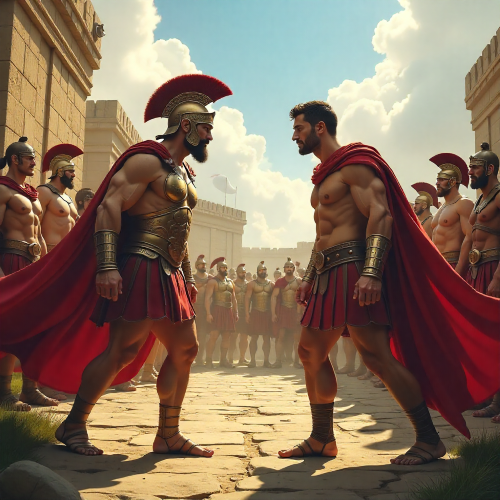
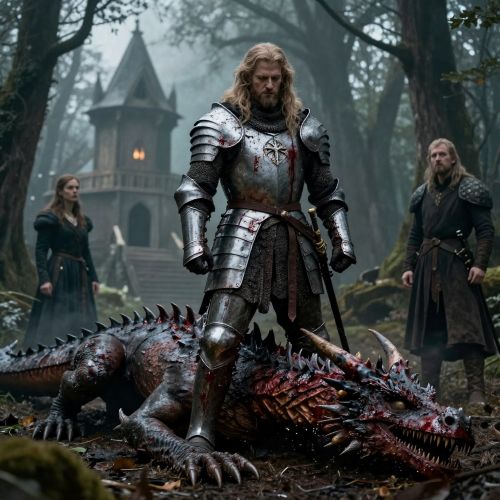
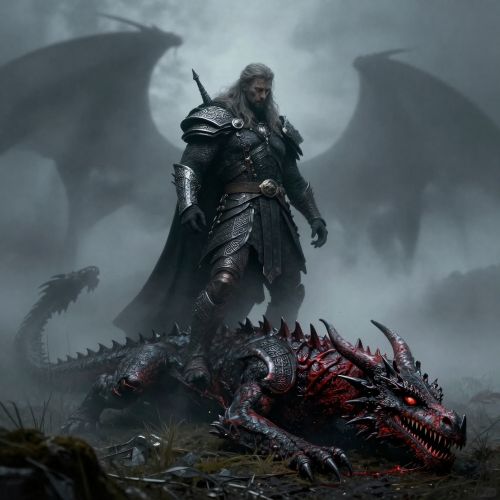
The narrative unfolds in two distinct movements that mirror one another in rise and destruction. The first centers on Siegfried of Xanten, a dragon-slayer rendered nearly invincible by bathing in the beast’s blood. His arrival at the Burgundian court in Worms brings glory and danger in equal measure. Through deception and supernatural aid, Siegfried helps King Gunther win the warrior-queen Brunhild, while he himself marries Kriemhild. What begins as political alliance unravels when Kriemhild publicly exposes Brunhild’s humiliation, igniting a chain of events that leads to Siegfried’s murder at the hands of Hagen.
The second half transforms personal loss into collective annihilation. Kriemhild’s grief hardens into calculated revenge as she marries Etzel and lures her brothers and Hagen to his court. Hospitality collapses into massacre, and loyalty becomes indistinguishable from fanaticism. By the end, nearly every major figure lies dead, including Kriemhild herself.
Throughout the Nibelungenlied, loyalty is treated as an absolute value, even when it demands atrocity. Revenge operates not as emotional release but as a consuming force that erases kinship and moral restraint. Fate looms heavily, yet it is human choice, driven by honor and pride, that seals each character’s doom. The poem rejects redemption, offering instead a stark vision of tragedy born from unwavering social codes.
Key Characters
Siegfried embodies the paradox of heroic perfection. His strength, wealth, and charisma elevate him above ordinary men, yet these same qualities provoke fear and resentment. His death marks the moment when honor becomes corrupted beyond repair.
Kriemhild undergoes the most dramatic transformation in the epic. Introduced as a courtly princess shaped by ideals of love and marriage, she evolves into a figure of relentless vengeance whose actions rival those of any warrior. Her arc challenges medieval assumptions about power and agency.
Gunther, king of the Burgundians, represents compromised authority. His dependence on Siegfried and submission to Hagen reveal a ruler unable to balance honor with justice.
Brunhild stands as a tragic remnant of an older heroic world. Her strength and autonomy are neutralized through deceit, and her humiliation becomes the spark for catastrophe.
Hagen von Tronje emerges as the epic’s most unsettling figure. Fiercely loyal and brutally pragmatic, he murders Siegfried not for personal gain but to preserve feudal order. His unwavering allegiance defines the concept later known as Nibelungentreue.
Cultural & Religious Significance
The Nibelungenlied occupies a unique position between pagan heroic myth and Christian moral worldview. While dragons, prophetic dreams, and cursed treasure remain central, characters attend mass and invoke God, creating a tension between divine justice and inexorable fate. This duality reflects a society in transition, struggling to reconcile inherited mythic values with Christian ethics.
In the nineteenth century, the poem was elevated as a national epic, shaping German cultural identity and influencing political symbolism. This legacy remains complex, as ideals of absolute loyalty were later misappropriated in destructive ways. Today, the Nibelungenlied is studied less as nationalist myth and more as a meditation on violence, memory, and social obligation. Its inclusion in UNESCO’s Memory of the World Register affirms its enduring literary and historical significance.
Modern Adaptations
The influence of the Nibelungenlied extends far beyond medieval literature. Der Ring des Nibelungen by Richard Wagner reimagined the saga through Norse sources, transforming it into a monumental operatic exploration of power and downfall. Early cinema found visual expression in Fritz Lang’s 1924 silent films, which framed the epic through expressionist grandeur.
Modern novels, graphic adaptations, and fantasy narratives continue to draw from its archetypes, particularly the doomed hero, the cursed treasure, and the destructive logic of revenge. Contemporary interpretations tend to emphasize tragedy and moral ambiguity rather than heroic glorification, ensuring the epic remains relevant in a post-mythic age.


Source
Anonymous. (2024). The Nibelungenlied: With the Klage. Hackett Publishing. https://hackettpublishing.com/the-nibelungenlied
Fourie, I. (2017). Modern adaptations of “Das Nibelungenlied”: “Hagen von Tronje” by Wolfgang Hohlbein. Academia.edu. https://www.academia.edu/40925736/Modern_adaptations_of_Das_Nibelungenlied_Hagen_von_Tronje_by_Wolggang_Hohlbein
Gehring, M. (2023, September 12). The ancient origins of the Nibelungenlied. Mythic Mind (Substack). https://mythicmind.substack.com/p/the-ancient-origins-of-the-nibelungenlied
Liuzza, R. M. (Trans.). (n.d.). The Nibelungenlied. Project Gutenberg. https://www.gutenberg.org/files/7321/7321-h/7321-h.htm
LitCharts. (2024). The Nibelungenlied plot summary. https://www.litcharts.com/lit/the-nibelungenlied/summary
Nibelungenlied Society. (n.d.). Short summary of the Nibelungenlied. http://www.nibelungenlied-gesellschaft.de/03_beitrag/english/summary.html
Wikipedia contributors. (2025). Nibelungenlied. Wikipedia. https://en.wikipedia.org/wiki/Nibelungenlied
Edwards, C. (2003). The Nibelungenlied: A Literary Analysis. Routledge.
Green, D. H. (2004). The Beginnings of Medieval Romance: Fact and Fiction, 1150–1250. Cambridge University Press.
Winder, M. (2010). Germanic Heroic Legend and the Nibelungenlied. Oxford University Press.
Wagner, R. (1876). Der Ring des Nibelungen. Leipzig: Breitkopf & Härtel.
Frequently Asked Questions
What is the Nibelungenlied about?
The Nibelungenlied tells the tragic story of Siegfried’s rise and murder, followed by Kriemhild’s devastating revenge against those responsible.
Is the Nibelungenlied based on real history?
Yes, it blends legend with historical events such as the fall of the Burgundian kingdom and the figure of Attila the Hun.
Who wrote the Nibelungenlied?
The poem was written by an anonymous poet around 1200 CE, likely in the Danube region near Passau.
How is the Nibelungenlied different from Norse versions?
Unlike the Norse sagas, the Nibelungenlied adapts the story to Christian and courtly medieval values, emphasizing feudal loyalty.
Why is the Nibelungenlied important today?
It remains a key text for understanding European epic tradition, tragic storytelling, and the cultural memory of medieval Germany.