

Dobhar-Chu : The Irish Water Hound of Celtic Lore
Listen
At a glance
| Description | |
|---|---|
| Origin | Celtic Mythology |
| Classification | Hybrids |
| Family Members | N/A |
| Region | Ireland and Scotland |
| Associated With | Freshwater lakes and rivers, Ferocity, Protection |
The Mythlok Perspective
From the Mythlok Perspective, the Dobhar-Chu represents nature’s refusal to be domesticated. It is not a god demanding worship but an elemental guardian enforcing balance through fear. Similar roles appear elsewhere, from Japan’s river-dwelling kappa to Scotland’s kelpie, beings that punish human arrogance near water. Across cultures, these figures serve the same function, transforming rivers and lakes into moral landscapes where survival depends on respect rather than conquest.
Dobhar-Chu
Introduction
The Dobhar-Chu, from the Irish dobhar-chú meaning “water hound” or “water dog,” occupies a singular place in Irish and Scottish folklore as one of the most feared aquatic beings of the Celtic world. Neither wholly animal nor entirely monstrous, it is remembered as a liminal creature that belongs equally to land and water. Unlike later folkloric figures preserved through manuscripts, the Dobhar-Chu survived primarily through oral tradition, passed from lakeside communities that lived close to rivers, loughs, and hidden waters. These stories describe a being that ruled freshwater domains, enforcing an older natural order where humans were never fully dominant.
The legend is most strongly associated with Glenade Lough in County Leitrim, where an eighteenth-century tale recounts the killing of a woman named Grace Connolly and the violent retaliation that followed. Whether interpreted as myth, cautionary tale, or memory of an unusually aggressive animal magnified by fear, the Dobhar-Chu became a symbol of nature’s hostility when disturbed. Its persistence across centuries suggests that it fulfilled a deeper cultural role, warning communities about the dangers of water while preserving respect for forces beyond human control.
Physical Traits
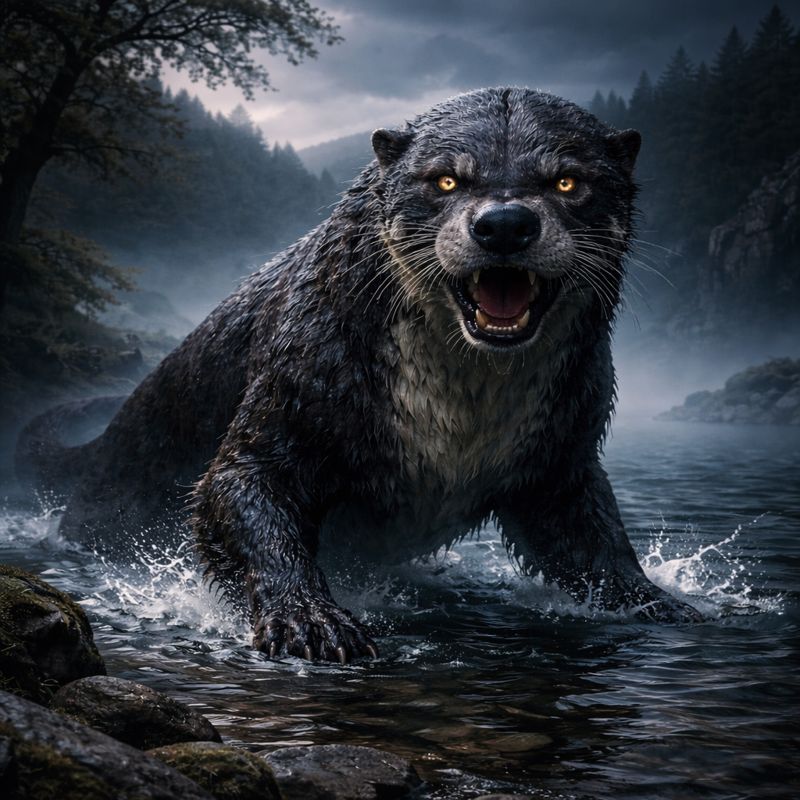
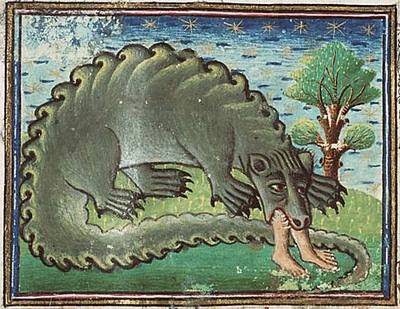
Descriptions of the Dobhar-Chu vary by region, yet several features remain consistent across accounts. It is usually portrayed as resembling an enormous otter combined with canine traits, its head often likened to that of a dog or greyhound. Folklore frequently exaggerates its size, placing it anywhere between three and five times larger than a common otter, with some accounts claiming lengths of up to four meters. Its body is elongated and powerful, suited for both swimming and sudden bursts of speed on land.
The creature’s fur is one of its most distinctive attributes. Some traditions describe it as sleek and pitch-black, while others speak of dark brown pelts marked by white or pale patches on the throat or chest. A recurring motif is a strange marking on its back, sometimes shaped like a cross, interpreted either as a supernatural sign or a folkloric attempt to explain unusual coloration. The skin itself is said to be thick, water-resistant, and unnaturally strong. Legends claim the Dobhar-Chu’s snout could split stone, reinforcing its reputation as a force capable of reshaping the physical world around it.
Family
In many Irish and Scottish tales, the Dobhar-Chu is never truly alone. It is often described as existing in mated pairs, bound by an unbreakable bond. When one is wounded or killed, the other is said to rise immediately from the water in pursuit of vengeance. This belief adds a layer of inevitability to encounters with the creature, suggesting that violence against it always invites further bloodshed.
Some Gaelic traditions go further, naming the Dobhar-Chu the father or king of all otters. It is portrayed as leading groups of seven or nine otters, sacred numbers in Celtic belief, reinforcing its authority within the natural hierarchy. Later folklorists recorded stories in which vast numbers of ordinary otters gathered around a single massive figure, a detail that likely contributed to its enduring title as the King Otter. These narratives frame the Dobhar-Chu not as a solitary monster but as a ruler within an aquatic society.
Other names
The Dobhar-Chu is known by numerous regional and anglicized names, reflecting the way oral tradition adapts to language and place. “King Otter” emphasizes its dominance, while “Water Hound” highlights its canine nature. Variants such as Dobarcu, Doyarchu, Anchu, and Dhuragoo appear in historical texts and local dialects. The term “Irish Crocodile,” though rare, reflects attempts by early writers to compare it with more familiar exotic predators. Scottish Gaelic sources refer to it as Rìgh nan Dòbhran, literally “King of the Otters,” reinforcing the same mythic status across Celtic regions.
Powers and Abilities
The Dobhar-Chu’s abilities mark it as more than a dangerous animal. It is described as fiercely territorial, attacking humans, livestock, and boats that intrude upon its waters. Folklore grants it extraordinary speed, both in water and on land, and an unsettling habit of emitting a piercing shriek or whistle before attacking. This sound functions as both a warning and a supernatural signal, particularly to its mate.
One of the most enduring beliefs surrounding the creature concerns its hide. Possessing even a small strip of Dobhar-Chu fur was said to confer protection against drowning, shipwrecks, and physical harm. Some accounts claim the creature could only be killed with silver, while others insist that its death required a simultaneous human or animal sacrifice. A recurring motif identifies a single vulnerable white spot beneath the chin or forelimb, echoing a widespread mythic pattern in which near-invincible beings possess one fatal weakness.
Modern Day Influence
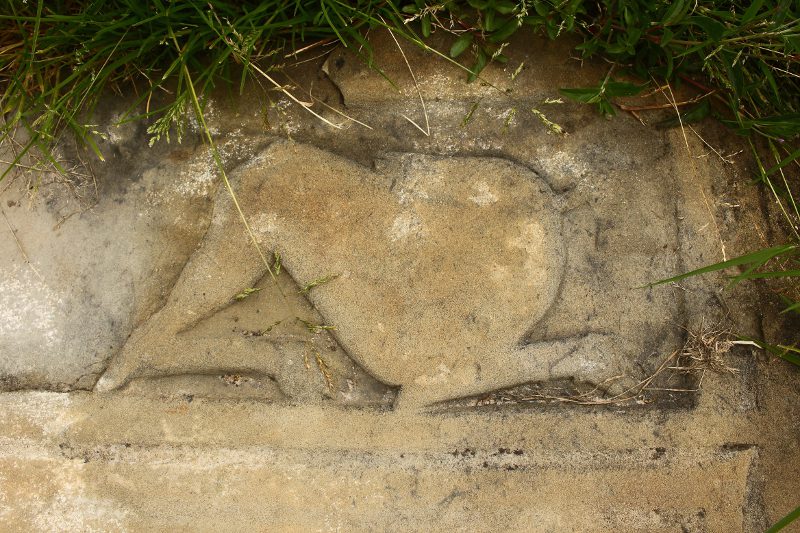
The Dobhar-Chu continues to occupy a place in modern Irish cultural memory, straddling folklore, cryptozoology, and local identity. Glenade Lough remains a focal point for the legend, with a gravestone depicting a strange animal often cited as material evidence of the tale. Scholars and folklorists such as Katherine Briggs and Dáithí Ó hÓgáin have examined the creature within broader Celtic traditions, while writers like Roderick O’Flaherty provided some of the earliest written descriptions.
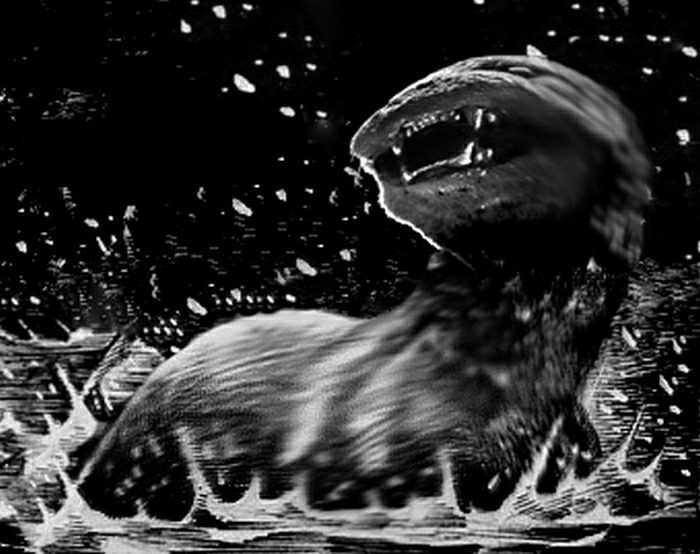
In contemporary culture, the Dobhar-Chu frequently appears in discussions of lake monsters, often compared to the Loch Ness phenomenon. Artists, musicians, and documentary filmmakers continue to reinterpret the legend, while cryptid enthusiasts debate whether sightings reflect misidentified animals, collective memory, or something more elusive. Its survival into the present underscores the enduring power of folklore to shape how landscapes are perceived.
Related Images
Source
Tohall, P. (1948). The Dobhar-chú tombstones of Glenade, Co. Leitrim. Journal of the Royal Society of Antiquaries of Ireland, 78(2), 231-236. https://www.jstor.org/stable/25510654
Carmichael, A. (1900). Carmina Gadelica: Hymns and incantations (Vol. 2). Oliver and Boyd. https://www.sacred-texts.com/neu/celt/cg2/index.htm
O’Flaherty, R. (1846). A chorographical description of West Connacht. Dublin University Press.
Briggs, K. (1976). An encyclopedia of fairies: Hobgoblins, brownies, bogies, and other supernatural creatures. Pantheon Books.
Wikipedia. (2024). Dobhar-chú. https://en.wikipedia.org/wiki/Dobhar-ch%C3%BA
Cryptid Wiki. (2024). Dobhar-chu. https://cryptidz.fandom.com/wiki/Dobhar-chu
Historic Mysteries. (2024). Dobhar-chú: The Otter King of Irish Folklore.
https://www.historicmysteries.com/myths-legends/dobhar-chu/38817/
Frequently Asked Questions
What is the Dobhar-Chu in Irish folklore?
The Dobhar-Chu is a legendary water hound believed to inhabit Irish and Scottish lakes, often described as the king of otters.
Where is the Dobhar-Chu most famously associated?
It is most strongly linked to Glenade Lough in County Leitrim, Ireland, where an eighteenth-century legend is recorded.
Is the Dobhar-Chu considered a real animal?
While some suggest misidentified otters or seals, the Dobhar-Chu is generally regarded as a folkloric or mythic being.
What powers does the Dobhar-Chu have?
Legends credit it with immense strength, supernatural resilience, protective fur, and an unbreakable bond with its mate.
How is the Dobhar-Chu different from other lake monsters?
Unlike solitary monsters, the Dobhar-Chu is portrayed as a ruler within a natural hierarchy, leading otters and enforcing balance rather than random destruction.