

Boon of Near Immortality : Ravana’s Fatal Protection
Listen
At a glance
| Description | |
|---|---|
| Mythology | Indian Mythology |
| Bestowed Upon | Ravana |
| Granted By | Brahma |
| Primary Effect | Near-immortality (invulnerability against gods, demons, celestial beings) |
| Conditions Attached | Could still be killed by humans and animals |
Mythlok Perspective
From the Mythlok perspective, Ravana’s near immortality echoes a universal archetype found across cultures. Like Achilles’ heel in Greek tradition or Baldr’s vulnerability in Norse lore, invincibility is always selective. Indian epics emphasize moral limitation, while other traditions stress physical loopholes. Across cultures, the message remains consistent: no power escapes balance, and every strength carries its own undoing.
Ravana’s Boon of Near Immortality
Introduction
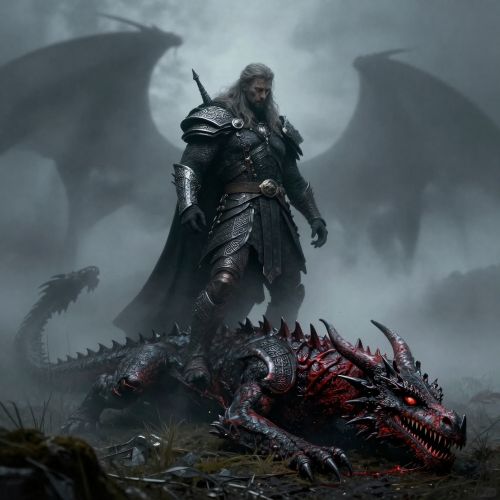
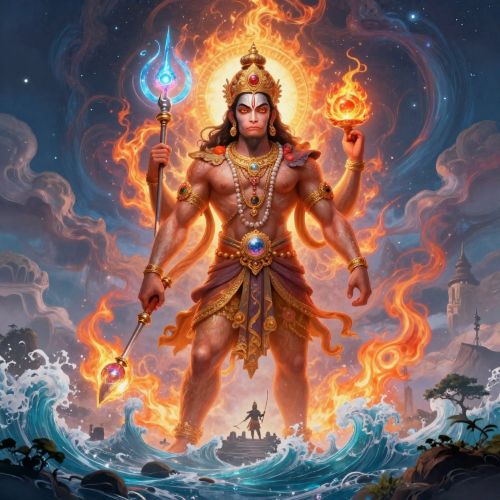
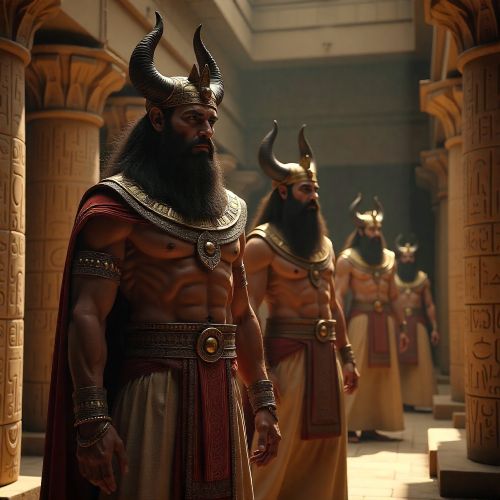
The story of Ravana and his boon of near immortality stands at the moral and philosophical heart of the Ramayana. Often reduced to a symbol of evil, Ravana is in fact one of Indian epic literature’s most layered figures. He was a scholar, ruler, devotee, and musician whose extraordinary penance earned him powers that rivalled the gods themselves. Yet those very boons carried within them the seed of his destruction. Ravana’s near immortality was not a reward without consequence, but a carefully bounded divine concession that ultimately reaffirmed the supremacy of dharma over power.
Mythological Background
Ravana was born to the sage Vishrava, a descendant of the Prajapati Pulastya, and Kaikesi, daughter of the rakshasa king Sumali. This dual heritage shaped his personality, blending Brahminical learning with rakshasa ambition. From an early age, Ravana demonstrated mastery over the Vedas, scriptures, music, and statecraft. His intellect and discipline were unquestioned, but so was his hunger for dominance.
According to Puranic traditions, Ravana and his brother Kumbhakarna were incarnations of Jaya and Vijaya, the gatekeepers of Vishnu’s abode, cursed to be born as enemies of the divine across successive ages. In the Treta Yuga, that destiny manifested as Ravana’s reign over Lanka. His conquest of the city from Kubera marked the beginning of an empire that challenged both celestial and terrestrial order, setting the stage for his quest for invulnerability.
Granting of the Boon/Blessing
Ravana’s ascent to near immortality was earned through extreme tapasya. For thousands of years on Mount Gokarna, he performed relentless austerities to please Brahma. Some traditions describe Ravana offering each of his ten heads in sacrifice, regrowing them through sheer ascetic power. His devotion also drew the attention of Shiva, who rewarded him with divine weapons and unmatched favor.
When Brahma finally appeared, Ravana demanded immortality. This request was refused, as death is inescapable for all created beings. Instead, Ravana asked for immunity from gods, celestial beings, demons, serpents, and wild creatures. In a decisive act of arrogance, he excluded humans, believing them too insignificant to pose a threat. Brahma granted the boon exactly as requested, binding Ravana’s fate to his own blind spot.
Nature of the Boon/Blessing
The Ravana boon of near immortality was conditional rather than absolute. Ravana became invulnerable to divine weapons and celestial forces, making him unbeatable by gods and supernatural beings. Some traditions further describe a reservoir of amrita, or life essence, concealed beneath his navel, sustaining him even when grievously wounded.
This protection elevated Ravana beyond ordinary kingship. He could shapeshift at will, command fearsome astras, and disrupt cosmic forces. Yet the boon was precise, not careless. Humanity remained outside its scope. What Ravana perceived as a trivial exclusion would later become the fulcrum upon which destiny turned.
Recipients and Key Figures
The primary recipient of the boon was Ravana himself, but his brothers also played critical roles. Kumbhakarna received immense strength alongside a curse of prolonged sleep, while Vibhishana was granted longevity and clarity of judgment for his righteousness. Brahma stood as the formal granter, while Shiva functioned as the spiritual catalyst whose approval validated Ravana’s penance.
The final and most consequential figure in this narrative is Rama, whose very humanity allowed him to bypass Ravana’s divine safeguards.
Effects and Consequences
Empowered by his boon, Ravana subjugated devas, sages, and kingdoms alike. Lanka flourished materially under his rule, becoming a center of wealth and learning, yet fear accompanied prosperity. Ravana’s sense of invincibility hardened into hubris, culminating in the abduction of Sita. This single act transformed his boon from protection into provocation.
When war came, no god could defeat him. Only Rama, bound by human limitations yet aligned with cosmic order, could exploit the flaw Ravana himself had created. With Vibhishana revealing the secret of Ravana’s life force, Rama’s final strike ended the reign of near immortality and restored balance to the worlds.
Symbolism and Spiritual Meaning
Ravana’s ten heads symbolize both enlightenment and excess. They reflect mastery over sacred knowledge while also embodying unchecked desire, pride, and ego. His boon illustrates a central Indian philosophical truth: power divorced from humility becomes self-defeating.
Near immortality in this context is not a triumph over death but an illusion of permanence. Ravana’s fall reinforces the idea that dharma, not strength or intelligence, sustains existence. His defeat was not the failure of devotion, but of devotion corrupted by ego.
Cultural Impact and Legacy
Ravana’s near immortality continues to shape Indian cultural memory. His effigy is burned during Dussehra to signify the fall of arrogance, yet in regions such as Sri Lanka, he is remembered as a capable ruler and scholar. Classical dance, temple art, folk instruments like the ravanahatha, and modern literature repeatedly revisit his story.
Contemporary retellings increasingly portray Ravana as a tragic figure rather than a simple villain, reflecting evolving perspectives on power, morality, and complexity. His boon remains a narrative reminder that greatness without restraint is never complete.






Source
Goldman, R. P. (1984). The Ramayana of Valmiki: An epic of ancient India, Vol. 1: Balakanda. Princeton University Press.
Menon, R. (2006). The Ramayana: A novel. North Point Press.
Narayan, R. K. (1972). The Ramayana: A shortened modern prose version of the Indian epic. Viking Press.
Richards, E. (2020). Ravana: The untold story of the demon king. Exotic India Art.
Sarma, M. (2017). Boons and curses in the Ramayana. Journal of Indian Mythology, 12(3), 45-60.
Chowdhury, R. B. (2020). Ravana – One of the Most Fascinating Characters of Hindu Mythology. Detechter. Retrieved from https://www.detechter.com/ravana-one-of-the-most-fascinating-characters-of-hindu-mythology
Nilov, M. (2025). The Story of Ravana’s Boon: An In-Depth Exploration. E-Grammar Book. Retrieved from https://www.e-grammarbook.com/ravana-boon
Frequently Asked Questions
What was Ravana’s boon of near immortality?
Ravana received immunity from gods, demons, and celestial beings, making him nearly invincible except to humans.
Why did Ravana exclude humans from his boon?
He underestimated human capability, believing no mortal could challenge his power.
Who granted Ravana his boon?
Brahma formally granted the boon, while Shiva blessed Ravana’s devotion and weapons.
How did Rama defeat Ravana despite the boon?
Rama’s human form allowed him to bypass the boon’s protection and strike Ravana’s life source.
What does Ravana’s near immortality symbolize?
It represents the illusion of invincibility created by ego and the inevitable limits placed on power.