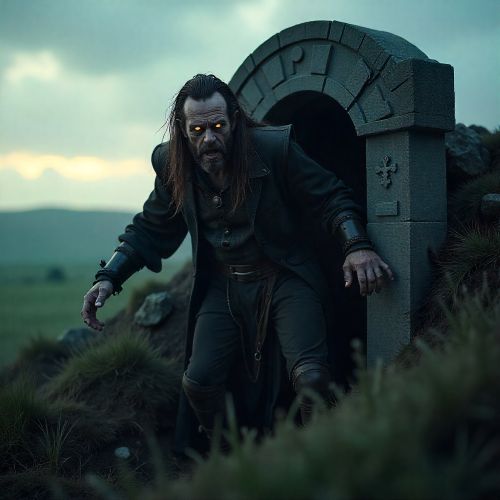


Banshee : Ireland’s Spirit of Death and Ancestral Mourning
Listen
At a glance
| Description | |
|---|---|
| Origin | Irish Mythology |
| Classification | Spirits |
| Family Members | N/A |
| Region | Ireland |
| Associated With | Death omens, mourning, Ancestry, Foresight |
The Mythlok Perspective
From the Mythlok lens, the Banshee is not a ghost of terror but a sound given form. She represents the moment before loss becomes real, when grief exists as anticipation rather than memory. Unlike death spirits that punish or collect, the Banshee only witnesses, reminding humanity that endings deserve acknowledgement. Across cultures, similar figures appear as mourners, washerwomen, or fate-callers, from Celtic lands to parts of Southeast Asia where ancestral spirits announce death through dreams or sounds. The Banshee stands apart because she mourns before the loss, positioning grief not as weakness, but as an ancient form of respect. In this way, she transforms death from an event into a ritual.
Banshee
Introduction
The Banshee is one of the most recognisable and emotionally charged figures in Irish folklore. Known in Irish Gaelic as bean sí or bean sídhe, meaning “woman of the fairy mound,” she is neither a demon nor a killer, but a supernatural herald whose cry announces the approach of death. Her legend sits at the crossroads of myth, ritual, and collective memory, shaped by Ireland’s deep relationship with ancestry and mourning. Unlike many fear-driven spirits, the Banshee exists within a moral framework of inevitability rather than punishment. She does not bring death but prepares the living for it, embodying the sound of grief before grief itself arrives.
Rooted in pre-Christian Ireland, the Banshee likely evolved from ancient keening traditions, where professional mourners lamented the dead through ritualised wails. Over centuries, Christian reinterpretations reframed her as a ghost or restless spirit, yet older folklore firmly situates her among the sídhe, the fairy folk believed to inhabit burial mounds and liminal landscapes. This dual identity explains why the Banshee feels both intimate and otherworldly, bound to families yet untouched by human time.
Physical Traits
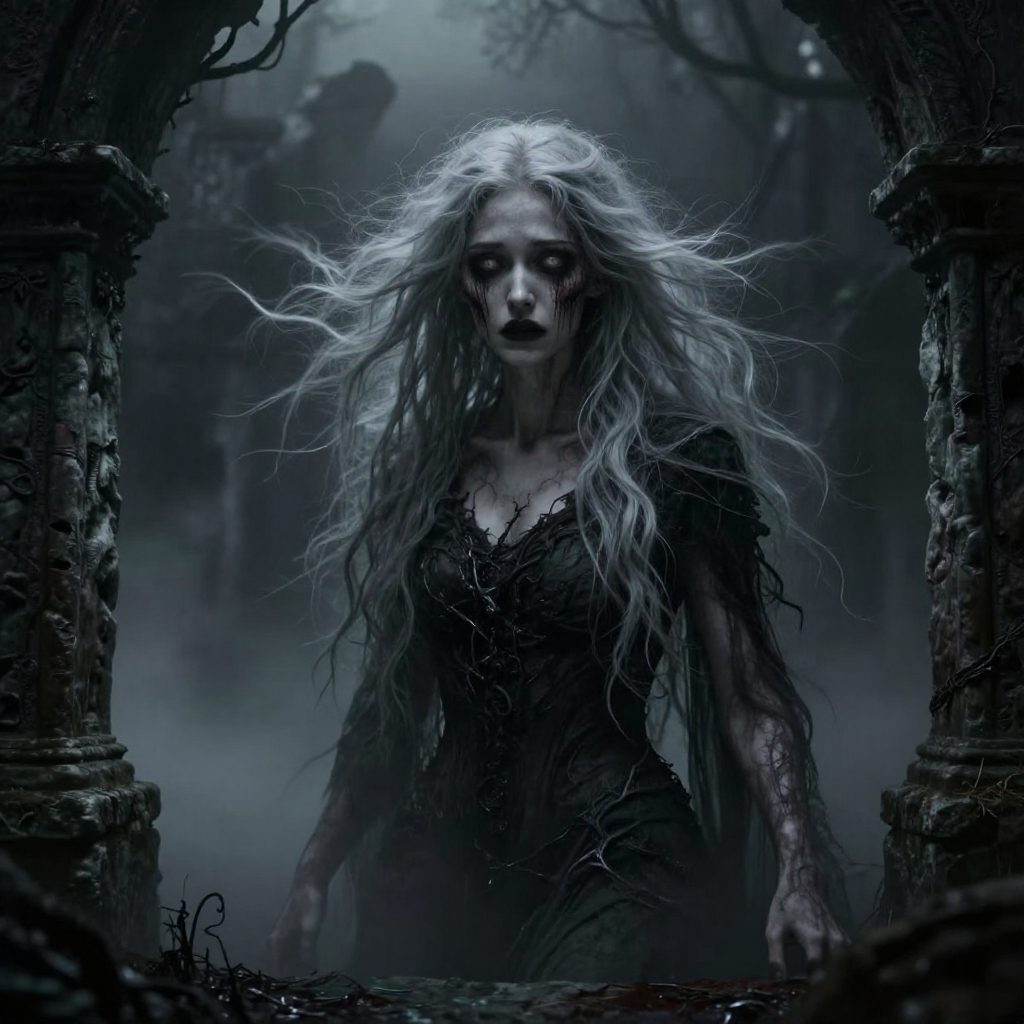
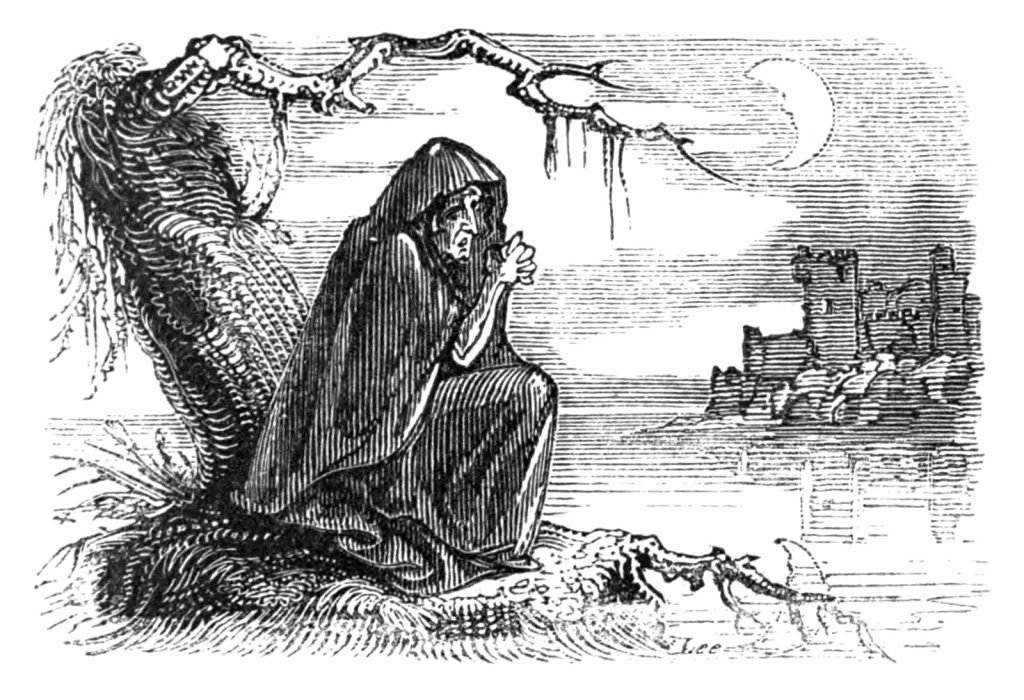
Descriptions of the Banshee vary dramatically across regions, reinforcing her supernatural and liminal nature. She may appear as a young woman of unearthly beauty, with long flowing hair and a pale glow, or as a bent old crone marked by sorrow and age. Her eyes are often described as red or swollen from endless weeping, a visual reminder that her role is rooted in mourning rather than menace. Clothing ranges from white or grey funeral garments to tattered cloaks, and in some traditions, she appears washing bloodstained clothes beside rivers or streams.
Despite these variations, certain traits remain constant. The Banshee is never fully solid, often described as gliding rather than walking, and her presence is accompanied by a chilling stillness. Her most defining feature is her voice. The wail of the Banshee is not a scream of violence but a keening cry, a sound said to blend sorrow, warning, and resignation. It is this sound, more than her appearance, that defines her identity in folklore.
Family
The Banshee’s connection to family is central to her myth. Unlike wandering spirits, she is traditionally attached to specific Irish lineages, particularly ancient Gaelic families whose surnames carry prefixes like O’ or Mac. Folklore holds that each such family has its own Banshee, who appears or cries when a member is about to die. This bond is not selective or moral; the Banshee mourns the lineage itself, not individual virtue.
Importantly, her presence is not viewed as a curse. In older traditions, she functions as a familial spirit whose role is to grieve in advance, ensuring that no death passes unnoticed. Some stories suggest these bonds were forged through ancestral pacts or past wrongs, while others present her as a guardian of bloodlines. Even in diaspora tales, families who left Ireland were said to hear her cry abroad, reinforcing her role as an inheritor of lineage rather than place.
Other names
The name Banshee is an anglicised form of bean sídhe, but she appears under many titles across Ireland and the wider Celtic world. She is sometimes called bean chaointe, meaning “keening woman,” directly referencing her role in funeral lamentation. In Scottish folklore, related figures include the bean nighe, or “washerwoman,” who cleans burial garments at river fords. Other names such as caoineag or “woman of sorrow” emphasise her auditory presence rather than physical form.
These variations reflect shared Celtic beliefs rather than contradictions. Across regions, the core identity remains the same: a female supernatural figure whose voice bridges the worlds of the living and the dead. Even associations with older war deities, such as the battle crow figures of Irish tradition, reinforce her role as an announcer of fate rather than an agent of destruction.
Powers and Abilities
The Banshee’s primary power is foresight. She knows when death is approaching and announces it through her keening cry. This ability is passive rather than aggressive; she does not interfere with events or alter outcomes. Her cry is said to vary in tone depending on the individual and circumstance, ranging from mournful and gentle to piercing and terrifying. Only those connected to the death are meant to hear it, reinforcing the personal nature of her warning.
Beyond her voice, the Banshee possesses limited supernatural abilities typical of fairy beings. She can appear and disappear at will, traverse great distances, and manifest in different forms. Symbols such as silver combs or burial cloths appear in some accounts, though these are not tools of magic but markers of her role within the death ritual cycle. Her power lies not in fear, but in certainty.
Modern Day Influence
In modern culture, the Banshee has undergone significant transformation. Literature, cinema, television, and video games often portray her as a violent or monstrous ghost, amplifying her scream into a weapon rather than a warning. While this version dominates global media, it strips away much of her cultural specificity. In Irish literature and poetry, however, she remains a figure of sorrow and heritage, invoked as a symbol of loss, memory, and female presence within myth.
Contemporary reinterpretations by Irish writers and artists have begun reclaiming the Banshee as a complex figure tied to voice, womanhood, and ancestral continuity. Even outside Ireland, the archetype of the wailing spirit owes much of its emotional resonance to her legend, proving that her influence extends far beyond her geographic origins.
Related Images
Source
Lysaght, P. (1986). The banshee: The Irish death-messenger. Mercier Press.
Narváez, P. (1989). Review of The Banshee: The Irish Supernatural Death-Messenger. Ethnologies, 11(1-2), 89–91. https://doi.org/10.7202/1081579ar
Ó’Donnell, E. (1920). The banshee. P. Allan & Co.
McAnally, D. R., Jr. (1888). Irish wonders: Ghosts, giants, pookas, demons, leprechauns, banshees, fairies, witches, widows, old maids, and other marvels of the Emerald Isle. Houghton, Mifflin.
Wilde, J. F. (1919). Ancient legends of Ireland. Warner Library.
Yeats, W. B. (1888). Fairy and folk tales of the Irish peasantry. Walter Scott.
Ellis, P. B. (1987). A dictionary of Irish mythology. Constable.
IrishMyths.com. (2022, July 25). What is a banshee? The mythic origins of Ireland’s most infamous wailing woman. https://irishmyths.com/2022/07/25/banshee/
FolkloreScotland.com. (2022, November 11). The Banshee. https://folklorescotland.com/the-banshee/
Frequently Asked Questions
Is the Banshee evil or dangerous?
No. Traditional folklore portrays the Banshee as a neutral or mournful spirit who warns of death but does not cause it.
What does a Banshee’s cry mean?
Her cry signals that a death is imminent within a specific family, allowing time for emotional and spiritual preparation.
Can anyone hear a Banshee?
Typically, only members of the family connected to the death are said to hear her keening.
Is the Banshee a ghost or a fairy?
In older Irish tradition, she is considered a fairy being rather than a ghost, though later interpretations blurred this distinction.
Do Banshees still appear in modern Ireland?
While belief has faded, the Banshee remains a powerful cultural symbol in Irish storytelling and folklore studies.