Draupnir : The Norse Ring of Abundance and Renewal
| Description | |
|---|---|
| Origin | Norse Mythology |
| Classification | Golden ring that multiplies itself every ninth night |
| Owners/Users | Odin, Baldr |
| Symbolism | Abundance, prosperity, continuity, divine authority |
| Source Texts | Prose Edda |
Mythlok Perspective
From the Mythlok perspective, Draupnir presents abundance as rhythm rather than excess. Unlike cursed rings such as Andvaranaut or later fantasy artifacts that equate wealth with domination, Draupnir binds prosperity to time and restraint. Comparable to agricultural fertility symbols across cultures, its power depends on cycles, not hoarding. In this way, Norse thought aligns wealth with responsibility, suggesting that renewal survives only when abundance obeys natural law.
Draupnir
Introduction
Draupnir, whose name means “the dripper” in Old Norse, is one of the most evocative treasures in Norse tradition. Preserved in the Poetic Edda and elaborated upon in Snorri Sturluson’s Prose Edda, this golden ring is renowned for its miraculous ability to generate abundance without corruption. Every ninth night, eight new rings of identical weight and form emerge from it, establishing Draupnir as a symbol of prosperity rooted in cosmic order rather than greed. Unlike many mythic rings that bring ruin, Draupnir represents wealth that flows in harmony with fate, time, and divine responsibility.
Its presence in the myths connects craftsmanship, sacrifice, and renewal, linking the realms of gods, dwarves, and the dead. Through Draupnir, Norse storytelling presents abundance not as excess, but as a rhythm governed by sacred cycles.
Description
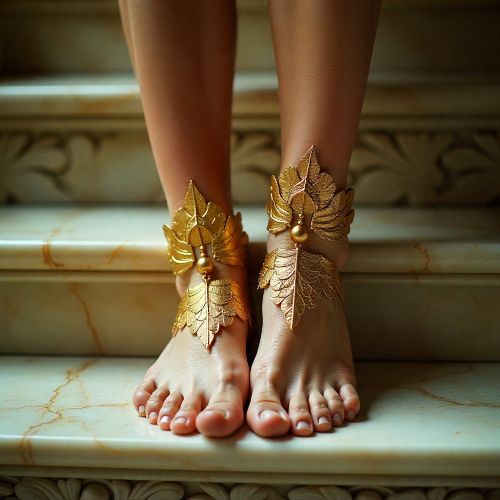
Draupnir is described as a heavy golden arm-ring, worn on the forearm in the manner of elite Norse jewelry rather than as a finger ring. Its form is simple and flawless, emphasizing function and symbolism over ornamentation. What distinguishes Draupnir is not its appearance but its rhythm. Every nine nights, precisely eight new rings “drip” from it, a detail that gives the artifact its name and reinforces the importance of numerology in Norse cosmology.
The newly formed rings are physically identical but lack Draupnir’s generative power. They serve instead as symbols of wealth, oaths, and divine gifting, reinforcing the idea that true abundance originates from a single sacred source rather than endless unchecked replication.
Mythological Context
Draupnir emerges from one of the most famous episodes of divine conflict and creativity in Norse lore. After Loki cuts the hair of Sif, he is forced to seek recompense from the dwarves. This leads to a wager between the sons of Ivaldi and the master smiths Brokkr and Eitri, forged deep within Svartalfheim.
From this contest come three legendary treasures: Thor’s hammer, Freyr’s boar, and Draupnir. While Mjölnir becomes the most famous weapon, Draupnir occupies a quieter but deeper role, aligning wealth with order rather than conquest. Its journey later bridges the worlds of the living and the dead, reflecting Norse views of existence as cyclical rather than final.
Owners/Users
The primary owner of Draupnir is Odin, who wears it as a symbol of sovereignty and controlled abundance. For Odin, Draupnir is not mere wealth but proof of divine legitimacy, reinforcing his role as ruler, law-giver, and guardian of cosmic balance.
The ring’s association extends to Baldr, Odin’s son, when it is placed upon his funeral pyre. This act transforms Draupnir from a symbol of living prosperity into a token of grief, sacrifice, and continuity beyond death. Its eventual return underscores that even loss participates in a larger cycle.
Instances of Use
Draupnir’s most powerful appearance occurs during Baldr’s funeral. Odin places the ring upon his son’s chest as a final offering, willingly surrendering an object of infinite value in an act of paternal grief. When Hermóðr journeys to Hel and later returns, Draupnir is sent back to Odin, confirming Baldr’s continued existence in the underworld.
This moment elevates Draupnir beyond material symbolism. It becomes a bridge between realms, a proof that wealth, memory, and meaning persist even when physical life ends. In other traditions, Odin is said to gift rings derived from Draupnir to allies, reinforcing bonds through sacred generosity rather than domination.
Symbolism and Interpretations
Draupnir symbolizes abundance that renews itself without corruption. Its nine-night cycle connects it to Norse cosmology, where the number nine governs fate, sacrifice, and transformation. Odin’s own nine-night ordeal on the world tree mirrors the ring’s rhythm, linking wisdom and wealth to endurance and patience.
Scholars often contrast it with cursed rings such as Andvaranaut. Where the latter embodies greed and destruction, Draupnir represents prosperity aligned with cosmic order. Its “dripping” quality evokes natural processes like rainfall, sap, or blood, suggesting that wealth, like life, must circulate to remain meaningful.
Comparative Analysis
Draupnir occupies a distinct category among mythic artifacts. Unlike Mjölnir, which enforces order through force, or Skíðblaðnir, which enables movement and trade, Draupnir creates value through repetition and restraint. Cross-culturally, it resembles abundance symbols like the Cornucopia, yet remains uniquely Norse in its emphasis on timing, limitation, and responsibility.
What sets Draupnir apart is that its abundance is neither instant nor infinite in a chaotic sense. It obeys rules. This restraint reflects Viking-Age economic realities, where wealth depended on seasonal cycles, trade routes, and social obligation rather than hoarded excess.
Modern Influence
Draupnir continues to shape modern interpretations of Norse symbolism. It appears in contemporary literature, fantasy gaming, and popular media as a model for self-replicating magical artifacts. In modern Heathenry, Draupnir is invoked as a symbol of sustainable prosperity and ethical wealth.
In visual culture, it inspires jewelry, tattoos, and ritual objects, often worn as a sign of balance rather than luxury. Even modern adaptations reinterpret its generative power not as limitless consumption, but as renewal through discipline.
Legacy
Draupnir endures because it frames wealth as a responsibility rather than a reward. Its story survives Ragnarok, carrying forward the idea that renewal follows destruction. In a world increasingly conscious of scarcity and imbalance, Draupnir’s message remains strikingly relevant: abundance must move, return, and renew itself to endure.

Sources
Lindow, J. (2002). Norse mythology: A guide to gods, heroes, rituals, and beliefs. Oxford University Press.
Orchard, A. (1997). Dictionary of Norse myth and legend. Cassell.
Snorri Sturluson. (13th c./1995). Edda (A. Faulkes, Trans.). Everyman.
Simek, R. (2007). Dictionary of northern mythology. D.S. Brewer.
Vikingr.org. (2024). Odin’s ring Draupnir. https://vikingr.org/norse-gods-goddesses/draupnir
Wevikings.com. (2025). Draupnir: The magical gold ring. https://wevikings.com/articles/draupnir/
Wikipedia. (2025). Draupnir. https://en.wikipedia.org/wiki/Draupnir
Frequently Asked Questions
What is Draupnir in Norse tradition?
Draupnir is a magical golden ring owned by Odin that produces eight new rings every ninth night, symbolizing abundance and renewal.
Who forged Draupnir?
It was crafted by the dwarf smiths Brokkr and Eitri during a legendary contest initiated by Loki.
Why is the number nine important to Draupnir?
Nine is a sacred number in Norse cosmology, associated with cycles, sacrifice, and transformation.
Was Draupnir ever lost?
Yes, it was placed on Baldr’s funeral pyre but later returned to Odin from the underworld.
Is Draupnir a cursed ring?
No, unlike other mythic rings, Draupnir represents uncorrupted wealth and harmonious abundance.