


Abhartach : The Irish Undead Chieftain of Slaghtaverty
Listen
At a glance
| Description | |
|---|---|
| Origin | Irish Mythology |
| Classification | Spirits |
| Family Members | N/A |
| Region | Ireland |
| Associated With | Vampire, Blood Sucking, Black Magic |
The Mythlok Perspective
From the Mythlok perspective, Abhartach represents fear of authority that survives death itself. Unlike heroic undead or tragic spirits, he embodies unchecked power that refuses to dissolve when life ends. Similar anxieties appear in Slavic vampire traditions and Chinese jiangshi lore, where improper burial sustains dangerous dead. Abhartach stands apart by anchoring this fear within political tyranny, making him less a monster of hunger and more a symbol of oppression that even death struggles to contain.
Kamohoaliʻi
Introduction
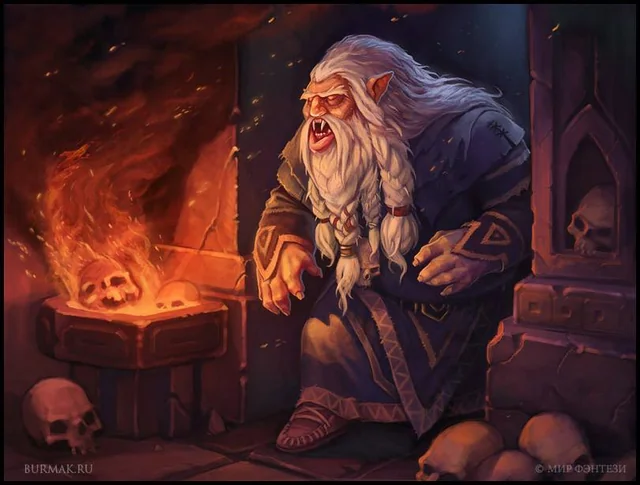
Abhartach occupies a uniquely unsettling place in Irish folkloric tradition. Unlike heroic figures who dominate Celtic storytelling, Abhartach is remembered as a cruel chieftain whose legacy is rooted in fear rather than valor. His story is most strongly associated with the region around Slaghtaverty in modern-day County Londonderry, where oral tradition preserved accounts of a ruler who oppressed his people through violence and sorcery. Though often described as a dwarf, Abhartach’s physical size bore no relation to his authority or the terror he inspired.
The legend survives primarily through 19th-century folklore collections, particularly those recorded by P. W. Joyce, yet its thematic roots are far older. Abhartach’s tale belongs to a wider European tradition of revenants, beings who return from death to torment the living. What distinguishes Abhartach is the explicit blood-drinking element attributed to his undead state, a detail that places him among the earliest vampire-like figures in Western folklore. This has led scholars to propose indirect links between Abhartach and later Gothic creations, including those shaped by Bram Stoker.
Rather than functioning as a cautionary moral tale, the story of Abhartach reflects deep cultural anxieties surrounding unjust rulers, improper burial, and the idea that death does not always end tyranny.
Physical Traits
Descriptions of Abhartach consistently emphasize his small stature, marking him as a dwarf chieftain rather than a physically imposing warrior. In Irish tradition, this physical abnormality is not symbolic of weakness but of imbalance. His size is repeatedly contrasted with his dominance over others, reinforcing the idea that power derived from unnatural sources rather than personal strength or honor.
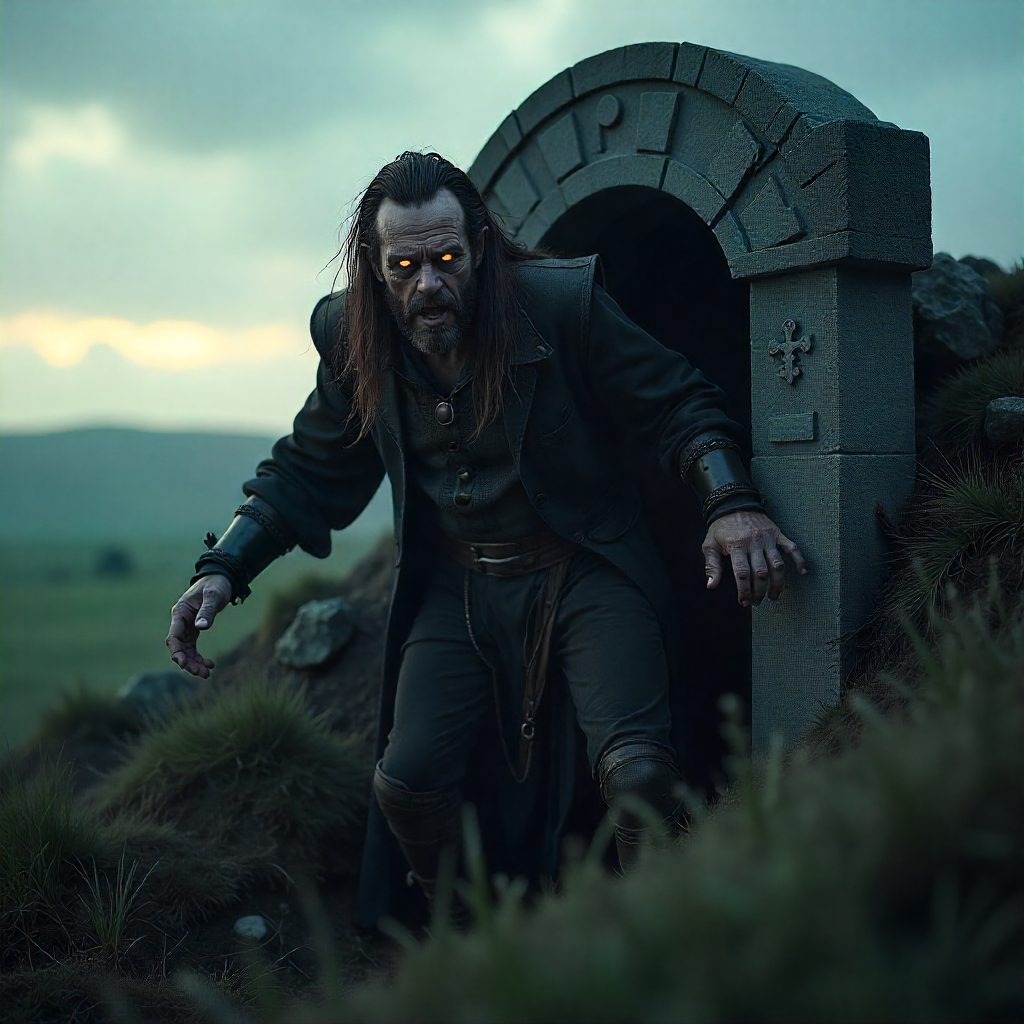
Folklore presents Abhartach as grotesque rather than merely short. His appearance is said to have unsettled those around him, even before his death. While precise details vary between tellings, he is often imagined as twisted, sharp-featured, and unnerving to behold. After death, this discomfort intensifies. Accounts of his return describe a corpse-like figure animated by malevolent will, whose presence evoked decay, fear, and spiritual corruption. His physical form thus becomes an extension of his moral decay, reinforcing his role as a figure who violates natural boundaries.
Family
Very little is recorded about Abhartach’s family or lineage, a striking omission within a mythological tradition that typically emphasizes ancestry and heroic bloodlines. This absence appears intentional within the logic of the tale. Abhartach is remembered not as a son, father, or husband, but as a ruler isolated by cruelty and fear.
His lack of recorded kin reinforces his portrayal as an aberration within the social order. Authority in early Irish society was closely tied to kinship and reciprocal obligation, yet Abhartach’s rule is defined by exploitation rather than protection. The silence surrounding his family suggests that his power was sustained through domination rather than communal legitimacy. In death, this isolation deepens, as he returns not to reclaim lineage or land, but solely to extract blood from the living.
Other names
The name Abhartach itself derives from Old Irish linguistic roots associated with deformity or dwarfism, though its exact meaning remains debated. Variants such as Abhartagh or Avartagh appear in regional retellings, reflecting the fluid nature of oral transmission rather than distinct identities.
Confusion sometimes arises between Abhartach and similarly named figures in Fenian literature, but folklore treats him as a separate and localized presence. Unlike legendary heroes whose names accumulate honorifics and titles, Abhartach remains defined by a single name, reinforcing his role as a specific menace tied to a particular place rather than a pan-Irish mythic archetype.
Powers and Abilities
Abhartach’s abilities are central to his enduring notoriety. In life, he is described as a practitioner of dark magic, using supernatural means to reinforce his authority and punish resistance. His tyranny is not merely political but spiritual, suggesting access to forces that violate natural and social order alike.
After death, these powers intensify. Abhartach repeatedly rises from his grave, demanding blood from the living, an act that distinguishes him sharply from ghosts or ordinary revenants. This blood-drinking is not symbolic but literal, marking him as a corporeal undead being rather than a spectral presence. Traditional weapons prove ineffective against him, and only a specific ritual is said to prevent his return. According to folklore, Abhartach must be pierced with a blade made of yew wood, buried upside down, and sealed beneath heavy stones or thorns.
These details are consistent with broader European beliefs surrounding dangerous dead, where improper containment allows the deceased to cross back into the world of the living. Abhartach’s story preserves one of the clearest early expressions of this fear within Irish tradition.
Modern Day Influence
In modern scholarship, Abhartach is frequently cited in discussions of the origins of vampire mythology. His legend predates Gothic literature by centuries, yet contains many elements later popularized in fiction: resurrection, blood consumption, and ritualized destruction. While direct influence cannot be proven, thematic parallels between Abhartach and Dracula have made him a recurring point of reference in academic and popular discourse.
Beyond literature, Abhartach has become a focal point for folklore tourism. The site traditionally identified as his grave in Slaghtaverty continues to attract visitors intrigued by Ireland’s darker mythic heritage. In contemporary culture, Abhartach appears in documentaries, podcasts, role-playing games, and modern reinterpretations of Celtic horror. His story demonstrates how localized folklore can evolve into globally recognizable archetypes without losing its regional identity.
Related Images
Source
Current, B. (2021). Abhartach explained: Was Bram Stoker’s vampire Dracula inspired by Irish myth? IrishMyths.com. https://irishmyths.com/2021/09/25/dracula-abhartach-history/
Gallagher, S. M. (2015). Irish vampire legends and folklore. Publisher Unknown.
Joyce, P. W. (1870). The origin and history of Irish names of places (Vol. 2). McGlashan & Gill.
Kirkpatrick, D. (2026). Abhartach in Irish mythology: The blood-drinking undead dwarf.
https://www.danielkirkpatrick.co.uk/irish-mythology/abhartach-irish-mythology/
McCully, J. (2015). Death and decomposition in Irish folklore. Folklore Journal, 126(2), 45-62.
Ó hÓgáin, D. (2006). The lore of Ireland: An encyclopaedia of myth, legend & art. Boydell Press.
Simmons, D. (n.d.). Abhartach the dwarf king. Emerald Isle. https://emeraldisle.ie/abhartach-the-dwarf-king
Stoker, B. (1897). Dracula. Archibald Constable and Company.
Frequently Asked Questions
Who was Abhartach in Irish folklore?
Abhartach was a cruel chieftain from northern Ireland who returned from the grave as a blood-drinking revenant after death.
Is Abhartach considered a vampire?
While not called a vampire in historical sources, Abhartach displays many traits associated with vampirism, including resurrection and blood consumption.
Where is Abhartach’s grave located?
Folklore places Abhartach’s grave near Slaghtaverty in County Londonderry, often referred to as the “Giant’s Grave.”
Did Abhartach inspire Dracula?
Some scholars suggest Abhartach may have influenced later vampire fiction, though no direct evidence confirms this.
How was Abhartach finally defeated?
According to legend, Abhartach was subdued through a ritual involving a yew wood blade, inverted burial, and heavy stones to prevent his return.
