
Charyeok and the Korean Belief in Borrowed Power
In Korean mythic thought, power is rarely portrayed as something owned outright. Instead, it is often borrowed, invoked, negotiated, or granted, reflecting a worldview where humans, spirits, and gods exist in a dynamic network of obligation. This concept finds its clearest expression in Charyeok, a system of supernatural empowerment that sits at the crossroads of mythology, shamanic tradition, and modern reinterpretation.
Unlike rigid power hierarchies found in many myth traditions, Charyeok functions as a relational force. One does not awaken Charyeok alone. It emerges through connection, ritual, devotion, or alignment with a higher or older entity. This makes it less a talent and more a covenant.
Understanding Charyeok in a Mythic Context
The term Charyeok roughly translates to “borrowed power” or “force drawn from another source.” In mythic logic, this source is rarely abstract. It may be a god, a legendary hero, an ancestral spirit, a mountain deity, or even a collective spiritual current tied to the land itself.
Korean mythology, shaped heavily by shamanism, does not draw hard lines between gods and humans. Spirits intervene in daily life, and humans can temporarily rise above their limits through proper ritual conduct. Charyeok reflects this permeability. When invoked, it allows a mortal to act as a vessel rather than an origin of power.
This is why Charyeok is often depicted as conditional. Power flows only so long as respect, balance, and purpose are maintained. When arrogance or misuse enters the equation, the connection weakens or breaks.
Roots in Korean Shamanic Belief
To understand Charyeok, one must look to Muism, Korea’s indigenous shamanic system. Shamans, known as mudang, do not claim inherent divine power. Instead, they act as intermediaries who invite spirits to descend during rituals. Their strength comes not from themselves but from the entities who choose to answer their call.
Charyeok mirrors this process in narrative form. The empowered individual does not replace the deity. They channel it. Their body, voice, or actions become an extension of something greater.
This stands in contrast to myth systems where divine bloodlines or permanent blessings dominate. In Charyeok logic, access matters more than inheritance.
Types of Charyeok Sources
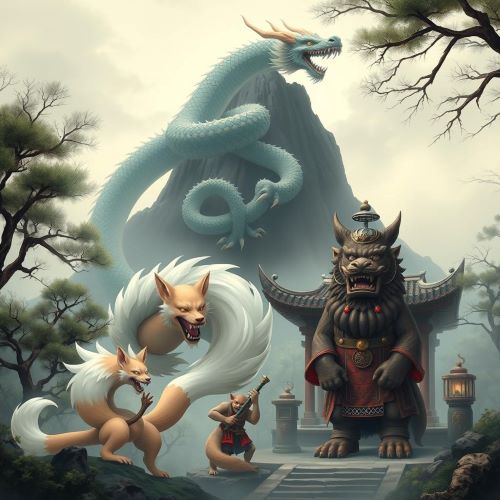
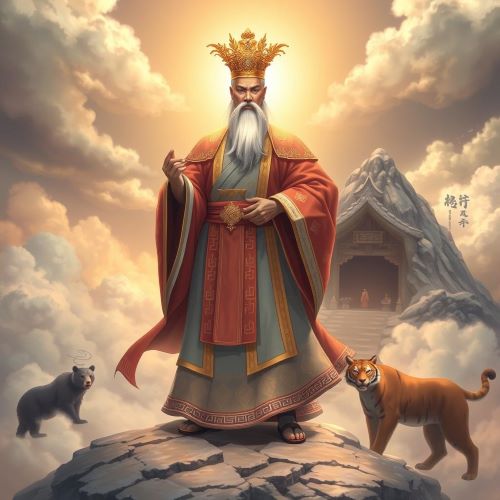
Mythic narratives suggest that Charyeok can manifest through multiple kinds of sources. Some draw from major gods associated with war, wisdom, or protection. Others channel legendary figures whose deeds have elevated them into semi-divine status. There are also cases where nature spirits, such as mountain guardians or river entities, lend their strength.
Each source carries its own temperament. Borrowing power from a righteous warrior spirit may grant physical might, while invoking an ancient scholar-deity may enhance perception or strategy. This diversity reinforces the idea that Charyeok is not a single force but a framework for supernatural exchange.
Costs, Limits, and Consequences
A defining feature of Charyeok is its cost. Borrowed power always demands something in return. This may be physical exhaustion, shortened lifespan, emotional burden, or ritual obligation. In mythic storytelling, the cost is often moral. Characters who rely too heavily on it risk losing their autonomy, becoming overshadowed by the will of the entity they channel.
This creates a narrative tension unique to Korean mythic structures. Victory achieved through Charyeok is never purely triumphant. It raises questions about dependence, agency, and the price of divine assistance.
Charyeok in Modern Korean Storytelling
In contemporary Korean fantasy, webtoons, and manhwa, Charyeok has evolved into a recognizable power system. While modern depictions often formalize it into ranks or contracts, the mythic core remains intact. Power is still external. Authority still flows downward. Respect and compatibility still determine effectiveness.
These modern interpretations have helped introduce Charyeok to global audiences, but they also preserve a distinctly Korean worldview. Strength does not isolate the hero from the world. It binds them more deeply into it.
Why Charyeok Feels Uniquely Korean
Charyeok resonates because it reflects Korea’s historical and cultural emphasis on harmony, hierarchy, and relational identity. Power is not about domination but alignment. The strongest figures are those who understand their place within a larger cosmic structure.
From a mythological lens, Charyeok represents a philosophy as much as a mechanic. It suggests that greatness is possible, but never alone, and never without consequence.
No posts were found.