
Dogon Creation Story : The Cosmic Egg and the Birth of Order
| Description | |
|---|---|
| Origin | Dogon Mythology |
| Country | Mali |
| Deities Involved | Amma, Nommo, Ogo |
| Symbolism | Cosmic Egg, Four Elements/Directions, Duality |
| Source Texts | Flawed creation followed by success |
Mythlok Perspective
From the Mythlok perspective, the Dogon Creation Story stands apart by treating imbalance as intrinsic to existence rather than a flaw to be erased. Unlike Mesopotamian or Biblical traditions where creation is finalized through divine command, Dogon cosmology resembles Yoruba and Andean worldviews where harmony must be repeatedly restored. Creation here is rhythmic, fragile, and ethical. Order survives only through continuous participation, not divine finality.
Dogon Creation Story
Introduction
The Dogon Creation Story emerges from one of West Africa’s most visually striking and culturally resilient societies. The Dogon people inhabit the cliffs and plateaus surrounding the Bandiagara Escarpment in Mali, a landscape that has helped preserve their ceremonial traditions, oral teachings, and cosmological worldview for centuries. At the center of this worldview stands Amma, the supreme creative principle, whose act of creation unfolds not as a simple divine command but as a complex, layered process filled with rhythm, failure, correction, and balance.
What makes the Dogon Creation Story remarkable is not only its symbolic depth but the way it integrates cosmology, ethics, social order, and observation of the natural world into a single narrative system. The account documented by Marcel Griaule and Germaine Dieterlen in the twentieth century revealed a creation tradition that challenges assumptions about how isolated cultures conceptualize the universe. Rather than a static myth, the Dogon Creation Story operates as a living framework that continues to shape ritual life, architecture, and seasonal ceremonies.
Cosmic Origins
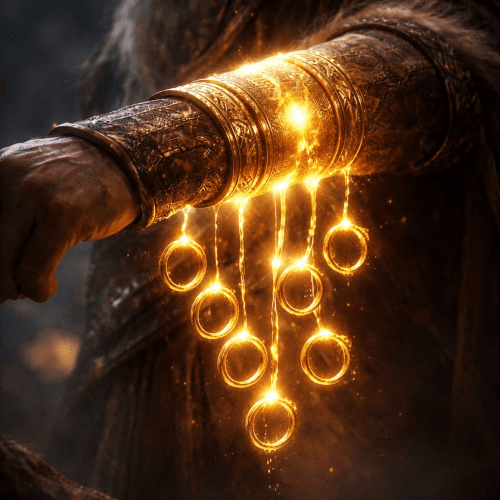
According to the Dogon Creation Story, existence begins before form, time, or direction. Amma alone exists as pure potential, condensed into a metaphysical structure known as aduno tal, often translated as the cosmic egg. This primordial form contains all future matter, motion, and meaning in an undifferentiated state. The egg is described as both conical and quadrangular, an image that anticipates spatial order while still holding chaos within it.
Within aduno tal reside 266 primordial signs. These signs prefigure every category of existence, from minerals and stars to speech and social relations. Their number symbolically echoes human gestation, linking the birth of the cosmos to the birth of life itself. Creation does not occur instantly. Instead, the egg vibrates and spirals, its motion expanding outward until it opens and disperses its contents across the universe. Stars, planets, and cosmic directions emerge through this expansion, giving structure to what was once formless.
The Dogon Creation Story emphasizes that the first movement of creation is unstable. Amma’s initial attempt fails, establishing a key theme of imperfection that runs throughout the myth. Creation, in Dogon thought, is not flawless by default. Balance must be achieved through correction, repetition, and moral order.
Deities and Forces Involved
Amma is neither male nor female, neither human nor animal. As a creative force, Amma transcends oppositions while containing them. From Amma’s divided essence emerge two contrasting principles that drive the Dogon Creation Story forward: disorder and order.
The first manifestation of imbalance appears as Ogo, also known as the Pale Fox or Yurugu. Born prematurely and without a twin, Ogo embodies incompleteness and restless desire. His solitary nature drives him to rebel against cosmic order, attempting to create independently of Amma. His failure introduces disruption into the universe.
In contrast stand the Nommo, primordial twin beings associated with water, rhythm, speech, and regeneration. Amphibious in form and luminous in nature, the Nommo represent balance achieved through pairing and cooperation. When Amma sacrifices and later restores one of the Nommo, the act distributes order across the cosmos. The Nommo become both cosmic regulators and ancestral figures, linking divine structure to human lineage.
Process
The creation process within the Dogon Creation Story unfolds through multiple phases rather than a single divine act. After the instability caused by Ogo’s premature emergence, Amma reshapes creation through deliberate intervention. The Earth itself forms from fragments associated with Ogo’s descent, rendering it initially dry, dark, and infertile.
To counter this imbalance, the Nommo descend and clothe the Earth in living fibers, substances infused with vital force and the first words of creation. Speech, in Dogon belief, is not merely communication but a creative act that restores harmony. When these fibers are disturbed, imbalance returns, prompting Amma to generate additional ancestral beings.
These ancestors receive seeds, knowledge, and tools in the celestial realm before descending to Earth. Their arrival is chaotic, scattering humans, animals, and plants across the world. Only after years of ritual ordering do Amma and the Nommo stabilize the universe, completing creation not through dominance but through alignment.
Symbolism
Symbolism saturates every layer of the Dogon Creation Story. The cosmic egg represents absolute potential, a state where all opposites coexist before separation. Its division into elements and directions mirrors both the structure of the universe and the human body.
The spiral motion of creation reflects continuity rather than linear progression. This spiral appears in Dogon masks, village layouts, and ceremonial dances, reinforcing the idea that life unfolds through cycles rather than straight paths. Twins symbolize harmony and completeness, while Ogo’s solitary nature serves as a warning against imbalance and unchecked ambition.
Fire, speech, water, and grain each function as symbols of transformation. They are gifts that sustain humanity but also forces that require discipline. In this way, the Dogon Creation Story doubles as an ethical system, teaching restraint, cooperation, and respect for cosmic rhythms.
Comparative Analysis
The cosmic egg motif central to the Dogon Creation Story appears across many cultures, suggesting a shared symbolic language in humanity’s attempts to explain origins. In Indian traditions, the Hiranyagarbha describes a golden egg from which the universe emerges. Chinese accounts of Pangu begin with chaos enclosed in an egg that separates into heaven and earth. Ancient Egyptian cosmology also features a primordial egg associated with solar creation.
What distinguishes the Dogon narrative is its emphasis on failed creation and correction. While many myths portray creation as decisive and final, the Dogon Creation Story presents it as fragile and iterative. Order must be maintained through ritual, speech, and moral balance. This places Dogon cosmology closer to cyclical African and Indigenous worldviews than to linear creation models found elsewhere.
Legacy
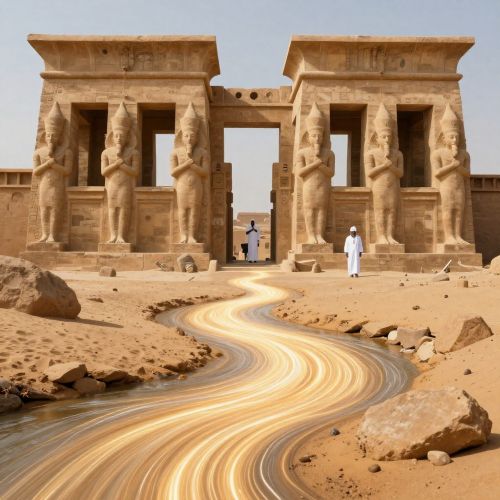
The Dogon Creation Story remains embedded in daily life rather than confined to mythic time. Village architecture mirrors cosmic structure, with granaries modeled on the form of the egg and the human body. Mask ceremonies reenact moments of cosmic ordering, while initiation rites transmit cosmological knowledge across generations.
The Sigui ceremony, held roughly every sixty years, marks cosmic renewal and the transmission of sacred language. Through such rituals, the Dogon reaffirm their connection to Amma, the Nommo, and the original ordering of the universe. Creation, in this sense, is never finished. It is continuously renewed through collective memory and practice.
Modern Influence
Modern fascination with the Dogon Creation Story often centers on its astronomical references, particularly descriptions of the Sirius system. While speculative theories have exaggerated these elements, scholarly debate has highlighted how myth and observation can coexist without requiring modern scientific frameworks.
Beyond anthropology, the Dogon Creation Story has influenced artists, architects, and philosophers interested in non-linear cosmologies. Its vision of creation as rhythmic, imperfect, and relational offers an alternative to mechanistic views of the universe. In an era grappling with ecological imbalance, the Dogon emphasis on harmony over domination feels increasingly relevant.


Sources
JustAlchemy. (n.d.). Cosmic egg. https://justalchemy.com/category/cosmic-egg/
Wikipedia contributors. (2024). Dogon religion. Wikipedia. https://en.wikipedia.org/wiki/Dogon_religion
Maxmag. (2025, August 3). Dogon mythology: Mali’s star people and their cosmic beliefs. https://maxmag.org/mythology/dogon-mythology/
Britannica. (2014, October 10). Amma. https://www.britannica.com/topic/Amma
ObeisanceBaha. (2025, September 20). Ancient Dogon people cosmology. https://www.obeisancebaha.org/ancient-dogon-people-cosmology/
Fabulahub. (2025, October 10). Dogon Creation Myth: Amma, Nommo, and the Cosmic Egg. Retrieved from https://fabulahub.com/en/story/myth-dogon-creation-story-amma-cosmic-egg-and-nommo/sid-2529
Oxford Reference. (n.d.). Amma and the Egg that Contains the Universe. Retrieved from https://www.oxfordreference.com/display/10.1093/oi/authority.20110803095408829
Frequently Asked Questions
What is the Dogon Creation Story about?
The Dogon Creation Story explains how the universe emerged from a cosmic egg created by Amma, emphasizing balance, imperfection, and the role of divine twins in restoring order.
Who is Amma in Dogon belief?
Amma is the supreme creative force in Dogon cosmology, existing beyond gender and form, responsible for initiating and correcting the process of creation.
What is the significance of the Nommo?
The Nommo are primordial twin beings associated with water, speech, and balance, serving as agents who restore harmony after creation is disrupted.
Who is the Pale Fox in the Dogon Creation Story?
The Pale Fox, also known as Ogo or Yurugu, represents disorder and incompleteness, symbolizing the dangers of imbalance and solitary creation.
Why is the cosmic egg important in Dogon cosmology?
The cosmic egg symbolizes total potential and unity, containing all elements and signs of existence before they separate into the ordered universe.
