Nagastra
Introduction
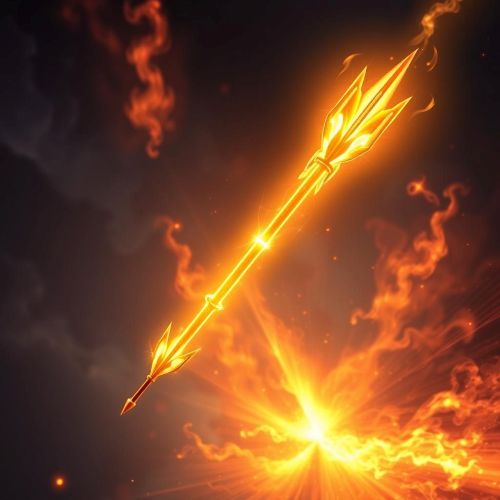
In Indian epic tradition, warfare was never merely physical. Battles unfolded on both material and cosmic planes, where victory depended as much on spiritual discipline as martial skill. Among the many divine weapons described in the Ramayana and the Mahabharata, the Nagastra stands out as one of the most terrifying astras ever unleashed. Rooted in serpent symbolism and activated through sacred mantras, Nagastra transformed a single arrow into a manifestation of living, venomous destruction.
The name Nagastra derives from “Nāga,” the semi-divine serpent beings of Indian tradition, and “astra,” a missile weapon invoked rather than wielded. Unlike ordinary arrows or swords, an astra drew its power from a presiding deity and could not be used without precise ritual knowledge. When invoked correctly, Nagastra released swarms of deadly serpents capable of binding heroes, crippling armies, or inducing terror across the battlefield. Its presence in epic literature reflects an ancient worldview where serpents embodied both primal fear and cosmic authority.
Origins
The origins of Nagastra lie deep within the theological framework of astras, which emerged from Vedic and later epic traditions. Astras were not manufactured weapons but divine forces granted through austerity, discipline, and moral worth. Classical texts describe them as being presided over by specific deities and governed by strict rules of invocation and withdrawal. The Nagastra is most closely associated with the Nāga lineage, particularly Vasuki, the king of serpents, who appears repeatedly in cosmic narratives as both guardian and weapon-bearer.
One important origin narrative describes Nagapasha, a closely related serpent missile, as a living serpent created by Brahma to destroy the asura Nagasura, whose reign spread death and chaos across Salmali Island. After fulfilling its purpose, this serpent was defeated by Garuda, the eternal enemy of the Nāgas. Seeking refuge, it surrendered itself to Shiva, who transformed it into a celestial weapon rather than a wandering force of destruction. Through Shiva’s intervention, Nagastra became an astra accessible to gods, demons, and select mortals who earned it through penance.
This transformation from living entity to divine missile reflects a recurring theme in Indian cosmology: destructive power is not eliminated but redirected under cosmic law. References to serpent-binding weapons also appear in treatises like the Dhanurveda and Arthashastra traditions, reinforcing Nagastra’s role not only as mythic lore but as part of a broader strategic imagination.
Think you know your myths and legends? Dive into the world of ancient stories and test your knowledge with our engaging quizzes on Mythlok!
Powers
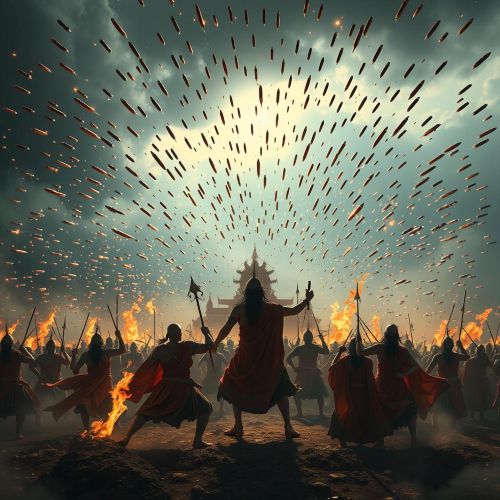
When invoked, Nagastra manifests as an arrow that multiplies into countless serpents mid-flight. These serpents coil around enemies, bite with lethal venom, and immobilize even the mightiest warriors. In some accounts, the snakes breathe fire, while in others they act as binding forces rather than immediate instruments of death. This dual function makes Nagastra unique among astras, as it can incapacitate without killing, depending on the intent of the user.
Beyond physical harm, Nagastra exerts immense psychological terror. The sudden eruption of writhing serpents across a battlefield induces panic, breaks formations, and overwhelms even seasoned fighters. The weapon operates simultaneously on the physical and illusory planes, blurring the line between reality and divine manifestation. However, Nagastra is not uncontrollable. Strict mantra discipline governs its use, and failure to withdraw the weapon properly could invite divine retribution upon the wielder.
The primary counter to Nagastra is the Garudastra, which summons Garuda or eagle forces that devour the serpents instantly. This eternal opposition between serpents and birds mirrors a cosmic balance embedded within the weapon system itself, ensuring that no astra remains absolute.
Owners/Users
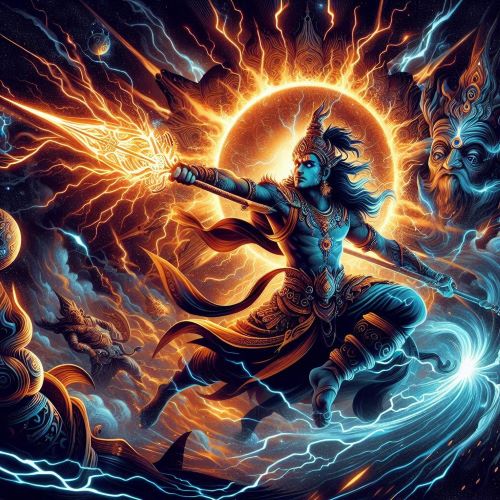
Only warriors trained as astradharis were capable of wielding Nagastra. In the Ramayana, the most famous user is Indrajit, also known as Meghanada, the son of Ravana. Trained by celestial beings and empowered through severe austerities, Indrajit used Nagastra with devastating precision, proving himself nearly invincible in early stages of the Lanka war.
Ravana himself is also described as possessing serpent-based astras, though his mastery never surpassed that of his son. In the Mahabharata, Karna received Nagastra under strict conditions, bound by a vow to use it only once and only against Arjuna. This limitation underscores the ethical codes governing astras, where restraint was as important as power.
Some traditions also suggest that Arjuna and Rama possessed knowledge of Nagastra, though they rarely deployed it, relying instead on counter-astras or divine intervention. Across all narratives, possession of Nagastra signifies not just strength but recognition by cosmic authorities.
Instances used
One of the most iconic uses of Nagastra occurs during the Battle of Lanka, when Indrajit fires Nagapasha at Rama and Lakshmana. The serpent missiles bind both brothers completely, rendering them unconscious and immobilized. The battlefield falls silent, believing the war lost, until Garuda arrives and disperses the serpents, restoring Rama and Lakshmana. This episode highlights both the terror of Nagastra and the necessity of divine balance.
In the Mahabharata, Karna’s use of Nagastra on the seventeenth day of the Kurukshetra war marks a climactic moment. Aiming at Arjuna, Karna adheres strictly to his vow, using the weapon only once. Krishna’s intervention saves Arjuna, reinforcing the theme that destiny and dharma ultimately supersede even the most powerful weapons.
Other regional retellings describe Nagastra being used against entire divisions, particularly in illusionary warfare, where confusion and fear were as decisive as physical damage.


Source
Hindu Blog. (2012, February). Story of Nagapasha or Nagastra. https://www.hindu-blog.com/2012/02/story-of-nagapasha-or-nagastra.html
Wisdom Library. (2024, September 27). Nagastra: Significance and symbolism. https://www.wisdomlib.org/concept/nagastra
Wikipedia. (2007, August 4). Astra (weapon). https://en.wikipedia.org/wiki/Astra_(weapon)[9]
Kamban. (n.d.). Kamba Ramayana: Yuddha Kanda
Menon, R. (2006). The Mahabharata: A Modern Rendering. Rupa Publications.
Valmiki. (c. 5th century BCE). Valmiki Ramayana (Critical editions by Oriental Institute, Baroda). (Indrajit’s deployment).
Ramana Maharshi Foundation. (n.d.). The divine arsenal: Top 10 astras in Hindu lore. Retrieved from https://www.ramana-maharshi.org/the-divine-arsenal-top-10-astras-in-hindu-lore/
Frequently Asked Questions
What is Nagastra in Indian epics?
Nagastra is a divine missile weapon invoked through mantras that releases venomous serpents to bind or destroy enemies in epic warfare.
Who created Nagastra?
Nagastra is associated with the Nāga king Vasuki and is believed to have been transformed into an astra through the intervention of Shiva.
Who used Nagastra in the Ramayana?
Indrajit, the son of Ravana, famously used Nagastra to incapacitate Rama and Lakshmana during the Battle of Lanka.
How was Nagastra countered?
The primary counter to Nagastra is Garudastra, which invokes Garuda, the natural enemy of serpents, to destroy the snake manifestation.
Is Nagastra the same as the modern Nagastra-1 weapon?
No. The mythological Nagastra is a divine astra from ancient epics, while Nagastra-1 is a modern military drone with no mythological connection.