


Taga : The Chamorro Giant and Builder of Latte Stones
Listen
At a glance
| Description | |
|---|---|
| Origin | Chamorro Mythology |
| Classification | Demigods |
| Family Members | N/A |
| Region | Guam |
| Associated With | Superhuman strength |
Taga
Introduction
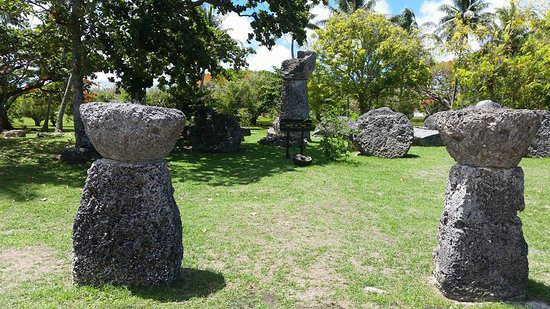
Taga occupies a towering place in Chamorro tradition as one of the most powerful ancestral figures remembered from the Mariana Islands. Revered as a giant chief and master builder, Taga is inseparably linked to the monumental latte stones that still dominate the landscapes of Guam, Rota, and Tinian. These stone pillars, once foundations for traditional houses, are not merely archaeological remains but living symbols of Chamorro resilience, ingenuity, and pre-colonial strength. Stories of Taga describe an era when leadership was measured through physical prowess, communal responsibility, and the ability to shape the land itself. Over generations of oral storytelling, his life has grown into a layered legend that blends human ambition, tragic flaw, and cultural transformation, making Taga one of the most enduring figures in Chamorro belief.
Physical Traits
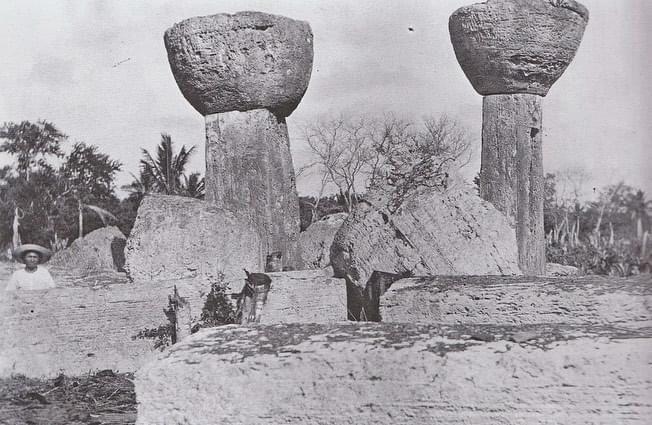
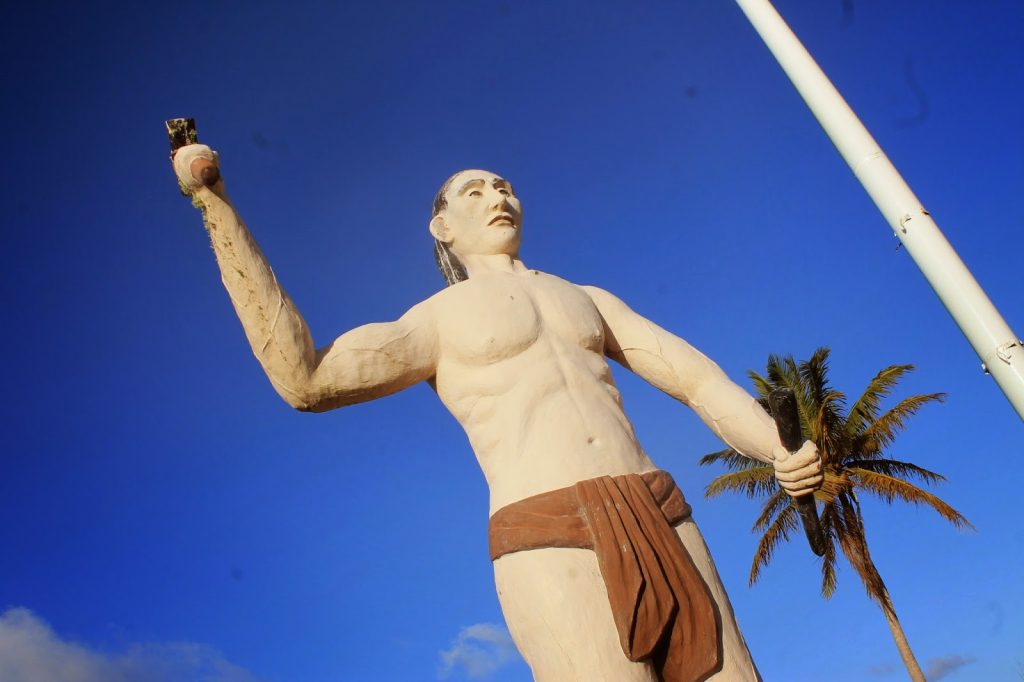
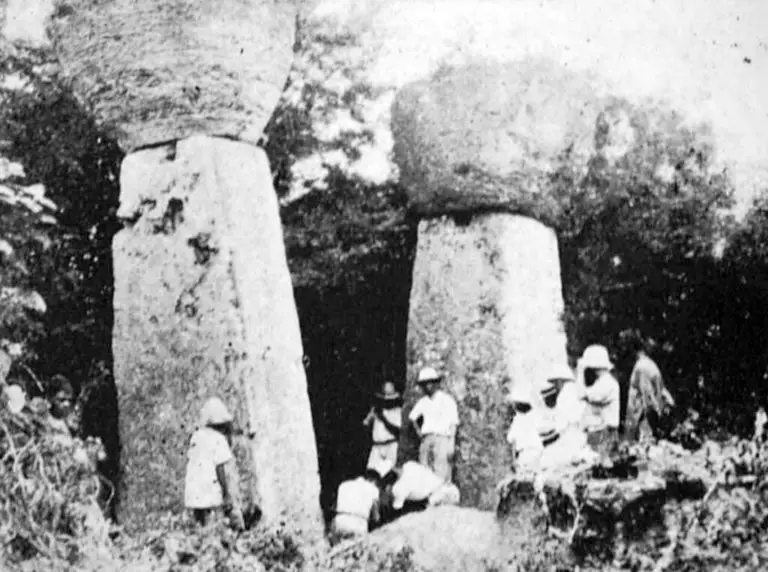
In Chamorro oral tradition, Taga is consistently described as a giant whose size and strength far exceeded that of ordinary humans. He is imagined as broad-shouldered and immensely tall, capable of feats that seemed impossible even to the strongest warriors. Legends recount him lifting and positioning massive stone pillars with ease, a task that would have required extraordinary coordination and power. His physical form symbolizes more than brute strength; it reflects the idealized image of a maga’låhi, or chief, whose body embodied authority, protection, and dominance. The sheer scale of the latte stones attributed to him, some reaching heights of over fifteen feet, reinforces the belief that Taga’s body itself was a force of nature, bridging the human and the monumental.
Family
Family relationships are central to Taga’s story and reveal the deeply human dimension beneath his giant stature. Born in Ritidian Village in Guam, Taga was the son of a ruling maga’låhi whose harsh leadership shaped his early life. After challenging and losing to his father, Taga left his homeland and eventually established himself as a chief elsewhere in the islands. He married and had children, including a son whose strength rivaled and even surpassed his own. Fearful of being overthrown, Taga committed an unforgivable act by killing the boy, a decision that shattered his household. His daughter fled in horror, and his wife soon followed, leaving Taga isolated. This tragic arc transforms him from an invincible giant into a cautionary figure, illustrating how unchecked power and fear can destroy even the strongest lineage.
Other names
The name Taga remains the most widely recognized designation for this legendary chief, yet his identity expands through titles and associations. He is closely linked to the House of Taga, or Guma’ Taga, the largest and most famous latte stone complex on Tinian. In later historical narratives shaped by Spanish colonization, Taga was reportedly baptized and given the Christian name Sebastian Hurtado de la Corcuera, after a Spanish governor. This renaming reflects how colonial histories sought to reinterpret indigenous figures within European frameworks. Across oral traditions, these names do not replace Taga but add layers to his story, revealing how myth adapts to cultural upheaval while retaining its core identity.
Powers and Abilities
Taga’s abilities center primarily on his superhuman strength, but his legend extends beyond simple physical might. He was believed to possess an intuitive understanding of balance, stonework, and construction that allowed him to erect the latte pillars with precision. His strength enabled him to dominate wrestling contests, defeat rival chiefs, and establish authority wherever he settled. Some versions of the legend attribute visionary experiences to him, including prophetic dreams that later storytellers interpreted through Christian symbolism. Unlike sorcerers or spirit-beings, Taga’s power is portrayed as an extreme expression of human potential, elevated to mythic scale. His abilities represent leadership rooted in action, endurance, and the capacity to leave lasting marks upon the land.
Modern Day Influence
Taga’s presence remains deeply woven into contemporary Chamorro identity. The House of Taga on Tinian is now a protected archaeological site and a national historic landmark, drawing visitors who encounter both history and legend in stone form. Latte stones associated with his story appear on flags, seals, and cultural emblems, reinforcing their role as symbols of indigenous heritage. In schools across Guam and the Northern Mariana Islands, Taga’s story is taught as part of cultural education, helping younger generations connect with their ancestral past. Storytelling events, festivals, and academic research continue to revisit his legend, often framing him as a symbol of resilience amid colonization and cultural loss. Through these modern expressions, Taga remains alive not as a distant myth but as a defining figure of Chamorro cultural memory.
Related Images



Source
Cunningham, L. J., & Kasperbauer, J. (2001). A porterography of the Mariana Islands. Guam Territorial Government.
Guampedia Foundation. (2025). Taga. Guampedia. https://www.guampedia.com/taga/
Iijima, J. (2011). House of Taga. Wikipedia. https://en.wikipedia.org/wiki/House_of_Taga
Manglona, J. (n.d.). Chamorro folktales about Guam: Taga. Guam Stripes. https://guam.stripes.com/travel/chamorro-folktales-about-guam-taga.html
National Marianas History Conference. (2023). A Marianas mosaic. Northern Marianas Humanities Council. https://www.nmhcouncil.org/wp-content/uploads/MarianasMosaic.pdf
Rogers, R. F. (1995). Destiny’s landfall: A history of Guam. University of Hawaii Press.
The Clio. (n.d.). Guma Taga; House of Taga. https://theclio.com/entry/110385
Thompson, L. M. (1945). Guam and its people: A study of culture change and ethnic identity. Stanford University Press.
Frequently Asked Questions
Who was Taga in Chamorro tradition?
Taga was a legendary giant chief known for his immense strength and for building the largest latte stone structures in the Mariana Islands.
Are the latte stones really linked to Taga?
While archaeologically built by ancient Chamorro people, oral tradition attributes the largest and most famous latte stones, especially on Tinian, to Taga.
Where is the House of Taga located?
The House of Taga is located on the island of Tinian in the Northern Mariana Islands and is a protected historic site.
Was Taga a god or a human?
Taga is portrayed as a giant with superhuman abilities, often considered a demigod-like ancestral figure rather than a full deity.
Why is Taga important to Chamorro identity today?
Taga symbolizes pre-colonial strength, leadership, and cultural resilience, making him a powerful emblem of Chamorro heritage and pride.
