

Sina: The Samoan Maiden Who Gave Birth to the Coconut Tree
Listen
At a glance
| Description | |
|---|---|
| Origin | Samoan Mythology |
| Classification | Mortals |
| Family Members | N/A |
| Region | Samoa |
| Associated With | Fertility, Origin of the coconut tree |
The Mythlok Perspective
From the Mythlok perspective, Sina represents a rare mythic constant across Oceania: transformation without violence. Where many traditions frame creation through conflict or divine command, Sina’s story roots change in empathy and restraint. The coconut is not seized or forged but grown through care and remembrance. This elemental framing aligns Sina with earth and water rather than sky or fire, placing her within a wider global pattern where feminine figures mediate balance between humans and nature. In this sense, Sina is not merely a character but a philosophy encoded in story.
Sina
Introduction
Sina is one of the most enduring figures in Samoan oral tradition and wider Polynesian storytelling. Her name is inseparable from the celebrated legend Sina ma le Tuna (Sina and the Eel), an origin narrative that explains how the coconut tree came into the world. Across Samoa, Tonga, Fiji, and Māori traditions, Sina appears as a beautiful yet resolute maiden whose encounters with supernatural beings transform the natural landscape itself. Unlike many mythic figures defined by divine birth or raw power, Sina’s importance lies in her humanity. Her compassion, agency, and emotional depth act as catalysts for sacred change, embedding her story into everyday life through one of the Pacific’s most essential plants. Through Sina, myth becomes ecology, and emotion becomes creation.
Physical Traits
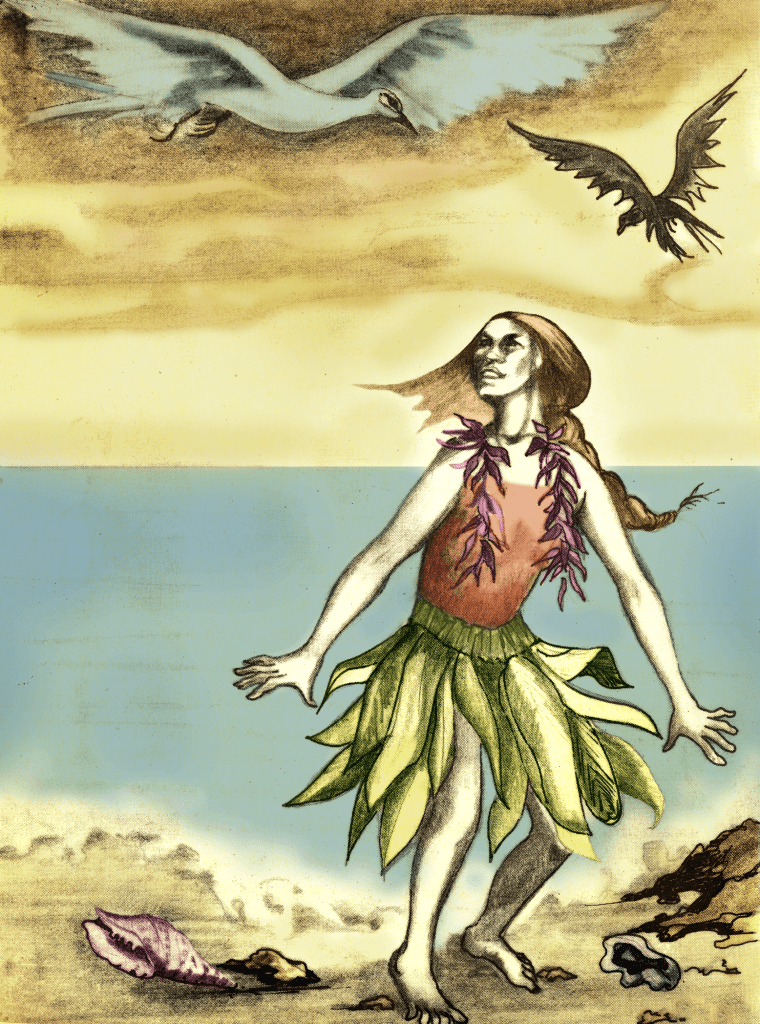
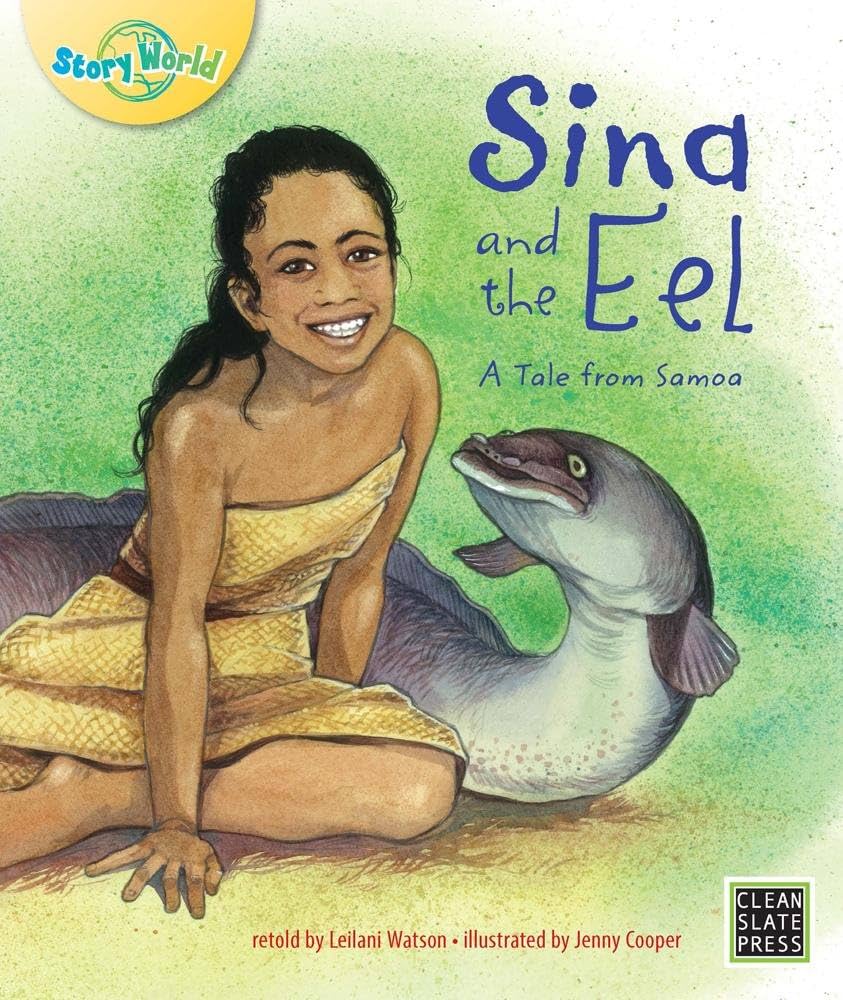
Samoan tradition consistently describes Sina as extraordinarily beautiful, a beauty known far beyond her village and even across oceans. Her radiance is not framed as ornamentation but as presence. Storytellers speak of her long flowing hair, luminous complexion, and calm confidence, often likened to moonlight reflecting on still water. The very meaning of the word sina in Samoan, associated with whiteness or brightness, reinforces this symbolism of clarity and purity. Importantly, Sina is never described as physically supernatural. Her appearance remains human, which heightens the contrast between her and the enchanted forces drawn to her. Her beauty serves a narrative function, attracting kings, spirits, and shape-shifters, but it is her intelligence and emotional strength that define her role rather than mere appearance.
Family
Accounts of Sina’s family differ across islands and villages, reflecting the fluid nature of Polynesian oral tradition. In many Samoan tellings, she is portrayed as a young woman living with her mother near a freshwater pool where the eel Tuna first appears. Other traditions elevate her status, presenting her as the daughter of a high chief or linking her to divine siblings such as Pili in Manu’a narratives. Despite these variations, Sina is never primarily defined by lineage. Her family provides social grounding rather than divine authority. This framing reinforces an important cultural idea: that transformative events can emerge from ordinary domestic life. Sina’s humanity, rather than exalted ancestry, allows audiences to see themselves reflected in her story.
Other names
While Sina is her most recognised name in Samoa, she belongs to a wider Polynesian archetype that appears under related names across the Pacific. In Hawaiian and Māori traditions, she closely parallels Hina, while Ina appears in the Cook Islands and other regions. These names often share associations with light, the moon, femininity, and transformation. In Samoa itself, epithets sometimes connect her to specific places or lineages, such as Sina Pili or Sina from Fiji, depending on the tale. These variations do not dilute her identity but instead reveal a shared cultural memory spread across ocean routes, where stories travelled with people and adapted to new landscapes while preserving their symbolic core.
Powers and Abilities
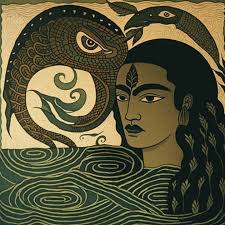
Sina is not portrayed as a sorceress or goddess wielding supernatural force. Her power is relational and emotional. In the most famous legend, Tuna, a shape-shifting eel revealed as a transformed Fijian king, falls deeply in love with her. When Tuna is killed, he asks Sina to bury his head, from which the first coconut tree grows. Sina’s role is not magical intervention but compassionate action. Her tears, care, and respect for Tuna’s final wish allow transformation to occur. The coconut’s three markings are said to echo Tuna’s face, eternally binding memory, sacrifice, and sustenance. Sina’s true ability lies in empathy, discernment, and moral choice, presenting power as something that flows through relationships rather than domination.
Modern Day Influence
Sina remains deeply embedded in Samoan cultural identity. Her story is taught in schools, performed in dance and song, and referenced in ceremonies connected to land and agriculture. The coconut tree, central to food, shelter, craft, and trade, gains sacred dimension through her mythic association. Beyond Samoa, Sina’s narrative resonates across Polynesia as a shared origin story, reinforcing cultural kinship between islands. In contemporary literature, visual art, and environmental discourse, Sina often appears as a symbol of ecological balance and feminine agency. Even global popular culture echoes her legacy, subtly weaving the eel-coconut myth into modern retellings of Pacific heritage. Through these adaptations, Sina continues to bridge ancestral memory and modern identity.
Related Images

Source
Buck, P. H. (1938). Samoa and the Samoan heritage. Stanford University Press.
Lichtenberg, S. (2011). Experiencing Samoa through stories: Myths and legends. SIT Digital Collections. https://digitalcollections.sit.edu/isp_collection/2085/
Nelson, O. F. (1925). Legends of Samoa. The Journal of the Polynesian Society, 34(135), 179-192.
https://www.jstor.org/stable/20702025
O le Papa o le Kollege o Samoa. (n.d.). Sina ma si ana tama i le masina = Sina in the moon. https://tewaharoa.victoria.ac.nz/discovery/fulldisplay?vid=64VUW_INST%3AVUWNUI&search_scope=MyInst_and_iab=9965
Pratt, D., & Pratt, J. (2010). Samoan legend of the 1st coconut. Pacific Island Parks.
https://pacificislandparks.wordpress.com/2010/04/26/samoan-legend-of-the-1st-coconut/
Samoan Mythology Blog. (2021). The legend of Sina from Fiji and Chief Malu of Samoa https://samoanmythology.org/st-legend-of-sina/
Wikipedia contributors. (2024). Sina and the Eel. Wikipedia. https://en.wikipedia.org/wiki/Sina_and_the_Eel
Wikipedia contributors. (2024). Hina (goddess). Wikipedia. https://en.wikipedia.org/wiki/Hina_(goddess)[2]
Stuebel, C. (1987). Samoan Myths and Legends. Institute of Pacific Studies, University of the South Pacific.
Turner, G. (1884). Samoa: A Hundred Years Ago and Long Before. London: Macmillan.
Shore, B. (1982). Sala‘ilua: A Samoan Mystery. Columbia University Press.
Māhina, ‘O. (2004). Tā, Vā, and Moana: Polynesian Mythology and Philosophy. Journal of Polynesian Society, 113(3), 233–260
Frequently Asked Questions
Who is Sina in Samoan tradition?
Sina is a legendary Samoan maiden best known from the story of Sina and the Eel, explaining the origin of the coconut tree.
Is Sina a goddess?
No. Sina is portrayed as human, not divine, which makes her role as a catalyst for sacred transformation especially meaningful.
What does the coconut symbolize in Sina’s story?
The coconut represents sacrifice, memory, and sustenance, born from compassion rather than conquest.
Is Sina connected to Hina in other Polynesian cultures?
Yes. Sina is closely related to figures like Hina or Ina across Polynesia, reflecting a shared mythic archetype.
Why is Sina still important today?
Her story reinforces cultural identity, ecological respect, and the idea that human emotion can shape the natural world.