


Mishipeshu : The Ferocious Water Spirit of the Ojibwe
Listen
At a glance
| Description | |
|---|---|
| Origin | Ojibwe Mythology |
| Classification | Hybrids |
| Family Members | N/A |
| Region | United States of America |
| Associated With | Copper, Storms, Floods |
Mishipeshu
Introduction
Mishipeshu, the legendary “Great Lynx” or “Underwater Panther,” stands as one of the most powerful and awe-striking beings in Ojibwe mythology. Revered across the Great Lakes region, this spirit embodies the unpredictable force of deep waters—life-giving, protective, and dangerously volatile. To the Ojibwe, Mishipeshu presides over lakes, rivers, and copper deposits, binding natural resources to spiritual law. Its domain is not merely physical but profoundly symbolic, representing the uncharted depths of the natural world and the consequences of human actions within it. For centuries, its mythology has shaped community practices, travel rituals, and teachings on environmental reciprocity, reinforcing the belief that water is alive, conscious, and must be treated with respect.
Physical Traits
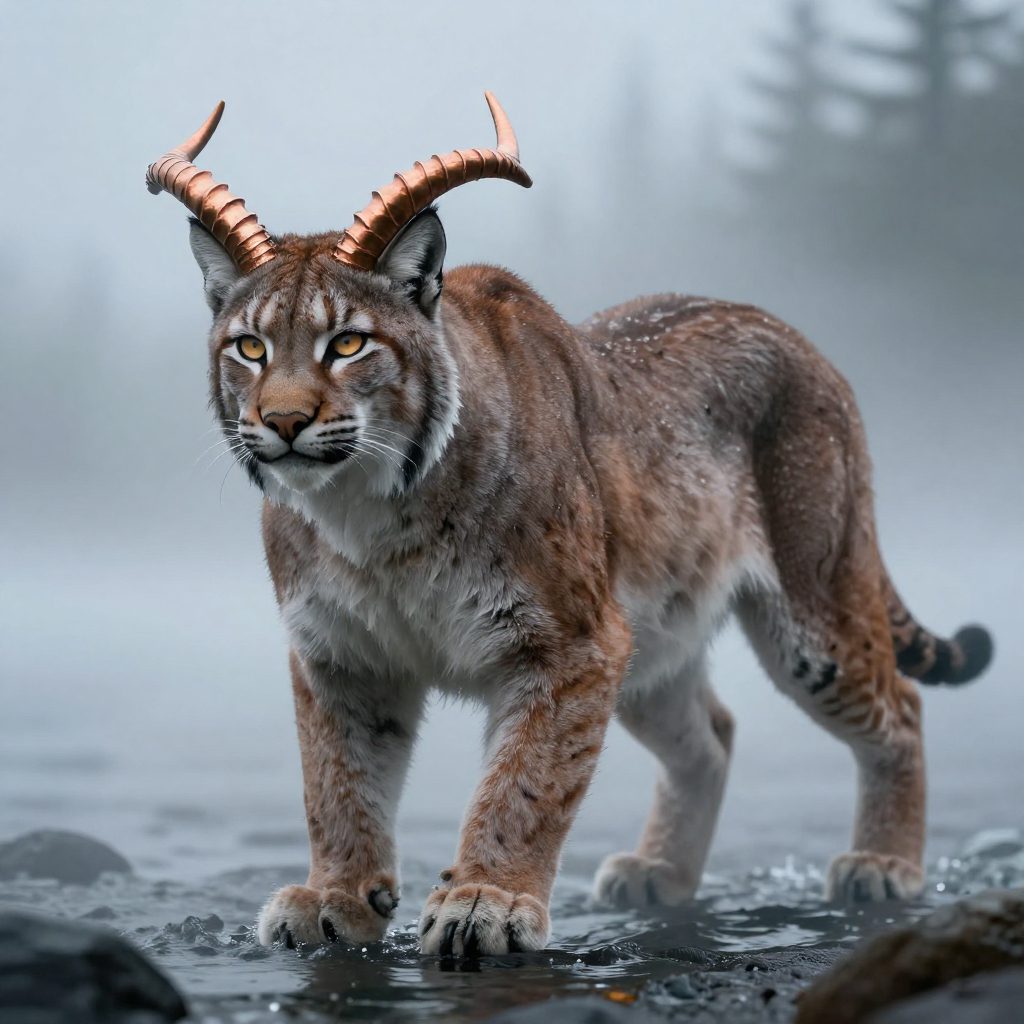
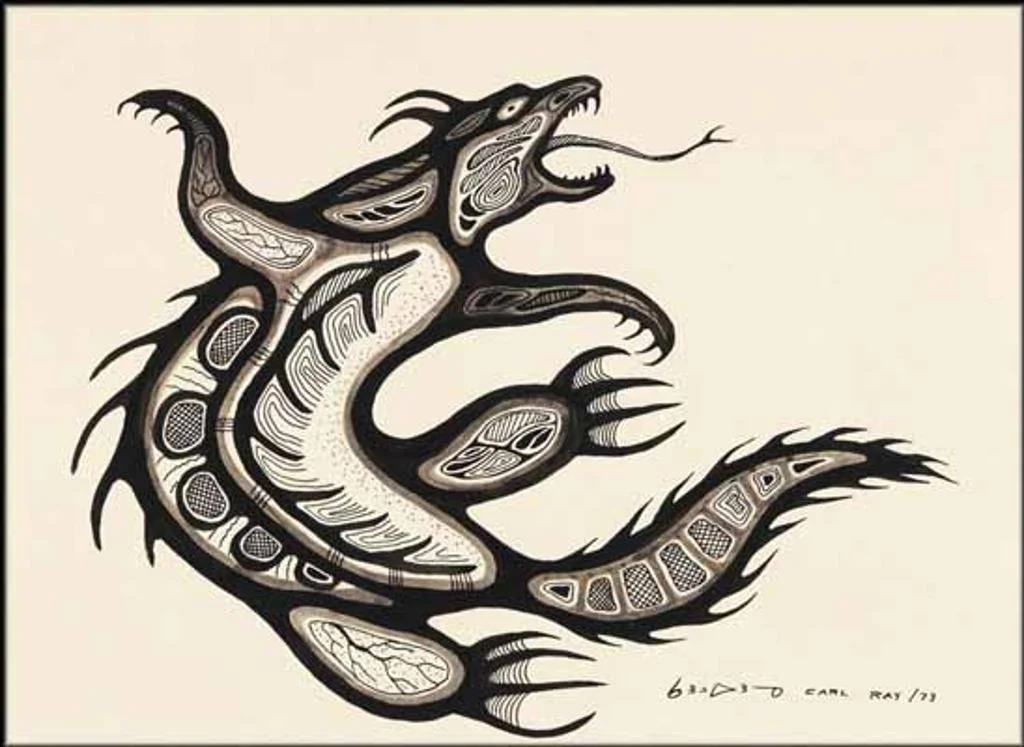
Mishipeshu is recognized for its striking and fearsome hybrid form. Most traditions describe a creature with the head and forelimbs of a massive lynx or panther, symbolizing predatory strength, while its torso and tail carry unmistakably aquatic features. Scales cover its body like armor, gleaming in hues reminiscent of deep lake waters, and rows of sharp spines run along its tail and back. Bison-like or antler-like horns rise from its head, emphasizing its supernatural stature, while its eyes—often described as glowing—reflect the intelligence and danger of the spirit realm.
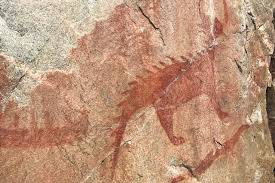
Ancient pictographs, particularly the renowned Agawa Rock paintings along Lake Superior, depict Mishipeshu with extended claws and a serpentine tail, its body painted in ochre red to signal its spiritual power. These images, many estimated to be hundreds of years old, confirm its long-standing role as a guardian and enforcer of natural law. Whether portrayed as colossal or more proportionate to a large animal, the creature always appears far beyond human scale, reinforcing its dominance over the waters it commands.
Family
Rather than a family in the human sense, Mishipeshu belongs to a powerful class of spiritual beings known as manitouk within Ojibwe cosmology. Its closest mythological counterparts are the Thunderbirds (animikiig), sky spirits who stand in elemental opposition to Mishipeshu and other water beings. Their relationship represents a cosmic tension between sky and water, thunder and wave, creating a balance that structures weather and ecological cycles.
Some stories describe eternal battles between the Thunderbirds and Mishipeshu, where lightning bolts strike lakes as an effort to control or destroy the underwater beings. Folklore suggests that serpents and other water entities, sometimes called mishiginebig, serve under Mishipeshu’s influence, populating its submerged territories. In creation narratives, the Great Lynx interacts with cultural heroes such as Wenebojo (Nanabozho), highlighting its longstanding presence in Anishinaabe cosmology as a spirit that shapes both land and water through its actions.
Other names
Across Indigenous communities, Mishipeshu is known by multiple names that reflect linguistic variations and cultural nuances. Among the Ojibwe, terms such as Mishibijiw, Mishibizhiw, and Mishebeshu all translate to versions of “Great Lynx.” English adaptations often adopt the descriptive title “Underwater Panther,” which captures the creature’s dual nature but simplifies its deeper symbolic traits.
Neighboring tribes within the Anishinaabe cultural sphere, including the Odawa and Potawatomi, share legends of similar beings, sometimes blending Mishipeshu with horned serpent narratives. European contact introduced further variations: 17th-century French missionaries recorded the spirit as Michi-Pichoux, attempting to transcribe its Ojibwe pronunciation. Despite these differences, all names point toward the same powerful aquatic guardian whose presence shapes stories across the Great Lakes.
Powers and Abilities
The powers attributed to Mishipeshu reflect the immense respect—and fear—that the Ojibwe hold for the waters. The spirit controls storms, currents, whirlpools, and floods, using them to enforce balance or punish disrespect. Travelers who ignored rituals or attempted to disturb sacred places were believed vulnerable to sudden tempests or dangerous waves.
Mishipeshu is particularly known as the guardian of copper, a metal highly valued in ancient Great Lakes cultures. Sacred sites such as Michipicoten Island were believed to fall under its protection, and anyone who extracted copper without proper offerings risked invoking the being’s wrath. Traditional offerings often included tobacco, copper pieces, or prayers meant to ensure safe passage.
Beyond its command of the elements, Mishipeshu also governs aquatic life and is said to influence hunting fortunes. In spiritual contexts, the being can appear in dreams or visions, imparting warnings or granting insight to those it favors. These capabilities position Mishipeshu as both an enforcer of natural law and a source of profound spiritual knowledge.
Modern Day Influence
Today, Mishipeshu remains a vibrant symbol of cultural identity, environmental reverence, and Indigenous resilience. Ojibwe artists continue to portray the Great Lynx in paintings, beadwork, sculptures, and digital art, often drawing inspiration from the ancient pictographs while integrating contemporary concerns such as water protection and climate change. Its iconic form appears in public murals, museum exhibitions, and educational resources, reinforcing its relevance in cultural revitalization.
The legend also influences broader popular culture. Mishipeshu appears in novels, video games, tabletop role-playing systems like Dungeons & Dragons, and academic studies on hydromythology and ecology. These modern reinterpretations often emphasize its role as a guardian spirit, aligning with present-day movements advocating for environmental stewardship and Indigenous water rights. The mythology of Mishipeshu thus bridges past and present, reminding audiences that the health of the natural world is inseparable from spiritual balance and cultural survival.
Related Images
Blogs & Opinions
Glorious Epics
Mythical Events


Source
Basil H. Johnston. (1976). Ojibway heritage. McClelland and Stewart.
Howey, M. C. L. (2020). Other-than-human persons, Mishipishu, and danger in the Late Woodland Inland Waterway of northern Michigan. American Antiquity. https://www.cambridge.org/core/journals/american-antiquity/article/otherthanhuman-persons-mishipishu-and-danger-in-the-late-wood
Johnston, B. H. (1995). The manitous: The spiritual world of the Ojibway. HarperCollins.
Lovis, W. A. (2001). Clay effigy representations of the bear and Mishipishu: Algonquian iconography from the Late Woodland Johnson site, northern Lower Michigan. Midcontinental Journal of Archaeology, 26(1), 105-119. https://www.academia.edu/12935204/Clay_Effigy_Representations_of_the_Bear_and_Mishipishu
Monsters and Us. (2025, October 7). Mishipeshu: The Great Lynx of Ojibwa lore. https://monstersandus.com/blog/mishipeshu-great-lynx/
Native Languages of the Americas. (n.d.). Native American legends: The Water Panther (Mishipeshu). http://www.native-languages.org/water-panther.htm
Underwater panther. (n.d.). In Wikipedia. Retrieved December 9, 2025, from https://en.wikipedia.org/wiki/Underwater_panther
Vecsey, C. (1983). Traditional Ojibwa religion and its historical changes. American Philosophical Society.
Frequently Asked Questions
What is Mishipeshu in Ojibwe mythology?
Mishipeshu is a powerful underwater spirit known as the Great Lynx, believed to control storms, protect copper, and govern the deep waters of the Great Lakes.
Why is Mishipeshu called the Underwater Panther?
It earns this name because it combines the features of a large feline with aquatic, serpentine traits, symbolizing its dominion over water and hidden depths.
Where is Mishipeshu believed to live?
Most traditions place Mishipeshu in Lake Superior and other major Great Lakes, where it guards sacred underwater regions and natural resources.
What powers does Mishipeshu have?
Mishipeshu controls weather, waves, and water currents, protects copper deposits, influences aquatic life, and can communicate through visions or dreams.
Does Mishipeshu appear in modern culture?
Yes. Mishipeshu features in Indigenous artwork, literature, environmental movements, academic studies, and even fantasy games and pop culture retellings.
