
Heyoka : The Sacred Contrarian of the Sioux Traditions
Listen
At a glance
| Description | |
|---|---|
| Origin | Dakota Mythology |
| Classification | Spirits |
| Family Members | N/A |
| Region | United States of America |
| Associated With | Contradiction, Satire, Thunder visions, Healing |
The Mythlok Perspective
The Heyoka represents a rare spiritual truth: balance is not preserved by order alone, but by those willing to disrupt it. Unlike heroic figures who uphold law or morality, the Heyoka safeguards equilibrium by exposing excess and illusion. Comparable figures appear across cultures, from sacred fools in Indigenous societies to ritual clowns in Mesoamerica and paradox-teachers in Himalayan traditions. In every case, inversion becomes instruction, reminding humanity that wisdom often arrives disguised as disorder.
Heyoka
Introduction
In Dakota and Lakota Sioux traditions, the Heyoka occupies one of the most paradoxical and demanding spiritual roles imaginable. Often translated as “sacred clown” or “contrary,” the Heyoka is not a figure of casual humor or entertainment, but a person called through terrifying and transformative visions of the Thunder Beings, known as Wakíŋyaŋ. This calling is never sought. It arrives through overwhelming spiritual encounters that resemble the violence and renewal of a thunderstorm, breaking down the individual before reshaping them into a living mirror for the community.
The Heyoka exists to disrupt comfort. By behaving in reverse, speaking in contradiction, and violating social expectations, they expose arrogance, hypocrisy, fear, and stagnation. Their laughter often emerges during grief, and their solemnity appears in moments of celebration. This inversion forces reflection, reminding the community that balance cannot exist without confronting its opposite. Unlike trickster figures who act from selfishness or mischief, the Heyoka operates under spiritual obligation, guided by the will of the Thunder Beings and ultimately accountable to Wakan Tanka, the Great Mystery.
Historically, Heyoka figures were both revered and feared. Their presence signaled spiritual tension within the community, yet also the possibility of renewal. They stood at the edge of social order, ensuring that pride did not harden into tyranny and that tradition did not fossilize into dogma.
Physical Traits
The Heyoka is defined less by fixed appearance and more by embodied contradiction. In ceremonial and social settings, Heyoka individuals are known to behave in ways that defy physical logic. They may shiver during intense heat, complain of heat while standing naked in snow, or move against the flow of processions. These acts are not theatrical but symbolic, demonstrating mastery over fear and discomfort through spiritual alignment.
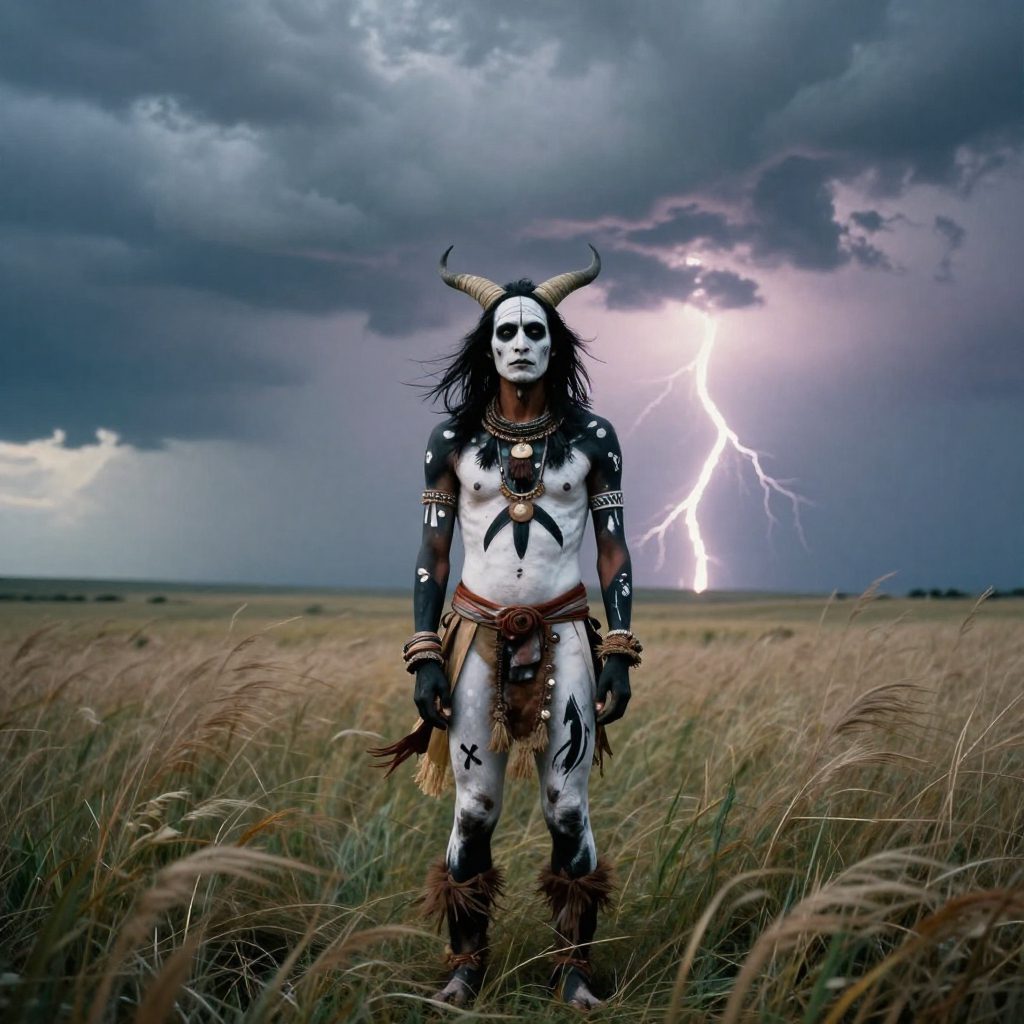
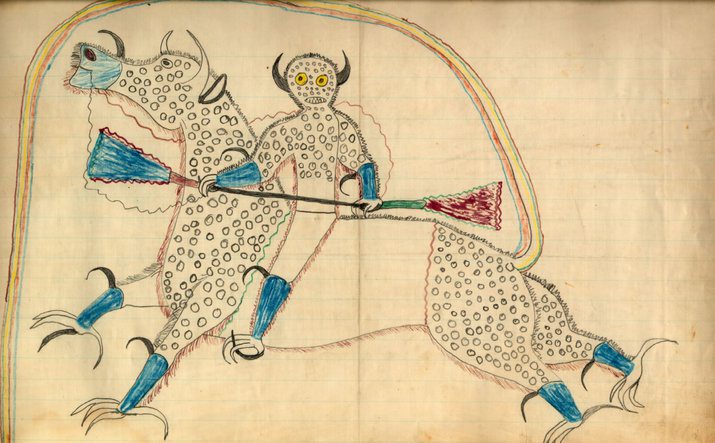
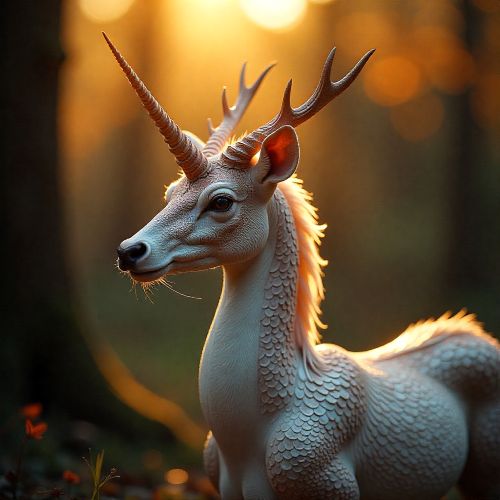
In mythic and visionary descriptions, the Heyoka spirit is sometimes associated with horned imagery, linking it to hunting power and thunderous force. Animal manifestations connected to Heyoka symbolism include frogs, dragonflies, horses, dogs, birds, and insects that appear during storms. These forms reinforce the idea that the Heyoka stands between worlds, neither fully human nor entirely otherworldly in function.
Observers often describe Heyoka figures as possessing an intense presence, regardless of physical stature. Their authority does not come from dominance or beauty, but from fearlessness, unpredictability, and spiritual endurance. The physical contradiction they embody reflects a deeper cosmological truth: balance emerges not from sameness, but from tension between extremes.
Family
The Heyoka calling is fundamentally spiritual rather than hereditary, yet it often appears repeatedly within certain families across generations. This repetition does not function as inheritance in the ordinary sense, but as a continuity of spiritual openness. Families deeply rooted in ceremonial life, vision quests, and medicine traditions are more likely to produce individuals capable of surviving the psychological and spiritual demands of the Heyoka role.
Community recognition is essential. Elders and spiritual leaders must confirm the calling, often after observing years of struggle, illness, or emotional turmoil in the individual. Many accounts describe those who resist the Heyoka path as suffering misfortune until they accept their responsibility. Once embraced, the role requires strong familial and communal support, as the life of a Heyoka is marked by sacrifice, misunderstanding, and isolation.
Rather than forming dynasties, Heyoka lineages form spiritual currents that surface when needed, recede, and return again when imbalance threatens the community.
Other names
Across Dakota and Lakota dialects, the term appears as heyókȟa, haokah, or heyokha, all referring to the sacred contrary. While these names vary linguistically, they retain the same spiritual meaning. The Heyoka should not be confused with other trickster figures, such as Iktomi, who acts from cleverness and self-interest rather than spiritual obligation.
Comparative traditions across Indigenous North America include ceremonial clowns and inversion figures who perform similar social and spiritual functions. These parallels suggest a widespread understanding that contradiction and humor are necessary tools for spiritual correction, though the Heyoka remains uniquely tied to thunder vision and storm power.
Powers and Abilities
The abilities of the Heyoka are not supernatural in the theatrical sense, but elemental and psychological. Their power flows directly from their relationship with the Thunder Beings. Traditionally, Heyoka are said to influence storms, protect camps from lightning, and survive physical extremes without harm. These feats symbolize alignment with forces that most humans fear.
More significant is their capacity to heal through disruption. By publicly violating taboos, exaggerating flaws, and inviting ridicule upon themselves, Heyoka individuals release communal tension and unspoken grief. Their satire cuts through denial, allowing truths to surface without direct confrontation.
Heyoka speech is often prophetic, though rarely literal. Their words arrive layered in irony, humor, and apparent nonsense, requiring interpretation. Through chaos, they restore humility. Through discomfort, they return balance.
Modern Day Influence
In contemporary culture, the Heyoka has been both preserved and misunderstood. Within Indigenous communities, the role continues in adapted forms, respected as sacred and restricted. Outside these traditions, the term has been diluted by New Age interpretations that label contrarian personalities or empaths as “Heyoka,” stripping the concept of its ceremonial depth and cultural boundaries.
Despite this misuse, the Heyoka archetype continues to influence literature, psychology, leadership theory, and popular culture. Figures who disrupt systems through irony, discomfort, and reversal often unconsciously echo Heyoka principles. When understood respectfully, the Heyoka reminds modern societies that growth rarely comes from affirmation alone, but from confrontation with uncomfortable truths.
Related Images
Source
American Anthropological Association. (1954). The Dakota Heyoka cult (J. H. Howard). JSTOR.
https://www.jstor.org/stable/21398
Erdoes, R., & Lame Deer, J. F. (1972). Lame Deer, seeker of visions: The life of a Sioux medicine man. Simon & Schuster.
Neihardt, J. G. (1932). Black Elk speaks: Being the life story of a holy man of the Oglala Sioux. University of Nebraska Press.
Native American Times. (2011). Heyoka: A man taller than his shadow. https://nativetimes.com/index.php/life/commentary/5149-heyoka-a-man-taller-than-his-shadow
Wallis, W. D. (1996). Heyoka: Rites of reversal (Reprint). Lakota Books.\Wikipedia contributors. (2024). Heyoka. Wikipedia. https://en.wikipedia.org/wiki/Heyoka\
Win, W. S. (2011). Heyoka reflections. Native American Times.
Zimmerman, L. (Producer). (2020). The last dance [Documentary series]. ESPN.
Frequently Asked Questions
Who or what is a Heyoka?
A Heyoka is a sacred contrarian figure in Dakota and Lakota traditions, called through thunder visions to challenge norms and restore balance.
Is Heyoka a trickster?
No. While humorous, Heyoka differs from tricksters by acting under spiritual obligation rather than self-interest.
Are Heyoka born or chosen?
Heyoka are chosen through intense spiritual visions, not by birthright or personal desire.
Do Heyoka still exist today?
Yes, though the role remains sacred and culturally restricted within Indigenous communities.
Is “Heyoka empath” a traditional concept?
No. This is a modern reinterpretation and not part of traditional Dakota or Lakota belief systems.