


Fumeripits : The First Carver and Creator of the Asmat People
Listen
At a glance
| Description | |
|---|---|
| Origin | Asmat Mythology |
| Classification | Gods |
| Family Members | N/A |
| Region | Indonesia |
| Associated With | Creation |
Fumeripits
Introduction
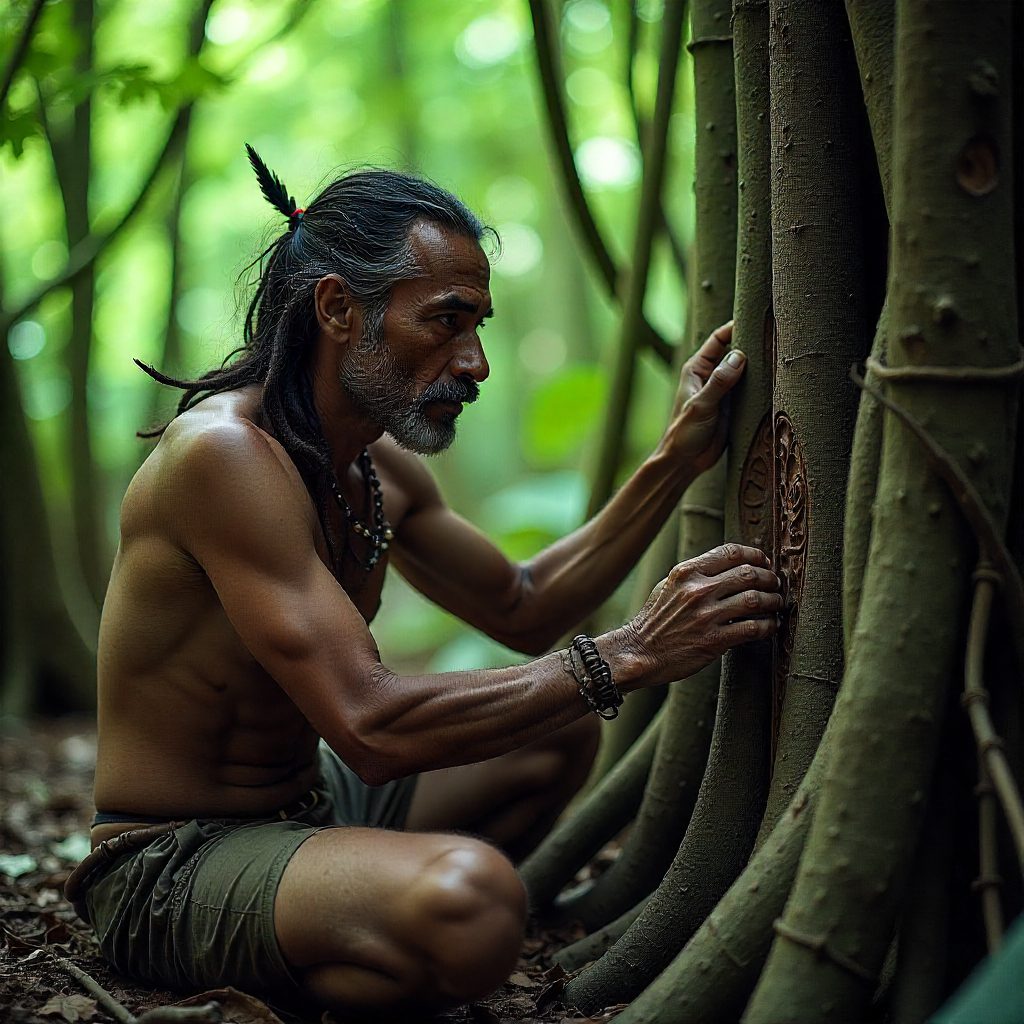
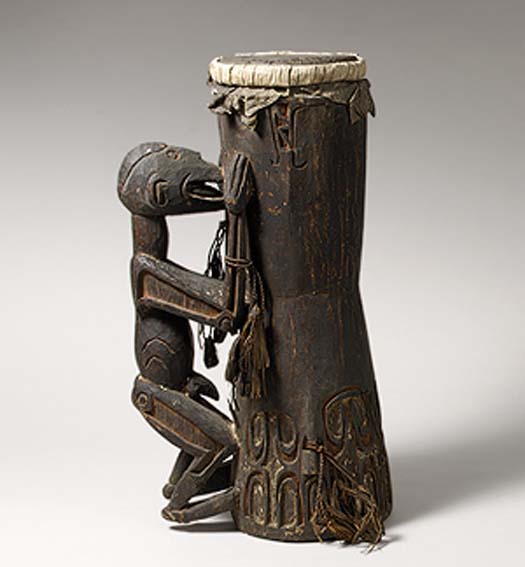
Fumeripits occupies one of the most important roles in the mythology of the Asmat people of Papua, Indonesia. More than a creator deity, he is remembered as the first being to shape culture, community, and identity for the Asmat. According to oral tradition, Fumeripits washed ashore near death after his canoe overturned in the open sea. Revived by magical birds, he found himself alone in a vast landscape of mangrove forests, tidal rivers, and towering sago trees. His profound loneliness led him to carve the first human figures from wood, bringing them to life with the rhythms of a drum stretched with lizard skin. Through this act, he not only created the ancestors of the Asmat but also established the cultural foundations of carving, drumming, ritual, and communal harmony. The myth of Fumeripits has endured for generations, shaping how the Asmat understand their origins, their environment, and their relationship with the unseen world.
Physical Traits
Asmat mythology does not offer detailed descriptions of Fumeripits’s appearance, reflecting the oral tradition’s greater emphasis on his actions and teachings. Still, the stories allow a sense of a resilient, human-like figure capable of surviving shipwreck, exhaustion, and isolation. His revival by birds symbolizes the interconnectedness of all living things, highlighting how natural forces and spiritual energies work together to sustain life. Although not explicitly depicted, his strength is implied through his craft: carving large wooden figures, dancing with vigorous motion, and constructing ceremonial structures all require exceptional endurance. His movements, especially the rhythmic dance that animates his carvings, further suggest supernatural vitality. Asmat carvings often portray elongated limbs and expressive features, and while not direct portraits of Fumeripits, these artistic forms echo the physical energy and artistry he represents.
Family
Fumeripits stands apart from deities with extensive genealogies. He has no parents, siblings, or children in the conventional sense. Instead, the beings he carves and brings to life become his companions and, ultimately, the ancestors of all Asmat people. These figures form a symbolic family created through skill, spirit, and community rather than biological kinship. Some versions of the myth describe Fumeripits traveling from one region to another, carving new groups of people each time, which explains the cultural and linguistic diversity found among different Asmat subgroups. This perspective reinforces a unifying belief: all Asmat, regardless of village or tribe, share a divine origin rooted in the creative act of their first carver. Animals—especially the birds who healed him—also form a form of spiritual kinship, linking humanity, nature, and the spirit world in a seamless continuum.
Other names
Due to linguistic variations among Asmat subgroups, Fumeripits appears under several closely related names, including Fumeripitsy and sometimes simply “the First Carver.” These names reflect local pronunciation differences and the flexibility of oral storytelling. Some narrators accentuate his drumming and call him “the Drum Player,” while others highlight his lonely wanderings, referring to him as “the Hunter.” Regardless of terminology, every version preserves the same core identity: he is the being who carved humanity from wood and set in motion the cultural traditions that define Asmat life. The consistency of the myth across dialects reinforces his central place in Asmat cosmology.
Powers and Abilities
Fumeripits’s abilities express the deeper worldview of the Asmat, where carving, rhythm, and spiritual presence are inseparable from daily life. His greatest power is creation through carving. With a few deliberate cuts, he shapes wooden figures that embody potential life. Yet the carvings do not awaken until he beats the drum—a symbolic reminder that rhythm and sound bridge the human world and the spirit realm. The moment the figures begin to dance, they cross into full existence, becoming ancestors capable of forming families and communities.
His powers extend beyond creation. He can bring ceremonial houses into being by sketching them into the earth, revealing mastery over both material and spiritual architecture. His survival—enabled by the intervention of birds—shows his connection to the natural world and hints at a protective cosmic order. Fumeripits also establishes the ritual patterns that continue today, such as drumming ceremonies, initiation rites, and communal feasts. These practices maintain balance between humans, ancestral spirits, and the environment, embodying Fumeripits’s enduring influence.
Modern Day Influence
The myth of Fumeripits remains deeply ingrained in Asmat cultural life, shaping artistic expression and spiritual identity. Modern Asmat carvers—still called wowipits—are regarded as bearers of sacred knowledge because their craft descends from the deity himself. Their bisj poles, shields, and ancestor figures are sought worldwide, not only for their aesthetic power but for the cultural heritage they represent. Museums such as the Metropolitan Museum of Art, the Smithsonian, and the Tropenmuseum frequently contextualize Asmat artworks through the Fumeripits creation story, demonstrating its significance in global discussions of indigenous art.
Within Asmat communities, the story reinforces traditions threatened by deforestation, modernization, and external pressures. By invoking Fumeripits in rituals and teachings, elders transmit cultural values to younger generations, ensuring continuity despite rapid change. His myth has also gained renewed visibility through anthropology, eco-cultural activism, and Indonesian cultural preservation programs, positioning him as a symbol of resilience. Today, Fumeripits stands not merely as a mythological figure but as an emblem of Asmat identity, creativity, and enduring spiritual strength.
Related Images


Source
Gerbrands, A. A. (1973). Asmat—New Guinea. In A. Forge (Ed.), Primitive art and society (p. 67). Oxford University Press.
Forge, A. (Ed.). (1973). Primitive art and society. Oxford University Press.
Metropolitan Museum of Art. (2004). The Asmat. https://www.metmuseum.org/essays/the-asmat
Pantheon.org. (2001). Fumeripits | Facts, information, and mythology. https://pantheon.org/articles/f/fumeripits.html
Wichita State University. (n.d.). Carving a culture: The Asmat creation story. https://www.wichita.edu/museums/holmes/Carving_a_Culture_-The_Asmat_Creation_Story.php
Wikipedia. (2012). Mythology of Indonesia. https://en.wikipedia.org/wiki/Mythology_of_Indonesia
Lamima. (2020). Of exotic art and ancient culture – Visiting the Asmat Tribe. https://www.lamima.com/of-exotic-art-and-ancient-culture-visiting-the-asmat-tribe-in-the-agat-region/
Authentic Indonesia. (2020). Asmat Tribe, an incarnation of the God in Papua. https://authentic-indonesia.com/blog/asmat-tribe-an-incarnation-of-the-god-in-papua/
Frequently Asked Questions
Who is Fumeripits in Asmat mythology?
Fumeripits is the creator figure who carved the first humans from wood and brought them to life through drumming, establishing the foundations of Asmat culture.
How did Fumeripits create humanity?
He carved wooden figures from trees and animated them through the powerful rhythms of a drum made from wood and lizard skin.
What cultural traditions are linked to Fumeripits?
Woodcarving, drumming, communal rituals, and the construction of ceremonial houses originate from his mythic actions.
Does Fumeripits have a family in mythology?
He has no traditional family; instead, the humans he creates become his symbolic descendants.
How does the myth of Fumeripits influence modern Asmat art?
Asmat carvers continue to honour him through intricate woodwork, maintaining the sacred legacy of wowipits craftsmanship.
