

Chaharshanbe Suri : The Fire Festival
At a glance
| Description | |
|---|---|
| Location | Tehran |
| Country | Iran |
| Dedicated To | Ahura Mazda |
| Duration | 1 night |
| Time of Year | March |
Introduction
Chaharshanbe Suri (چهارشنبهسوری), also known as the Festival of Fire, is one of Iran’s most iconic and ancient celebrations. Observed on the eve of the last Wednesday before Nowruz—the Persian New Year—it marks the symbolic transition from winter’s gloom to spring’s renewal. The festival combines fire, song, and communal joy in a night of purification and hope. Its origins stretch back over 2,500 years to Zoroastrian times, when fire symbolized purity and divine truth. Today, Chaharshanbe Suri continues to illuminate not only Iranian cities but also the hearts of millions in the global Persian diaspora, embodying the timeless message of renewal, unity, and the victory of light over darkness.
Connection with Mythology
The story of Chaharshanbe Suri is deeply rooted in ancient Persian mythology and Zoroastrian cosmology, where fire represents the eternal light of Ahura Mazda, the supreme god. In Zoroastrian thought, fire is sacred—not as a deity itself, but as a bridge between the human and the divine, a symbol of truth, purity, and enlightenment. The festival’s timing, just before the spring equinox, reflects cosmic harmony and renewal, when the balance of light and darkness signals a new beginning.
Historians trace the festival’s lineage to Hamaspathmaedaya, an ancient ceremony that honored the spirits of the dead and celebrated the closing of the old year. During this time, households would light fires to welcome ancestral souls and guide them safely back to the afterlife. The symbolic burning of misfortune and illness is a continuation of these ancient beliefs.
The myth of Siyavash from Ferdowsi’s Shahnameh also resonates with the festival’s fiery symbolism. Wrongly accused of betrayal, the pure-hearted prince proved his innocence by passing through a corridor of flames unscathed. This act of purification through fire echoes in the modern tradition of leaping over bonfires during Chaharshanbe Suri—transforming suffering into strength and reaffirming moral and spiritual resilience.
The word “Suri” itself means “red” or “radiant,” capturing both the glow of the fire and the vitality it bestows. Through centuries of religious and cultural shifts, the mythology of fire as a cleansing and life-giving force has remained the spiritual essence of Chaharshanbe Suri.
Main Activities
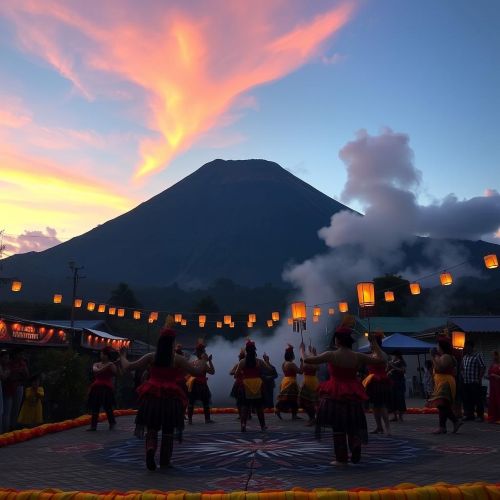
At the heart of Chaharshanbe Suri lies the ritual of fire-jumping. As twilight falls, families and neighbors gather in streets or courtyards, lighting small bonfires and chanting the timeless verse:
“Zardi-ye man az to, sorkhi-ye to az man” — “My yellowness to you, your redness to me.”
This chant symbolizes the exchange of weakness, sickness, and sorrow (paleness) for vitality, warmth, and joy (redness). The act is both literal and metaphorical—a moment of spiritual cleansing and renewal before entering the new year.
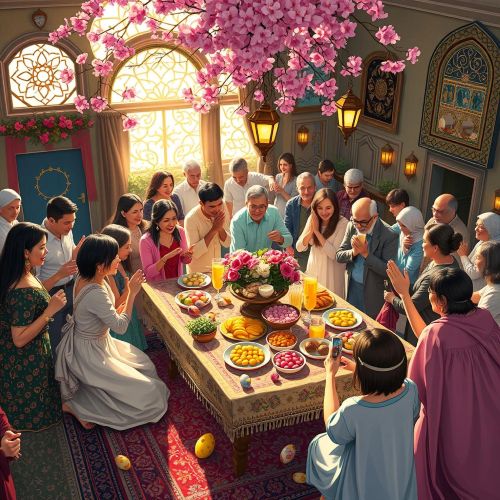
Beyond the bonfires, the night brims with tradition. Children take part in Qashoq-Zani (spoon-banging), roaming door to door disguised in veils or masks, tapping spoons on bowls to ask for treats—a ritual meant to drive away evil and invite generosity. Families prepare and share Ajil-e Moshkel Gosha, a special mix of nuts and dried fruits believed to bring prosperity and make wishes come true.
The air fills with the sound of firecrackers and laughter as the community celebrates under a sky lit with sparks and fireworks. While these modern additions have at times been restricted for safety, they reflect the festival’s enduring joy and adaptation through time.
Older traditions also persist. Burning rue seeds (esfand) and frankincense is a common practice to ward off the evil eye, while some still drop clay pots (kuze-shekani) from rooftops—symbolically casting away misfortune and ushering in good luck. In certain regions, young men perform shal-andazi (dropping a sash with gifts) as a playful courting ritual, while families prepare Ash-e Reshteh, a hearty noodle soup representing intertwined destinies and blessings for the coming year. Together, these customs form a vibrant mosaic of fire, food, music, and fellowship—blending ancient symbolism with communal joy.
Importance in Cultural History
Chaharshanbe Suri is far more than a night of festivities—it is a profound cultural statement of continuity and identity. Its origins reach back to pre-Islamic Iran, yet it has endured across dynasties, empires, and even political restrictions. As the first event in the Nowruz cycle, it embodies the themes of rebirth, purification, and optimism that define the Persian New Year.
In the Zoroastrian worldview, fire was the purest of the elements and the link between humans and divine wisdom. After Islam became dominant in Iran, the festival’s meaning evolved but never disappeared. It became a communal ritual of renewal and national unity, emphasizing moral and physical cleansing rather than overtly religious symbolism. Even during periods when authorities discouraged large gatherings, Iranians found ways to celebrate Chaharshanbe Suri privately or in smaller groups, proving its deep cultural resilience.
Historically, the festival also carried social and political undertones. In Tehran during the Qajar era, crowds gathered around the famed Tup-e Morvarid (“Pearl Cannon”) to seek blessings for love and fertility. In more recent times, Chaharshanbe Suri has sometimes become a space for public expression and resistance, symbolizing the unbroken spirit of Iranian cultural identity in the face of adversity.
At its heart, the festival represents a collective exorcism of misfortune and an affirmation of life, continuity, and hope. It connects Iranians not only to their ancestors but also to one another, serving as a timeless reminder that cultural heritage thrives through shared experience.
International Appeal
In the modern world, Chaharshanbe Suri has become a global phenomenon, celebrated by Iranian and Persian-speaking communities far beyond the borders of Iran. From Los Angeles to London, from Sydney to Stockholm, bonfires blaze in parks and community centers as families gather to keep their traditions alive.
In multicultural cities like Toronto and Berlin, the festival serves as a joyful bridge between cultures. Locals join in the festivities, sampling Persian dishes, enjoying music and dance performances, and learning about Nowruz traditions. Stockholm’s Eldfesten (Festival of Fire) has become one of the largest international Chaharshanbe Suri events, broadcast across Europe and attended by thousands each year.
In different regions, unique local variations thrive. In Azerbaijan, families splash rose water for joy; in Kurdistan, villagers throw pebbles behind them to cast off bad luck; and in the coastal city of Bushehr, people dip their feet in the sea to wash away sorrow. Across the Iranian diaspora, cultural organizations and embassies host fire-jumping events that combine ancient ritual with modern celebration, fostering unity and awareness.
Through these global observances, Chaharshanbe Suri has transcended its origins to become a universal celebration of light, hope, and renewal. It underscores the enduring vitality of Iranian culture and its ability to adapt, inspire, and connect people across time and geography.
Source
Chaharshanbe Suri: Experiencing Iran’s Fiery Festival. (2025, October 1). Surf Iran. https://surfiran.com/mag/chaharshanbe-suri/
Everything about Chaharshanbe Suri in Iran. (2025, June 7). Saadat Rent. https://www.saadatrent.com/mag/en/iran/iran-chaharshanbe-suri-festival/
Why Do Iranians Celebrate Chaharshanbe Suri? (2025, October 20). Orient Trips. https://orienttrips.com/mag/iranians-celebrate-chaharshanbe-suri/
Chaharshanbe Suri: A Fiery Persian Celebration of Joy, Food & Tradition. (2025, February 14). Ayoubs. https://ayoubs.ca/blogs/news/chaharshanbe-suri
Matinabad Eco-Camp. (2023). Chaharshanbe Suri in Iran (History, Photos, Date 2025). Retrieved October 28, 2025, from https://matinabad.com/en/chaharshanbe-suri/
Wikipedia contributors. (2024, March 10). Chaharshanbe Suri. In Wikipedia. https://en.wikipedia.org/wiki/Chaharshanbe_Suri
Encyclopaedia Iranica. (1990). Čahāršanba-sūrī. In Encyclopaedia Iranica (Vol. 5). Retrieved October 28, 2025, from https://iranicaonline.org/articles/caharsanba-suri