
Dr. Richard Buxton : Greek Myth and Narrative Thought
Mythlok Perspective
From the Mythlok perspective, Dr. Richard Buxton approaches Greek myth as a dynamic narrative system shaped by storytelling context rather than fixed belief. His work emphasizes that myths gain meaning through variation, performance, and audience, not through rigid doctrine. In this view, myth is less a sacred script and more a flexible language for thinking about the world. By analysing how ancient Greeks told stories about gods, heroes, and the unknown, Buxton reveals myth as a way of reasoning through contradiction. Gods behave inconsistently, heroes fail, and narratives resist moral closure. His scholarship reinforces a central Mythlok insight: myths endure not because they offer clear answers, but because they remain open structures, capable of accommodating uncertainty, debate, and reinterpretation.
Dr. Richard Buxton
Introduction
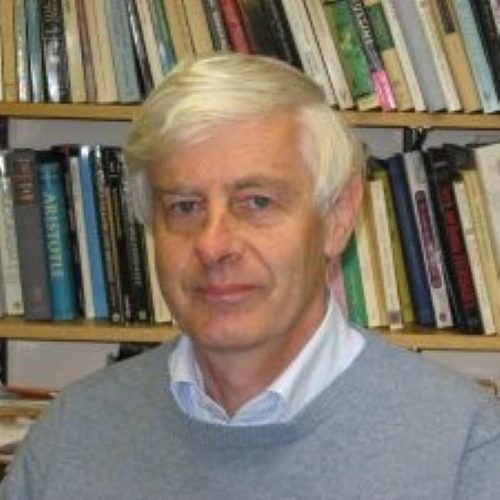
Dr. Richard Buxton, an esteemed classical scholar hailing from Mansfield, England, has carved a notable academic path through his lifelong dedication to Greek mythology and literature. After earning his doctorate from King’s College, Cambridge, and conducting research in Paris, Buxton joined the University of Bristol, where he would spend the bulk of his academic career. Today, as Emeritus Professor of Greek Language and Literature, he continues to explore the richness of classical antiquity, engaging not only with scholars but also with a broader public audience through books, lectures, and media.
Area of Expertise
Dr. Richard Buxton’s academic interests are rooted in the complex world of ancient Greek literature and religion, particularly in the mythological and tragic narratives that shaped the classical worldview. His scholarship examines how myths were not simply fantastical tales but part of a wider cultural matrix—intertwined with ritual, politics, and everyday life in ancient Greece. What sets Buxton apart is his focus on how myth operated socially and emotionally, not just intellectually, and how it continues to resonate in contemporary society. He also delves into the way ancient audiences interpreted these stories, opening up discussions about the interplay between myth and reason, and between tradition and innovation.
Books & Publications
Dr. Richard Buxton has authored and edited a collection of seminal works that are widely regarded as touchstones in the field of classical studies. Among his most recognized contributions is The Complete World of Greek Mythology (2004), which offers an accessible yet thorough exploration of Greek myth, thematically organized and enriched with detailed illustrations. The book has become a staple for both enthusiasts and scholars.
His later work, The Greek Myths That Shape the Way We Think (2022), reflects on the lasting power of Greek narratives, showing how tales such as those of Oedipus and Prometheus continue to influence modern literature, psychology, politics, and even pop culture. The book’s reception was strong enough to land it on the shortlist for the 2023 Runciman Prize.
Other important works include Imaginary Greece (1994), where he investigates the social contexts of mythology, and Forms of Astonishment: Greek Myths of Metamorphosis, which probes into transformation stories in ancient texts. He also coauthored Cyclops: The Myth and Its Cultural History, illustrating his interest in the life of individual myths across time.
Research & Contributions
Over four decades, Dr. Richard Buxton has shaped the discourse around Greek mythology by questioning traditional interpretations and offering new frameworks for understanding ancient stories. One of his most influential efforts was organizing the international conference that led to From Myth to Reason?, a book that challenged the long-standing idea that Greek culture evolved in a straight line from mythos (myth) to logos (reason). Instead, Buxton emphasizes how myth and rationality coexisted in ancient thought, each shaping and responding to the other.
His collaborative work on the Cyclops myth with Dr. Mercedes Aguirre is a model of how ancient stories can be reinterpreted across cultures and eras. Buxton often investigates not just the content of myths, but their performance, ritual contexts, and reception in antiquity and modernity. His involvement in major scholarly projects, such as the Thesaurus Cultus et Rituum Antiquorum (a reference work on ancient cults and rituals), underlines his commitment to comprehensive, interdisciplinary approaches.
As president of the International Lexicon Iconographicum Mythologiae Classicae (LIMC) Foundation, Buxton has also contributed significantly to the visual documentation of mythology, helping to catalog and interpret its representations in ancient art.
Awards & Recognitions
Dr. Richard Buxton’s work has earned accolades in both scholarly and public circles. His 2022 book The Greek Myths That Shape the Way We Think garnered significant attention and was shortlisted for the 2023 Runciman Prize—an award that honors outstanding contributions to the understanding of Greek culture and history.
His excellence in teaching has also been formally recognized, notably with the Dean of the Faculty Teaching Award at Colorado College in 2023, showcasing his impact in the classroom as well as on the page. The wide translation of his works—into at least fourteen languages—speaks to their international relevance and accessibility. Buxton has succeeded not only in pushing academic boundaries but also in connecting with readers worldwide, making him a bridge between classical scholarship and the general public.
Social Media Profiles
While Dr. Richard Buxton’s primary engagement is through scholarly output, he maintains an online presence to share his work and connect with audiences interested in classical studies. His official website acts as a hub for his biography, publication history, and news related to his ongoing projects and speaking engagements.
On Twitter, under the handle @rbuxton, he shares insights on Greek mythology, upcoming events, and reflections on current cultural issues as they relate to classical themes. He is also featured on platforms like Muck Rack, where his media appearances and articles are cataloged for public access. These platforms help extend his influence beyond the university setting, reaching students, educators, and mythology enthusiasts across the globe.
Bibliographic Sources
Richard Buxton – Richard Buxton. (n.d.). https://richardgabuxton.co.uk/
Contributor – Richard Buxton – Thames & Hudson USA. (2025). https://www.thamesandhudsonusa.com/contributors/richard-buxton
Richard G A Buxton – University of Bristol Research Portal. (2008). https://research-information.bris.ac.uk/en/persons/richard-g-a-buxton
Richard G.A. Buxton | Britannica. (2025). https://www.britannica.com/contributor/Richard-GA-Buxton/449


Frequently Asked Questions
Who is Dr. Richard Buxton?
Dr. Richard Buxton is a British classicist known for his influential research on ancient Greek mythology and narrative theory.
What is Dr. Richard Buxton best known for?
He is best known for his book Imaginary Greece and for analysing Greek myth as a form of storytelling rather than literal belief.
What is Dr. Richard Buxton’s approach to mythology?
Buxton studies myths as narratives shaped by social context, performance, and audience, focusing on how stories work rather than what they claim to explain.
Did the ancient Greeks believe their myths literally?
According to Buxton, belief in myth varied widely. Myths functioned as stories for thinking, teaching, and debating, not as fixed religious doctrines.
Why is Dr. Richard Buxton important to myth studies?
He helped shift myth studies away from symbolic reductionism toward narrative analysis, influencing how scholars interpret ancient storytelling traditions.