
Changeling : The Stolen Child of Irish Folklore
Listen
At a glance
| Description | |
|---|---|
| Origin | Irish Mythology |
| Classification | Spirits |
| Family Members | N/A |
| Region | Ireland |
| Associated With | Deception, Illness |
The Mythlok Perspective
From the Mythlok perspective, the changeling reflects humanity’s fear of disruption within the most sacred space, the family. It is less a monster than a mirror, revealing how societies respond when the familiar becomes unknowable. Comparable figures appear across cultures, from European elf-children to Japanese spirit substitutions and African trickster infants. Across traditions, the pattern is the same: difference is mythologised, and fear fills the gaps left by uncertainty.
Changeling
Introduction
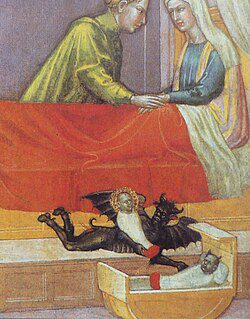
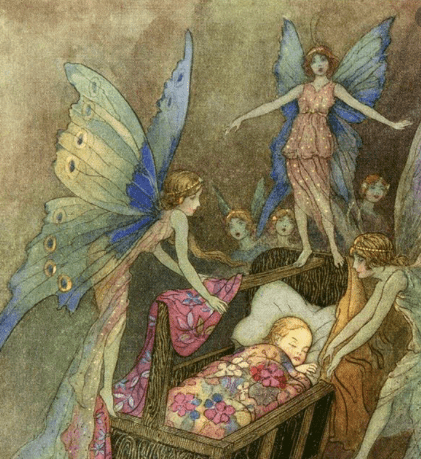
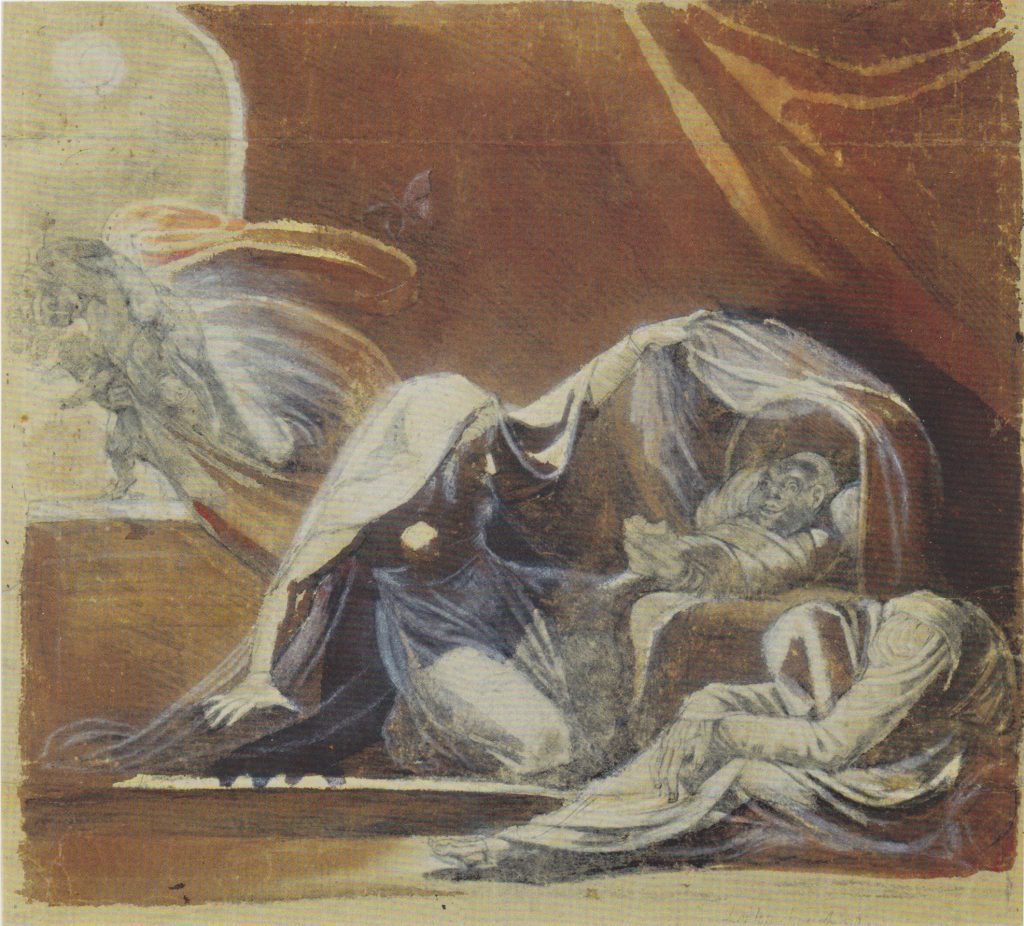
The Changeling is among the most disturbing figures in Irish folklore, rooted in centuries of fear surrounding infancy, illness, and loss. In traditional belief, a changeling was not a metaphor but a literal substitution. Fairies were said to steal a healthy human child and leave behind one of their own, disguised through glamour to resemble the missing infant. This belief flourished in a world where infant mortality was high, medical knowledge was limited, and sudden changes in a child’s health or behaviour demanded explanation. The changeling myth provided a supernatural framework that made the unthinkable feel comprehensible, even if terrifying. It also reinforced the idea that the fairy world was not distant or symbolic but actively intertwined with daily human life, especially within the home.
Physical Traits
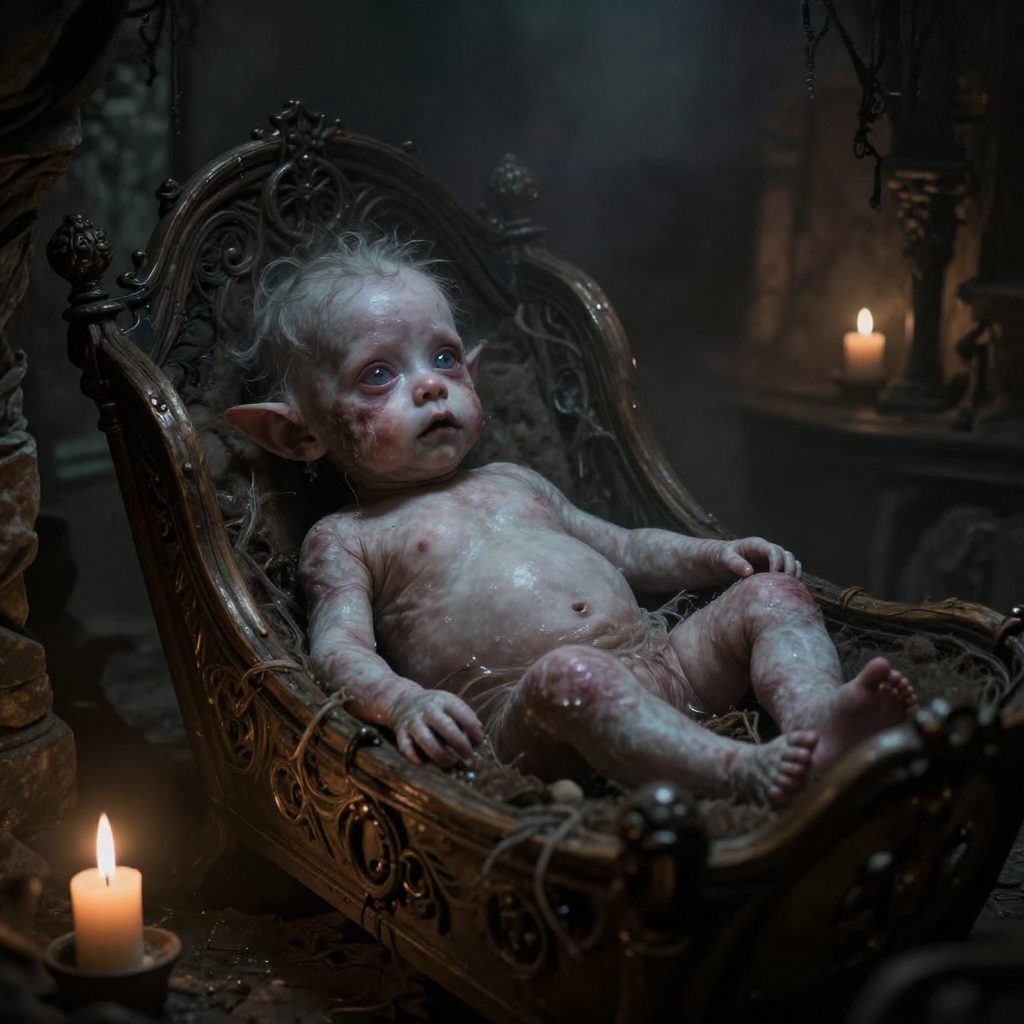
Descriptions of changelings are strikingly consistent across Irish oral traditions. Though they appeared as infants, they were often described as looking strangely old, with sharp eyes, gaunt faces, or wizened skin that did not match their supposed age. Many were said to be frail yet endlessly demanding, crying incessantly or feeding ravenously without gaining weight or strength. Some stories describe twisted limbs, enlarged heads, or unnatural stillness, while others focus on unsettling behaviour such as staring silently for long periods or laughing at inappropriate moments. These traits reflected genuine anxieties surrounding developmental disorders, chronic illness, and failure to thrive, all reinterpreted through a supernatural lens that framed difference as deception.
Family
The changeling exists at the intersection of two families, neither of which fully claims it. Its true kin belong to the fairy world, often identified with the Aos Sí, who were believed to dwell in mounds, forests, and liminal spaces. The reasons for the exchange vary by region. Some traditions suggest fairies coveted the vitality of human children to strengthen their weakening bloodlines, while others claim they sought beautiful infants to raise or feared losing their own sickly offspring. The human family, meanwhile, was left to care for a child that looked familiar but felt profoundly alien. The emotional strain of this belief was immense, and folklore frequently describes desperate parents attempting rituals to expose the impostor and recover their stolen child.
Other names
While “changeling” is the most widely recognised English term, the concept appears under many names across Europe. In Ireland, they were often simply called fairy children or referred to as “stocks” once revealed, a term linked to the belief that the fairy might vanish and leave behind a log or bundle of wood. German folklore used the word Wechselbalg, while Scandinavian traditions described similar beings under local terms tied to elves or trolls. In Scotland and Wales, closely related beliefs existed with regional names and variations. These linguistic differences point to a shared cultural anxiety rather than a single unified legend, suggesting the changeling was a pan-European response to universal human fears.
Powers and Abilities
Despite their weak appearance, changelings were believed to possess distinctly non-human abilities. Many tales emphasise their unnatural intelligence, with some speaking in full sentences or displaying adult knowledge while still in a cradle. Others were said to play music with uncanny skill or reveal prophetic insights when startled or angered. Their most significant power, however, lay in deception. Through fairy glamour, they could maintain their disguise for years, slowly draining a household’s resources and emotional resilience. Iron, fire, or sudden shocks were commonly believed to break this illusion, forcing the changeling to reveal its true nature. Once exposed, the outcome varied. Some stories promise the return of the human child, while darker versions end only in disappearance or death.
Modern Day Influence
The changeling remains deeply influential in modern literature, psychology, and popular culture. Writers such as W. B. Yeats preserved these stories as part of Ireland’s cultural memory, ensuring their survival beyond oral tradition. In contemporary fiction and gaming, including franchises like The Witcher, changelings are often reimagined as shape-shifters or tragic beings caught between worlds. Scholars now interpret changeling beliefs as early attempts to understand autism, congenital illness, postpartum depression, and grief. The myth also serves as a cautionary reminder of how fear and misunderstanding can lead to harm, most notably reflected in real historical tragedies where individuals were accused of being changelings.
Related Images
Source
Briggs, K. M. (1976). An encyclopedia of fairies: Hobgoblins, brownies, bogies, and other supernatural creatures. Pantheon Books.
Dennehy, E. (2019). Changelings and medical anomalies in Irish folklore. Irish Journal of Folklore, 12(1), 20-35.
Ó hÓgáin, D. (2006). The lore of Ireland: An encyclopaedia of myth, legend & art. Boydell Press.
Silver, C. (1999). Strange customs of Leinster. Wolfhound Press.
The Irish Place. (n.d.). The curse of the Irish changeling. https://www.theirishplace.com/heritage/irish-myths-and-legends/the-curse-of-the-changeling/
YourIrish.com. (2024). Irish faerie changeling. https://yourirish.com/folklore/changelings-in-ireland
Yeats, W. B. (1888). Fairy and folk tales of the Irish peasantry. Walter Scott Publishing.
Zipes, J. (Ed.). (2000). The Oxford companion to fairy tales. Oxford University Press.
Frequently Asked Questions
What is a changeling in Irish folklore?
A changeling is believed to be a fairy child left in place of a stolen human infant, disguised through magic to deceive the family.
Why did people believe in changelings?
The belief helped explain sudden illness, disability, or behavioural changes in children during periods of limited medical understanding.
How were changelings identified?
Folklore describes signs such as unnatural intelligence, insatiable hunger, aversion to iron, or aged physical features.
Did people really try to expose changelings?
Yes, historical accounts show that some families performed rituals to reveal or expel suspected changelings, sometimes with tragic consequences.
Are changelings still relevant today?
Yes, they continue to influence literature, film, games, and psychological discussions about identity, difference, and grief.