

Who Were the Thracians and Why Do They Matter in Ancient History?
The Thracians were one of the most fascinating and complex ancient peoples of Europe, yet they remain far less well known than the Greeks or Romans. For students exploring early European history, the Thracians offer a powerful example of how cultures can be influential without leaving behind a single unified empire or written tradition. Instead, their story survives through archaeology, myth, and the writings of outsiders who encountered them.
The Thracians were not a single nation but a collection of related tribes who shared language, customs, and beliefs. They occupied a large region known in antiquity as Thrace, covering parts of modern-day southeastern Europe. Ancient writers often described them as fierce warriors, skilled horsemen, and deeply spiritual people whose rituals revolved around nature, music, and the afterlife. Despite being surrounded by powerful civilizations, the Thracians maintained a strong cultural identity for centuries.
Understanding who the Thracians were helps students grasp how ancient Europe was shaped not only by famous empires, but also by tribal cultures that influenced warfare, religion, art, and mythology across the continent.
Where Did the Thracians Live and How Did They Organize Society?
The Thracians lived across a vast area stretching through what is now Bulgaria, northern Greece, southern Romania, and parts of the Balkans and western Anatolia. This region, known as Thrace in ancient sources, sat at a crossroads between Europe and Asia. Because of this location, the Thracians interacted with Greeks, Persians, Macedonians, and later Romans, absorbing influences while preserving their own traditions.
Rather than forming a single kingdom, Thracian society was divided into many tribes, each ruled by its own chieftain or king. Some tribes became powerful enough to form short-lived kingdoms, such as the Odrysian Kingdom, which at its height rivaled neighboring states. Social structure among the Thracians was hierarchical, with warrior elites at the top, followed by farmers, craftsmen, and herders. Slavery existed, often resulting from warfare, and captives were commonly sold to Greek markets.
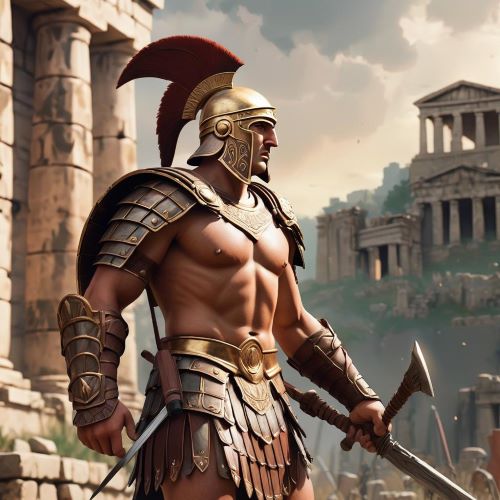
Thracians were especially famous for their military skills. They served as mercenaries in foreign armies and were admired, and feared, for their use of curved swords, javelins, and light shields. Their reputation as fearless fighters became legendary in the ancient world, shaping how other civilizations perceived them.
Thracian Beliefs, Myths, and Cultural Identity
Religion and spirituality were central to Thracian life. Unlike the Greeks, who built grand temples, the Thracians often worshipped in natural settings such as mountains, forests, and caves. They believed strongly in the soul’s immortality, a concept that set them apart from many neighboring cultures. Death was not always seen as an ending, but as a transition to another form of existence.
One of the most important religious figures associated with the Thracians was Orpheus, the legendary musician and poet said to have been born in Thrace. His myths, which emphasize music’s power over nature and death, reflect key Thracian beliefs about harmony, the soul, and the afterlife. Thracian rituals often involved music, dance, and ecstatic ceremonies that aimed to connect participants with divine forces.
Archaeological discoveries have revealed stunning Thracian craftsmanship, especially in gold. Elaborate burial treasures found in tombs suggest that Thracian elites believed strongly in an afterlife where wealth and status continued beyond death. These artifacts also show a blend of local and foreign artistic styles, highlighting how Thracian culture evolved through contact with surrounding civilizations.
The Thracians in Ancient History and Their Lasting Legacy
Although the Thracians never built an empire like Rome or Persia, their impact on history was significant. Ancient Greek historian Herodotus famously claimed that the Thracians were the second-largest people in the world after the Indians, emphasizing their numbers and influence. Thracian warriors fought in major historical conflicts, sometimes as allies and sometimes as enemies of great empires.
One of the most famous individuals linked to Thracian heritage is Spartacus, the gladiator who led a massive slave revolt against Rome in the first century BCE. His rebellion became a lasting symbol of resistance and freedom, keeping the memory of Thracian strength alive long after their political independence faded.
Over time, Roman conquest and cultural assimilation led to the gradual disappearance of distinct Thracian identity. However, their legacy survives through archaeology, mythology, and regional traditions in the Balkans. For students today, the Thracians represent an essential piece of European history, reminding us that ancient civilizations were diverse, interconnected, and far more complex than simple timelines suggest.

No posts were found.