

Akkorokamui : The Ainu Crimson Sea Deity of Japan
Listen
At a glance
| Description | |
|---|---|
| Origin | Ainu Mythology |
| Classification | Gods |
| Family Members | N/A |
| Region | Japan |
| Associated With | Seas, Oceans |
Akkorokamui
Introduction
Akkorokamui is one of the most striking figures in Ainu and northern Japanese folklore, remembered as a vast, crimson sea deity whose presence dominated the waters of Uchiura Bay in Hokkaido. Known as a powerful kamuy, or divine spirit, Akkorokamui represents the overwhelming force of the ocean and the fragile relationship early coastal communities had with the sea. The Ainu viewed every aspect of nature as alive and conscious, and Akkorokamui emerged from this worldview as both a destroyer and a guardian—capable of swallowing boats yet also embodying the deep respect the people held for the marine realm. Over time, this awe-inspiring being crossed into Japanese Shinto traditions, where it became a feared yet sacred oceanic presence. The creature’s enormous size, vivid red coloration, and connection to local geography contributed to its enduring legacy as one of Japan’s most memorable mythical sea entities.
Physical Traits
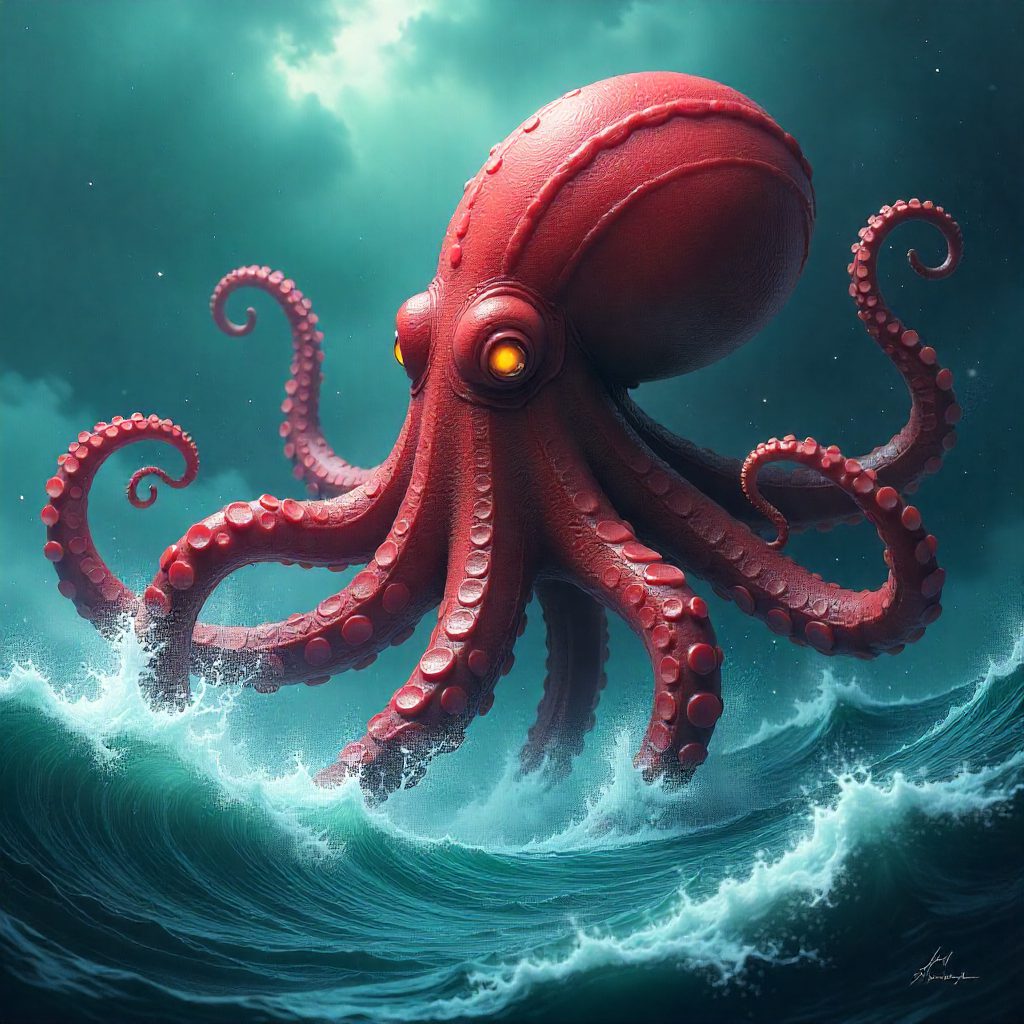
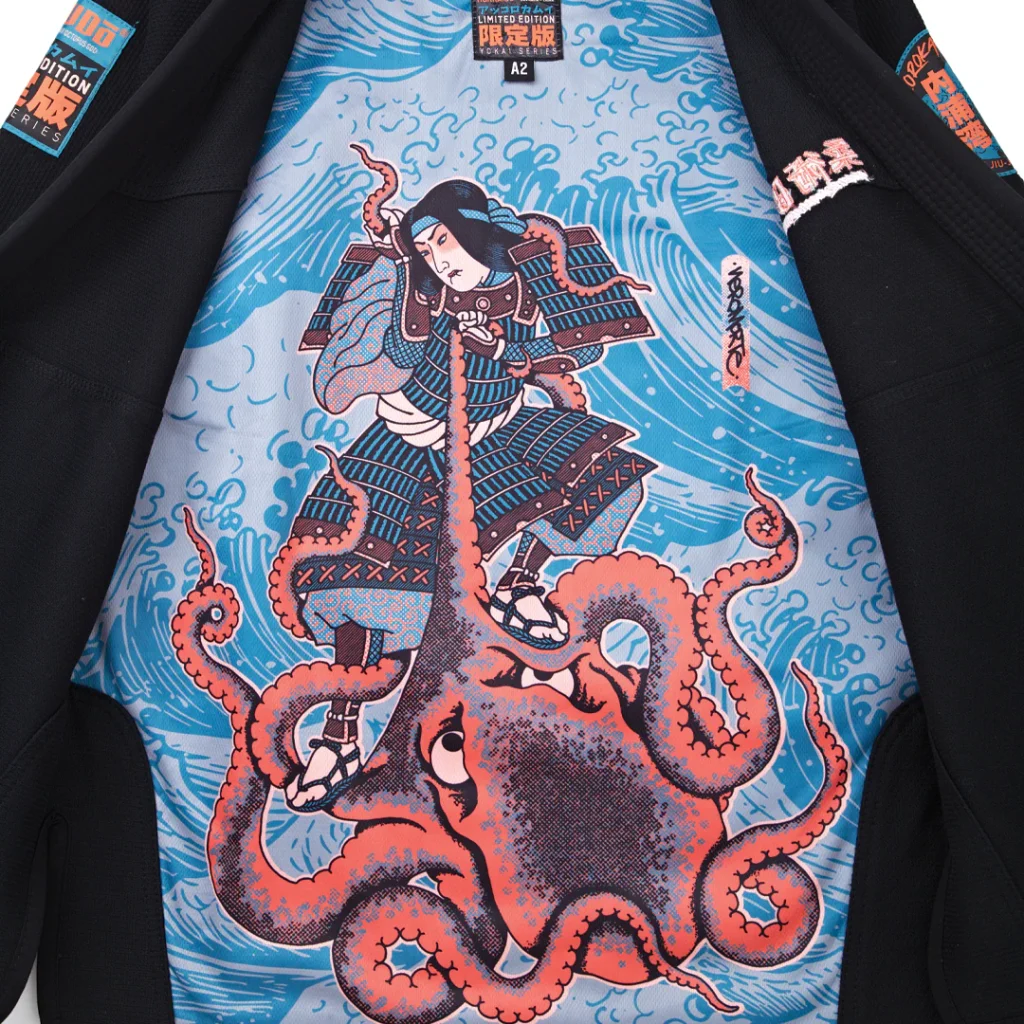
Akkorokamui is almost universally described as a colossal octopus-like being, its proportions so immense that it could stretch across a hectare of water, roughly a hundred meters wide. Its appearance is dominated by a deep, blood-red hue that stains the sea surface as it rises, a detail that recurs consistently in both Ainu and later Japanese accounts. This colour is not only symbolic of danger but also hints at the way octopus skin can shift in tone, grounding the legend in real marine behaviour. Its numerous tentacles extend with astonishing reach and strength, capable of ensnaring anything from whales to fully equipped fishing vessels. Some narratives embellish its features further, giving it glowing eyes or humanlike expressions, but the central image remains that of a scarlet giant lurking beneath the waves, its mere presence enough to unsettle entire coastal communities.
Family
Akkorokamui does not occupy a traditional family structure in Ainu belief, where deities are often defined by their relationship to natural forces rather than lineage. Instead, its connections lie within the wider spiritual hierarchy of the sea. Certain origin stories describe it as a transformed creature—once a monstrous spider subdued and cast into the ocean by the god Repun Kamuy, who then took responsibility for its existence. Other traditions trace its emergence to a divine object cast into the water, suggesting a symbolic rather than genealogical origin. In Shinto frameworks, Akkorokamui is sometimes mentioned alongside Ryujin, the great sea dragon, due to their shared jurisdiction over oceanic power. These associations position it within a network of aquatic deities rather than anchoring it to a specific mythological family.
Other names
The name Akkorokamui stems from the Ainu term At-kor-kamuy, often translated as “hut-possessing god” or “tentacle-holding god,” depending on dialectal interpretation. Variants such as Akkoro Kamuy or Atkorkamuy appear across different Ainu regions, showing subtle linguistic adaptations. Another traditional name, Ashketanne Mat, meaning “Long-Fingered Woman,” describes aspects of its form rather than its role, hinting at the creature’s long, fingerlike tentacles. In Japanese records, it occasionally appears as Ōdako, or “giant octopus,” which reflects a more straightforward interpretation based on appearance. These names highlight how Akkorokamui straddles Ainu spiritual identity and broader Japanese mythological imagination.
Powers and Abilities
Akkorokamui’s abilities blend overwhelming physical force with profound supernatural influence. Its tentacles allow it to seize and crush massive objects, while its vast size makes it a living force of nature capable of generating currents and disturbances that reshape the sea around it. Many accounts emphasize its regenerative ability, claiming that even severed limbs regrow rapidly, reinforcing its status as a near-invincible kamuy. Some traditions describe its presence as capable of altering the colour of the sea and sky due to the intensity of its red body. Beyond its physical might, Akkorokamui embodies a dual spiritual nature. While feared for its destructive tendencies, it was also believed to grant healing and wisdom to those who approached it with purity and respect. Ritual cleanliness and offerings—often white foods or cloths—were essential when invoking or acknowledging the creature, underscoring its unpredictable temperament. Sailors sometimes carried sharp tools for protection, a reflection of the belief that iron or pointed objects could repel malevolent forces at sea.
Modern Day Influence
Akkorokamui continues to thrive in popular culture, often featured as Japan’s counterpart to the Kraken in anime, manga, and video games. Its dramatic crimson form has inspired creature designs in horror narratives and marine-based fantasy settings, while its mythological origins draw attention to Ainu spirituality, which has been receiving increased recognition in modern Japan. Uchiura Bay and nearby towns occasionally reference the legend in tourism, using the story to highlight local heritage and the region’s connection to Ainu identity. Scholars and folklorists frequently discuss Akkorokamui when exploring global sea-monster archetypes, comparing it to figures like Leviathan and Cetus to understand humanity’s shared fear of deep ocean mysteries. Environmental conversations sometimes use Akkorokamui as a symbol of the ocean’s unchecked power, reflecting an awareness that the sea remains both life-giving and dangerously unpredictable. Through all these modern reinterpretations, Akkorokamui continues its evolution from a regional deity to a global mythic icon.
Related Images
Source
Berezkin, Y. E. (2019). Art of the Orient. Academia.edu. https://www.academia.edu/49150314/ART_OF_THE_ORIENT
Foster, M. D. (2024). Akkorokamui. Yokai.com. https://yokai.com/akkorokamui/
Nakayama, K. (2006). Akkorokamui. In Wikipedia. https://en.wikipedia.org/wiki/Akkorokamui
Strange Animals Podcast. (2025). Akkorokamui. https://strangeanimalspodcast.blubrry.net/tag/akkorokamui/
Yamada, T. (2014). Ainu folklore: Spirits of the sea. University of Tokyo Press.
Aston, W. G. (1899). Shinto: The Way of the Gods. London: Longmans, Green, and Co.
Philippi, D. L. (1969). Kojiki. Princeton University Press.
Munro, N. (1962). Ainu Creed and Cult. Columbia University Press.
Foster, M. D. (2009). Pandemonium and Parade: Japanese Monsters in the Culture of Yokai. University of California Press.
Smyers, K. (1999). The Fox and the Jewel: Shared and Private Meanings in Contemporary Japanese Inari Worship. University of Hawai‘i Press.
Frequently Asked Questions
What is Akkorokamui in Ainu folklore?
Akkorokamui is a massive crimson octopus-like sea deity believed to inhabit Uchiura Bay, known for its immense power and divine status in Ainu tradition.
How big is Akkorokamui supposed to be?
Legends describe Akkorokamui stretching over one hectare, making it one of the largest mythological sea creatures in Japanese and Ainu stories.
Is Akkorokamui related to other Japanese gods?
While not part of a defined family, it is sometimes associated with sea gods like Repun Kamuy or Ryujin due to shared aquatic domains.
What powers does Akkorokamui have?
It possesses enormous strength, regenerative abilities, and influence over the sea, and can offer healing or wisdom when respected properly.
Does Akkorokamui appear in modern media?
Yes, Akkorokamui appears in anime, manga, games, and modern art, becoming a popular sea-monster icon influenced by Ainu mythology.