

Occult Kerala Traditions and the Rituals That Still Shape Kerala
Kerala is often framed through images of tranquil backwaters, classical temples, and wellness traditions. Yet running parallel to this visible cultural identity is a dense undercurrent of ritual practices shaped by secrecy, fear, protection, and spiritual negotiation. Occult Kerala Traditions are not marginal beliefs surviving on the edges of society. They are deeply embedded systems that evolved alongside village life, agriculture, warfare, illness, and death. These traditions do not seek transcendence alone; they seek control, balance, and survival within an unpredictable world.
Unlike codified religious systems, Kerala’s occult practices remain fluid and situational. They are shaped by geography, caste histories, local deities, and ancestral memory rather than a single scripture. Knowledge is transmitted orally, guarded carefully, and revealed only when necessity demands it. This secrecy has allowed these traditions to endure quietly even as public culture shifted toward rationalism and institutional religion.
Tantric Rituals, Mantras, and Practical Magic
At the core of many occult Kerala traditions lies Tantra, but not in its philosophical or pan-Indian form. Kerala Tantra is intensely practical. Rituals are designed for specific outcomes—healing illness, neutralising misfortune, protecting households, reversing curses, or binding disruptive forces. Mantras are often whispered rather than chanted aloud, believed to retain potency through restraint. Yantras are drawn using mineral powders, plant ash, or turmeric directly onto earth, stone, or metal surfaces.
Timing is critical. Many rites are conducted at dusk, midnight, or during eclipses, moments believed to thin the boundary between worlds. These rituals are rarely performed in public temples. Instead, they unfold in inner courtyards, abandoned structures, forest edges, or cremation grounds. The emphasis is not on spectacle but on precision. Even a minor deviation in ritual order is believed to compromise the outcome.
Practitioners of occult Kerala traditions are judged not by moral authority but by effectiveness. Success builds reputation, while failure ends lineages. This pragmatic worldview treats spiritual forces not as abstract symbols but as entities that must be approached carefully, negotiated with skill, and dismissed respectfully.
Spirits, Sacred Groves, and the Invisible Landscape
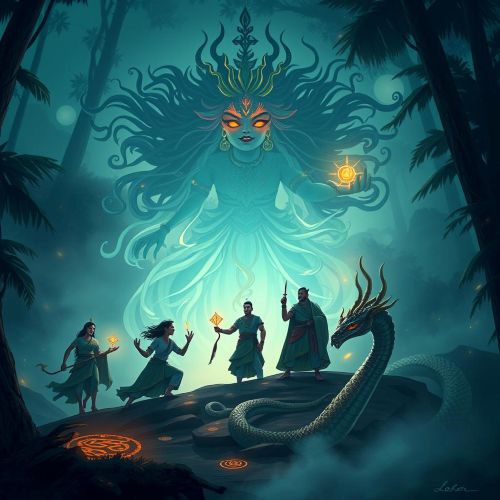
Spirit belief forms a central pillar of occult Kerala traditions. Folk spirits, ancestral presences, and nature-bound entities are treated as active participants within the social environment. These beings are not categorised strictly as benevolent or malevolent. Their behaviour depends on recognition, ritual upkeep, and territorial respect. When neglected or provoked, they are believed to manifest through illness, psychological disturbance, or recurring misfortune.
Sacred groves, known locally as kavus, serve as anchors within this invisible landscape. Dedicated primarily to serpent spirits and guardian deities, kavus act as spiritual buffers protecting entire communities. Occult rituals connected to these groves are subtle—bloodless offerings, trance possession during festivals, and seasonal rites aligned with agricultural cycles. The destruction or neglect of a kavu is consistently associated in folklore with calamity, reinforcing the belief that ecological balance and spiritual balance are inseparable.
Occult Kerala traditions also include spirit appeasement rituals conducted to relocate wandering entities rather than destroy them. These rites reflect a worldview that values coexistence over domination, acknowledging that the unseen world cannot simply be erased.
Martial Traditions, Sorcery, and Survival in Modern Kerala
Kerala’s occult systems extend into martial and protective traditions as well. Kalaripayattu, the region’s ancient martial discipline, incorporates ritual invocations, energy alignment, and spiritual preparation alongside physical training. Advanced practitioners often undergo rites believed to enhance resilience, awareness, and survival. Weapons are ritually consecrated, not merely sharpened, reinforcing the idea that combat is both physical and metaphysical.
Sorcery and counter-sorcery remain an uncomfortable but persistent aspect of occult Kerala traditions. Folklore and lived narratives speak of magical attacks conducted through symbolic objects, ritual contamination, or spirit deployment. In response, counter-rituals exist to neutralise or deflect such actions. These engagements are not framed in moral terms but as strategic conflicts requiring specialised knowledge.
What makes occult Kerala traditions remarkable is their quiet persistence in modern life. Urbanisation and scientific education have not erased them; instead, they have driven them underground. Ritual consultations occur alongside hospital visits. Families publicly reject superstition while privately maintaining protective rites. The language has softened, but the practices endure.
Occult Kerala traditions ultimately reveal a culture that never fully separated the sacred from danger or faith from fear. They remain living systems, activated not by curiosity but by necessity, reminding us that belief adapts even when it refuses to disappear.

No posts were found.