

Urung Ai Toyon : The Supreme Creator of the Sakha People
Listen
At a glance
| Description | |
|---|---|
| Origin | Sakha Mythology |
| Classification | Gods |
| Family Members | N/A |
| Region | Russia |
| Associated With | Creation |
Urung Ai Toyon
Introduction
Urung Ai Toyon stands at the pinnacle of Sakha cosmology as the supreme creator and the most revered deity of the Aiyy, the benevolent spirits who inhabit the Upper World. Central to Yakut belief systems, he represents divine purity, celestial order, and the foundational principles that shape the universe. His stories appear across the oral epics known as Olonkho, where he is portrayed as the ultimate architect of cosmic structure and human moral law. As the “White Creator,” he defines the spiritual worldview of the Sakha, linking creation, justice, and harmony through a distinctly Siberian lens rooted in ancient Turkic and shamanic traditions. Through him, the cosmos is given its hierarchy, purpose, and rhythm, making Urung Ai Toyon a defining figure of Sakha identity.
Physical Traits
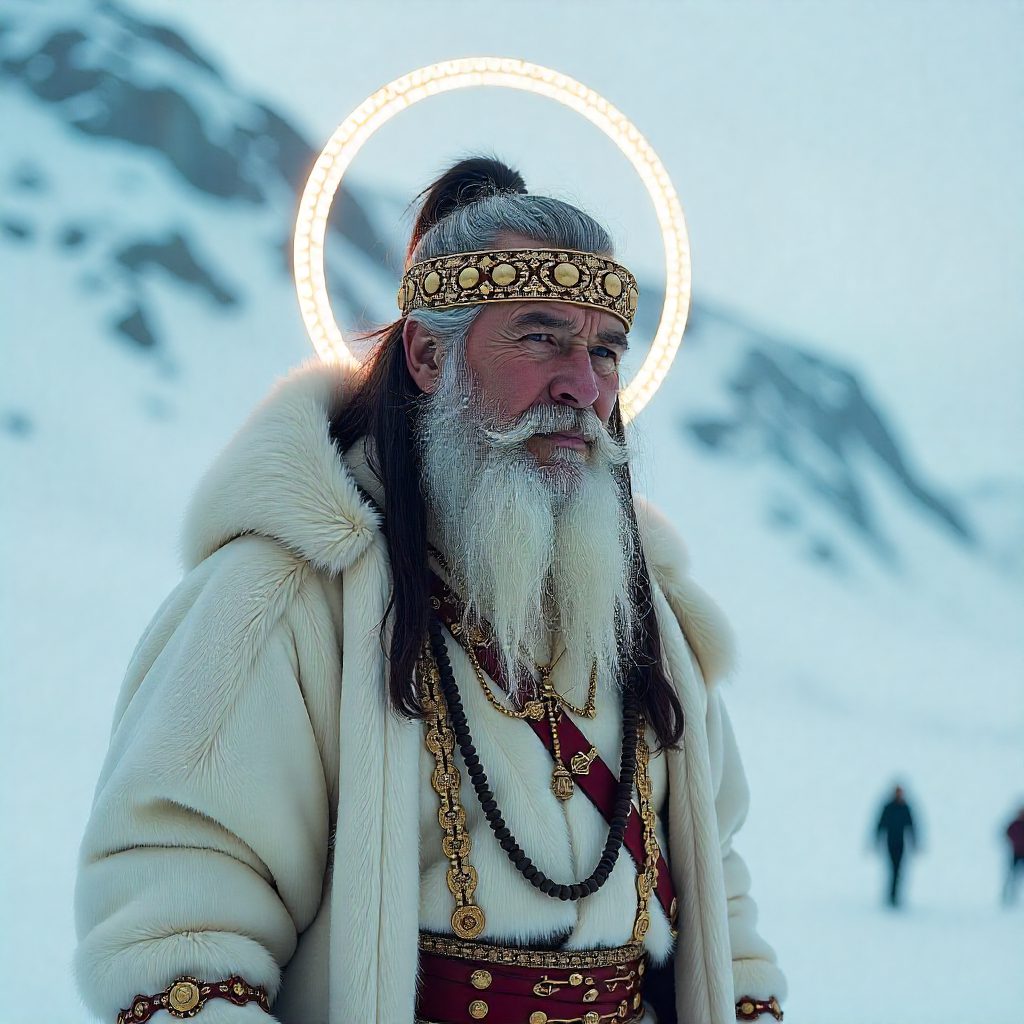
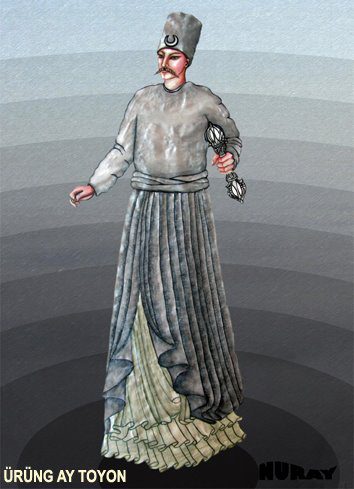
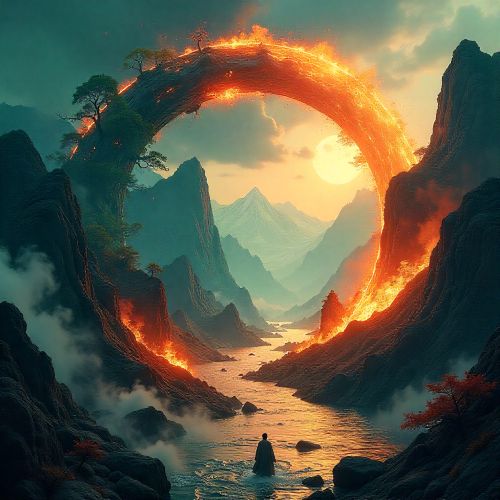
The descriptions of Urung Ai Toyon rarely rely on physical detail, reflecting his transcendent nature rather than human-like features. His essence is expressed through radiance—an overwhelming white brilliance that symbolizes purity, authority, and the unchanging laws of the Upper World. This luminous presence mirrors the sharp, reflective whiteness of the Yakut winter landscape, emphasizing his connection to the sky and celestial light. When depicted in Olonkho performances or traditional narratives, he may appear as a dignified elder robed in white, but even this is symbolic rather than literal. His form is intentional formlessness: vast, all-encompassing, and beyond corporeal boundaries. In Sakha spirituality, light is life, and thus the blinding brilliance of Urung Ai Toyon is the perfect expression of his supreme creative power.
Family
Urung Ai Toyon’s family structure reflects the cosmological hierarchy rather than human lineage. As the ruler of the Aiyy, he functions as the patriarchal head of the Upper World’s nine celestial layers, each inhabited by deities entrusted with the governance of natural forces, virtues, and cosmic order. His closest companion in creation is often identified as Lokhsukhoi, a goddess linked to fertility and nurturing powers, balancing his sky-oriented authority with earth-oriented vitality. While myths differ on the exact familial links, many lesser deities—even those connected to animals, landscapes, or moral qualities—are regarded as his offspring or creations. This familial symbolism reinforces his role as the spiritual ancestor of the Sakha people and the ultimate source of order across all realms.
Other names
Over centuries of oral transmission, Urung Ai Toyon has been addressed by several epithets that highlight different aspects of his divinity. “Ürüng Aiyy Toion” is the most common transliteration, capturing his identity as the White Lord of the Aiyy. Variants such as “Aiyy Toyon” emphasize his sovereignty over the sky realm, while titles like “Uluu Toyon” underscore his supreme authority. In some interpretative traditions, he is connected to the wider steppe concept of Tengri, drawing parallels between Sakha cosmology and broader Turkic-Mongolic sky-god worship. These names reveal how fluid and adaptable oral mythology can be, while always maintaining Urung Ai Toyon’s central position as the highest divine force.
Powers and Abilities
Urung Ai Toyon’s powers reflect his status as creator, moral guardian, and cosmic lawgiver. He is credited with bringing the universe into being, shaping the heavens, earth, and living creatures, and breathing kut—the life-soul—into humans and animals. His authority establishes the boundaries between the Upper World, Middle World, and Lower World, ensuring balance between benevolent spirits, humans, and malevolent forces such as the abaahy. His influence extends into justice and morality, guiding human conduct and protecting the harmony between people and nature. Although he is not associated with heroic feats or dramatic battles, his dominion is absolute: order, truth, purity, and the continuity of life all flow from his governing presence. Even today, rituals and offerings—especially dairy products symbolizing purity—are made to honor his benevolence and secure his blessings.
Modern Day Influence
Despite centuries of cultural transformation, Urung Ai Toyon remains a powerful symbol of Sakha heritage and spiritual continuity. The Ysyakh festival, celebrated each summer across Yakutia, pays homage to him through song, dance, prayers, and libations of fermented mare’s milk. Olonkho recitations, recognized by UNESCO as intangible cultural heritage, preserve his narrative presence and continue to transmit traditional cosmology to new generations. The revival of the Aiyy faith in post-Soviet Yakutia positions Urung Ai Toyon as both a spiritual anchor and a cultural emblem, shaping regional identity, nationalism, and environmental awareness. In contemporary art, literature, museum exhibitions, and digital media, his imagery and ideals are increasingly featured as symbols of Sakha resilience and ecological harmony. Through these modern interpretations, Urung Ai Toyon continues to guide cultural memory while adapting to the realities of the 21st century.
Related Images

Source
Baisheva, M. I. (2017). Spiritual dominance of the Sakha people: Traditional belief system. International Journal of Environmental and Science Education, 12(5), 1049-1058. https://files.eric.ed.gov/fulltext/EJ1162286.pdf
Ergis, G. U. (Ed.). (2008). Ocherki po yakutskomu fol’kloru [Essays on Yakut folklore]. Bichik.
Pekarsky, E. K. (1958). Slovar’ yakutskogo yazyka [Dictionary of the Yakut language] (Vol. I). Academy of Sciences of the USSR.
Pekarsky, E. K. (1959). Slovar’ yakutskogo yazyka [Dictionary of the Yakut language] (Vol. II). Academy of Sciences of the USSR.
Petrov, A. V. (2020). Urung Aiyy Toyon as a key male image of patriarchal Yakuts mythology. Tomsk State Pedagogical University Bulletin, 2(141), 141-148. https://doi.org/10.23951/2307-6119-2020-2-141-148
Yakut Mythology – Sakha Yakutia – Heart of Siberia. Yakutia Travel. https://www.yakutiatravel.com/special-interest/yakut-mitology
Yakuts (Saha) / Alekseev, N. A., Romanova, E. N., & Sokolova, Z. P. (Eds.). (2013). Nauka.
Afanasev, N., Efimova, L., Illarionova, T., Illarionov, V., & Pavlova, O. (2019). Study of the pantheon of deities in Sakha folklore. Atlantis Press. https://www.atlantis-press.com/article/125925288.pdf
Beydili, C. (2003). Türk Mitolojisi Ansiklopedik Sözlük. Yurt Yayınevi.
Alekseev, N. A. (1995). Yakutskaya mifologiya i shamany [Yakut mythology and shamans]. Yakutsk State University Press.
Balzer, M. M. (1999). The Tenacity of Ethnicity: A Siberian Saga in Global Perspective. Princeton University Press.
Pospelov, G. (2001). Epic Traditions of the Sakha People: Olonkho and Myth. Moscow Folklore Institute.
Government of the Sakha Republic. (2009). Postanovlenie ot 3 iyunya 2009 g. No. 241 [Resolution on Aiyy symbols]. Yakutsk: Official Gazette.
Frequently Asked Questions
Who is Urung Ai Toyon in Sakha tradition?
Urung Ai Toyon is the supreme creator deity of the Sakha people, ruling the Upper World and embodying purity, justice, and cosmic order.
What does the name Urung Ai Toyon mean?
It translates to “White Creator Lord,” highlighting his association with purity and celestial authority.
Is Urung Ai Toyon similar to Tengri?
Some scholars draw parallels between Urung Ai Toyon and the Turkic sky god Tengri due to shared themes of sky, creation, and divine order.
How is Urung Ai Toyon worshipped today?
He is honored during the Ysyakh summer festival through offerings, prayers, and traditional ceremonies celebrating fertility and prosperity.
What role does Urung Ai Toyon play in Olonkho epics?
In Olonkho, he appears as the originator of cosmic order and the benevolent force guiding humanity and the gods.
