

The Different Types of Guliga in Tulu Mythology
Introduction
In the vibrant spiritual traditions of Tulu Nadu, Guliga stands as one of the most enigmatic and fearsome daivas—divine spirit-beings who protect, punish, and maintain balance between the worlds of gods and men. Rooted deeply in the Bhūta Kola and Daiva Nema rituals of coastal Karnataka, Guliga is more than just a deity—he is the embodiment of raw justice, ancestral power, and unrelenting energy. Over centuries, local traditions, oral lore, and contemporary retellings such as Kantara: Chapter 1 have revealed multiple types of Guliga, each with distinct attributes, symbols, and purposes. Understanding these forms is essential to grasp the moral and metaphysical fabric of Tulu cosmology.
Origins and Essence of Guliga
According to traditional lore, Guliga was born from an act of divine chaos. When Goddess Parvati discarded the ashes from her sacred fire, Lord Shiva transformed them into a stone and cast it into water. From that divine union of fire and water arose Guliga—a spirit of paradox, carrying within him both destruction and protection. Though fierce and untamed, he was commanded to dwell on earth as a guardian and enforcer of dharma. In this dual role, Guliga became a liminal figure—feared for his temper, revered for his justice, and loved as a fierce protector of the land and its people.
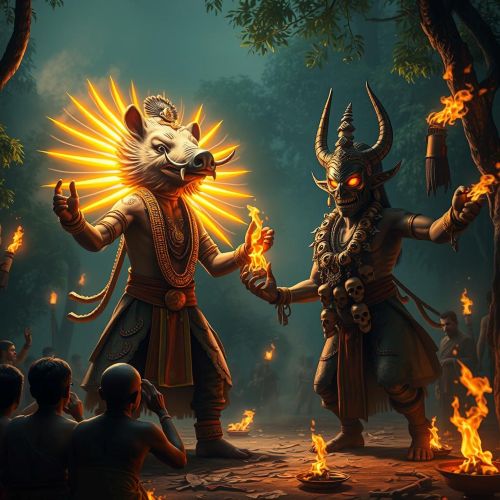
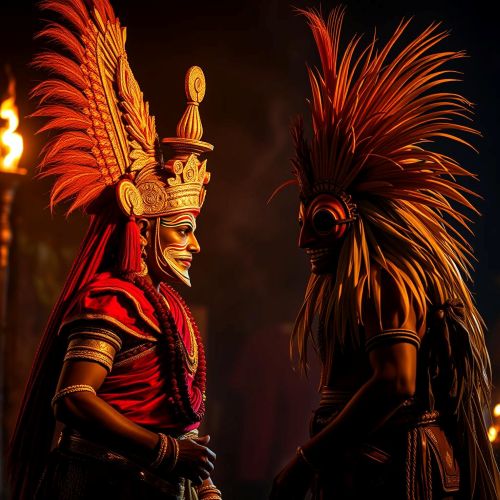
In the spirit cults of Tulu Nadu, Guliga’s presence is marked by intense ritual performances, hypnotic drumming, and fire dances that embody his volatile nature. These performances are not mere spectacles; they represent the delicate balance between devotion and danger, chaos and control. Yet within this complexity lies a powerful truth—Guliga manifests in many forms, each adapted to a specific cosmic or social function.
The Major Types of Guliga
Rahu Guliga – The Shadow Devourer
Perhaps the most infamous of all, Rahu Guliga embodies darkness and retribution. Combining aspects of the eclipse demon Rahu with the ferocity of Guliga, this form is invoked during times of moral decay or social unrest. He punishes oath-breakers and those who exploit others, symbolising karmic correction through chaos. In local astrology, Rahu Guliga’s influence is feared but respected—his energy teaches that every shadow must eventually confront the light.
Rudra Guliga – The Wrathful Protector
Drawing directly from Shiva’s own aspect as Rudra, this type channels unrestrained fury. Rudra Guliga appears when divine anger must cleanse impurity. He is both executioner and guardian, his presence signifying a moment of cosmic reset. Ritualists describe his possession dance as violent yet sacred—a storm that destroys falsehood to reveal truth.
Agni Guliga – The Fire of Purification
As his name suggests, Agni Guliga represents purification through fire. During Bhūta Kola ceremonies, this form is associated with flaming torches, burning coals, and the dance of heat that consumes negativity. Agni Guliga symbolises transformation—the destruction of corruption so that renewal may follow. His energy aligns closely with agricultural cycles, where burning fields after harvest prepares the soil for new life.
Kathale Guliga – The Lord of Darkness
The Kathale (“darkness”) aspect of Guliga is perhaps the most mystical. Representing the unseen and unknown, Kathale Guliga governs the liminal space between the living and the dead. He protects sacred groves and village boundaries, ensuring that malevolent forces do not cross into human settlements. This type embodies the fear of the unseen yet teaches reverence for the mysteries that lie beyond human comprehension.
Nethara Guliga – The Blood Guardian
Associated with sacrifice and ancestral justice, Nethara Guliga operates within rituals involving offerings of blood or symbolic substitutes. His presence is invoked to cleanse lineage curses or restore balance between families. In mythic storytelling, he is the embodiment of ancestral wrath—merciless, impartial, and bound to truth. His energy mirrors the karmic concept that every action, however hidden, demands its consequence.
Raja Guliga – The Sovereign Judge
Raja Guliga embodies divine authority. He enforces justice not through chaos but through order, representing the stabilising power that legitimises rulership. In older shrines, this form is connected with kingship and governance. Offerings to Raja Guliga were believed to ensure fair judgment and prosperity, reinforcing the social harmony that sustained traditional communities.
Tantra or Mantra Guliga – The Esoteric Form
This rare aspect links Guliga to the occult sciences. Tantra Guliga is the form invoked by practitioners who seek spiritual power, protection from black magic, or insight into hidden realms. His rituals involve complex chants and secret invocations, symbolising mastery over unseen energies. Within the Kantara mythology, this type mirrors the shamanic bridge between mortal and divine knowledge.
Guliga in Kantara: Chapter 1
In Kantara: Chapter 1, director Rishab Shetty delves into the layered cosmology of these forms, bringing to screen the spiritual world of the Tulu coast. The movie highlights several types—Rudra, Agni, Tantra, Kathale, Nethara, Raja, and Rahu Guliga—each connected to the cosmic order and human fate. These forms are portrayed not as separate entities but as facets of the same eternal spirit, responding differently to human greed, devotion, and imbalance. By merging folklore with cinematic realism, the film popularised these traditions, renewing interest in ancient regional mythologies.
Modern Reflections and Symbolism
The many types of Guliga continue to inspire artists, storytellers, and spiritual practitioners. In modern reinterpretations, Rahu Guliga becomes the voice of environmental vengeance, punishing ecological exploitation; Agni Guliga represents transformative change; and Raja Guliga reflects justice amid political decay. The archetype’s adaptability is what makes Guliga enduring—he is both guardian and destroyer, chaos and order, local deity and universal principle.
In the Mythlok universe, Guliga’s types form a symbolic map of human morality: each manifestation corresponds to an aspect of human experience—anger, fear, truth, sacrifice, rule, and transformation. To understand him is to confront the dual nature of all power—creative and destructive at once.
Conclusion
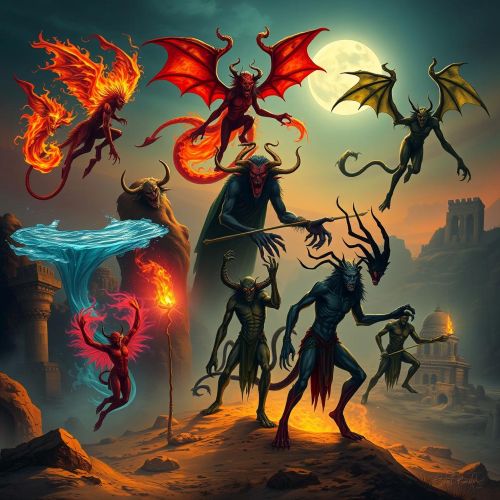
From the fiery Agni Guliga to the shadowy Kathale Guliga, the spectrum of Guliga forms reveals a theology of balance and consequence. Every manifestation teaches that justice is not gentle, that protection requires ferocity, and that chaos can also be sacred. Whether through ritual, folklore, or cinema, Guliga endures as one of South India’s most profound spiritual symbols—a mirror held up to humanity’s own duality. Understanding the different types of Guliga is not just an exploration of myth but a reminder of the eternal dance between darkness and light.

No posts were found.