

Aka Manto : Japan’s Deadliest Red Cloak Ghost
| Description | |
|---|---|
| Origin | Japan |
| Classification | Humanoid |
| Demeanour | Evil |
| Habitat | Bathrooms |
| Status | Not Proved |
Aka Manto
Introduction
Aka Manto is one of Japan’s most unnerving urban legends, a ghostly figure said to haunt the quiet corners of public and school bathrooms. Emerging from the shadows when a person is most vulnerable, Aka Manto confronts its victims with a deadly question that has terrified generations: the choice between red or blue paper. Although the tale began circulating among schoolchildren decades ago, its potent blend of suspense, psychological fear, and cultural symbolism has allowed it to evolve into a modern global legend. As with many Japanese supernatural stories, the fear does not come from a dramatic chase but from the chilling uncertainty created by an impossible decision.
Physical Attributes
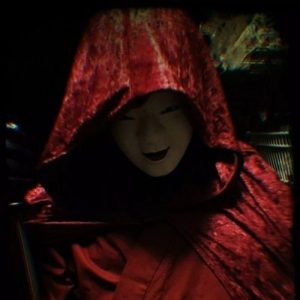
Descriptions of Aka Manto have varied over time, yet several traits remain consistent. The spirit appears draped in a striking red cloak that hangs heavily over its frame, giving it a regal yet ominous presence. A mask hides its face, sometimes smooth and emotionless, at other times carved into a disturbing grimace. In earlier depictions from the 1930s, the “manto” referred to a shorter, sleeveless jacket, which influenced how the figure was imagined. As language shifted and “manto” came to mean cape or cloak, its appearance evolved into the tall, hooded figure recognized today. Some versions describe Aka Manto’s hidden face as eerily handsome, suggesting a tragic past rooted in vanity, but most accounts emphasize its ghostly stillness and the suffocating sense of dread that accompanies its arrival.
First Sighting/Reporting
The earliest known reports of Aka Manto trace back to the mid-1930s, particularly in Osaka, where schoolchildren warned one another about a mysterious man who appeared in basement restrooms. By the late 1930s, the story had spread across Japan, weaving itself into school folklore. During the early Shōwa era, a related rumour in Tokyo described a “red cloak vampire,” hinting at the fluid nature of early urban legends. By the 1940s, the tale had become firmly associated with bathroom hauntings, whispered among students not only in Japan but also in Japanese communities in Korea during colonial rule. Like many urban myths born in academic settings, it reflected fears tied to childhood, isolation, and the darker corners of everyday environments.
Other Names
Aka Manto is known under multiple titles depending on region and interpretation, though all versions retain the theme of a supernatural figure offering an ominous choice. Some refer to it simply as the “Red Cape” or “Red Cloak,” while others use names like “Red Vest” or “Akai Hanten,” recalling older clothing styles. One of the most recognized variants is “Akai Kami, Aoi Kami”—literally “Red Paper, Blue Paper”—focusing on the fatal question itself. In some areas, a related entity known as Aoi Manto, the “Blue Cloak,” appears as a counterpart, though the core narrative remains tied to Aka Manto’s deadly dilemma.
Modus Operandi
The essence of Aka Manto’s legend lies in the fatal choice it presents. The spirit typically materializes in the last stall of a bathroom, often when the occupant discovers they have no toilet paper. A whisper breaks the silence:
“Would you like red paper or blue paper?”
The consequences vary by telling but follow a consistent pattern. Choosing red leads to a gruesome end, often described as being slashed or flayed until the body is drenched in blood. Selecting blue usually results in suffocation or blood loss, leaving the victim’s skin blue. Attempts to outsmart the spirit by requesting another color rarely end well; choosing yellow, for instance, may lead to drowning in the toilet or being forced downward until unconscious. The only safe response is to refuse the choice entirely, which sometimes causes Aka Manto to vanish. As with many Japanese ghost stories, the legend mirrors psychological fears—especially the anxiety of being confronted with decisions in moments of extreme vulnerability.
Pop Culture References
Aka Manto has become a staple of Japanese horror storytelling and has made its way into global popular culture. The legend is frequently referenced in anime episodes dedicated to urban myths and appears in manga collections of supernatural tales. Video games have embraced the character as well: an indie horror title named after Aka Manto places players directly in the terrifying bathroom encounter, while games like Corpse Party and World of Horror borrow elements of the legend to enhance their eerie settings. The 2021 Korean series Squid Game contains a symbolic nod to Aka Manto through its red-and-blue recruitment choice, a detail later confirmed by the director. Beyond traditional media, internet horror forums and creepypasta communities have kept the story alive, ensuring each generation discovers the ghost waiting behind the last stall door.
Current Status
Today, Aka Manto remains one of Japan’s most recognizable modern legends, continuing to circulate among schoolchildren despite the decades that have passed since its earliest reports. The tale has crossed cultural boundaries, appearing in Chinese, Korean, and Western adaptations of bathroom-based ghosts and yokai myths. While no real sightings exist, the narrative taps into universal fears—being alone, being trapped, and being forced into choices with no good outcomes. Contemporary retellings, livestream reactions to horror games, and social media discussions have kept Aka Manto relevant, positioning it among the most enduring entities of Japanese urban folklore.



Source
Japan Makes Me Scared. (2025, March 23). Aka Manto: Red paper or blue paper? – Japanese urban legend. https://japan-makes-me-scared.com/aka-manto/
TBS News. (n.d.). The legend of Aka Manto. https://www.tbsnews.net/splash/legend-aka-manto-39937
Villains Wiki. (2025, December 1). Aka Manto (folklore) – Villains Wiki. https://villains.fandom.com/wiki/Aka_Manto_(folklore)[2]
Wikipedia. (2011, July 2). Aka Manto. https://en.wikipedia.org/wiki/Aka_Manto
Yokai.com. (2023, January 8). Aka manto. https://yokai.com/akamanto/
Japan Travel. (2025, February 5). Japanese urban legends. https://en.japantravel.com/article/japanese-urban-legends/67903
Bulbapp. (n.d.). Urban legend: Aka Manto. https://www.bulbapp.com/u/urban-legend-aka-manto
Radu, R. (2025, June 10). Japanese Horror: The Terrifying Ghost of Aka Manto. The Horror Collection. Retrieved December 9, 2025, from https://thehorrorcollection.com/the-terrifying-ghost-of-aka-manto/
Wakoku. (2025, May 5). Aka Manto Story: Japan’s Terrifying Toilet Ghost. Retrieved December 9, 2025, from https://wakokujp.com/aka-manto-story/
Urban Legends Wiki. (n.d.). Aka Manto. Retrieved December 9, 2025, from https://urbanlegend.fandom.com/wiki/Aka_Manto
Moon Mausoleum. (n.d.). Aka Manto (赤マント): Japan’s Nightmare in the Bathroom Stall. Retrieved December 9, 2025, from https://moonmausoleum.com/aka-manto-%e8%b5%a4%e3%83%9e%e3%83%b3%e3%83%88-japans-nightmare-in-the-bathroom-stall/
Frequently Asked Questions
What is Aka Manto in Japanese folklore?
Aka Manto is a mysterious spirit said to appear in bathroom stalls, asking victims to choose between red or blue paper—both of which lead to deadly consequences.
How can you survive an encounter with Aka Manto?
Most versions say the only way to survive is to refuse both options or ignore the spirit entirely, causing it to disappear.
Where did the Aka Manto legend originate?
The story first circulated in the 1930s among Japanese schoolchildren, later spreading nationwide as a popular urban legend.
Does Aka Manto appear in pop culture?
Yes, Aka Manto features in horror video games, anime, folklore anthologies, and even inspired symbolic references in international TV series.