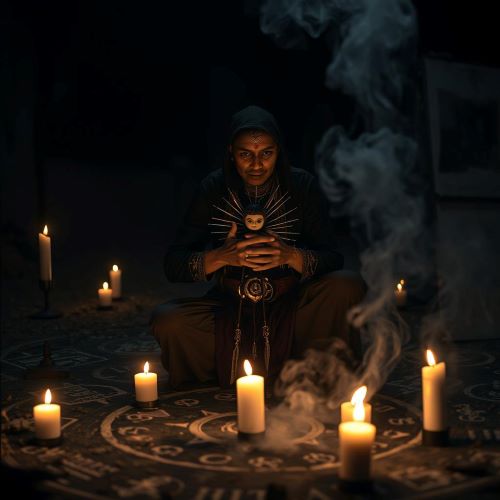
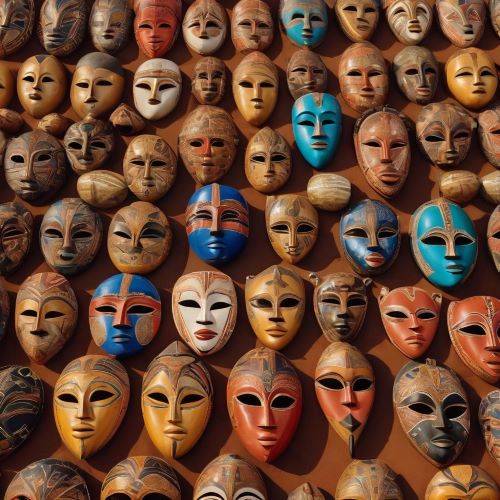
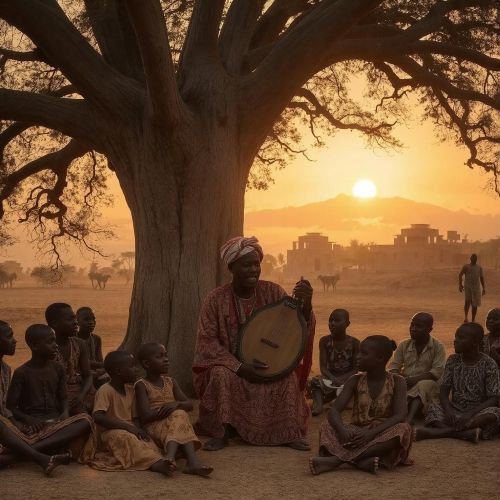
Likundu witchcraft occupies a powerful and unsettling place in the spiritual imagination of Central Africa, particularly among communities in the Congo Basin. Unlike distant or symbolic forms of sorcery found in many mythologies, Likundu witchcraft is believed to be active, personal, and dangerously real. It is not simply a mythological concept but a living explanation for misfortune, illness, unexplained death, and sudden changes in fortune. In societies where the spiritual and physical worlds constantly interact, Likundu witchcraft represents the darker consequences of spiritual imbalance and human intent.
At its core, Likundu witchcraft refers to a supernatural force or substance believed to reside inside a witch. This force is not external, like a charm or potion, but internal—often described as a hidden organ or spiritual entity that grants its bearer extraordinary powers. These powers are believed to include spiritual travel, invisibility, possession, and the ability to harm others from afar. The belief in Likundu witchcraft is deeply woven into moral systems, social order, and communal responsibility.
The Nature of Likundu Witchcraft
Likundu witchcraft is often described as parasitic and predatory. The Likundu itself is believed to hunger, demanding nourishment in the form of human vitality, blood, or spiritual essence. This belief creates a powerful narrative where witches are not merely evil individuals but people trapped by an internal force that must be fed. In some traditions, witches are said to fly at night, transform into animals, or attend secret gatherings in the spiritual realm where acts of cannibalism occur on a metaphysical level.
Unlike Western depictions of witches as solitary figures, Likundu witches are often believed to operate within networks or covens bound by secrecy and mutual obligation. These groups are said to share power, exchange victims, and reinforce one another’s abilities. Such beliefs reinforce community vigilance and social cohesion, as trust and morality become essential defenses against unseen threats.
Likundu and Social Fear
The fear of Likundu witchcraft is not abstract. It shapes daily behavior, relationships, and conflict resolution. Sudden illness, infertility, business failure, or unexplained accidents are often interpreted through the lens of Likundu witchcraft. Accusations frequently arise within families or close social circles, where jealousy, unresolved conflict, or imbalance is believed to attract or activate witchcraft.
This fear serves a dual purpose. On one level, it offers an explanation for suffering in environments where medical or scientific answers may not be accessible or culturally dominant. On another level, it acts as a moral regulator. Greed, excessive ambition, cruelty, and social isolation are often cited as traits that either attract Likundu or indicate its presence. In this way, Likundu witchcraft functions as a mythological warning against antisocial behavior.
Detection and Spiritual Justice
In many Central African traditions, identifying Likundu witchcraft requires spiritual specialists such as diviners, healers, or ritual elders. These figures act as mediators between the visible world and the unseen forces that govern it. Through rituals, trance states, or symbolic tests, they are believed to reveal the presence of Likundu and determine whether an individual is guilty or afflicted.
Importantly, not all individuals associated with Likundu witchcraft are considered irredeemably evil. Some traditions distinguish between those who willingly embrace witchcraft and those who inherit it unknowingly or are spiritually attacked. This distinction allows for cleansing rituals, exorcisms, or spiritual rehabilitation, reinforcing the idea that justice, not punishment alone, restores balance.
Likundu Witchcraft in Mythology and Oral Tradition
Stories of Likundu witchcraft are passed down through oral storytelling, where they serve as cautionary tales and communal memory. These narratives often feature secret night journeys, forbidden feasts, and dramatic confrontations between witches and spiritual protectors. Heroes in these stories are rarely warriors; instead, they are individuals guided by wisdom, ancestral protection, or moral purity.
These myths emphasize that power without balance leads to destruction. Likundu witchcraft, while potent, is portrayed as ultimately self-consuming. The witch’s hunger grows, alliances fracture, and exposure becomes inevitable. This reinforces a worldview where spiritual power demands responsibility and restraint.
Likundu Witchcraft in the Modern World
Despite urbanization and modern education, belief in Likundu witchcraft remains resilient. In contemporary Central African societies, the concept has adapted rather than disappeared. Accusations now coexist with modern legal systems, religious movements, and social media narratives. In some cases, Pentecostal and charismatic religious practices reinterpret Likundu as demonic possession, while traditional healers continue to frame it within ancestral cosmology.
In modern storytelling, films, literature, and digital folklore, Likundu witchcraft has become a symbol of unresolved trauma, inequality, and the fear of hidden exploitation. It represents anxieties about betrayal, unseen power structures, and moral decay in rapidly changing societies.
Why Likundu Witchcraft Still Matters
Likundu witchcraft endures because it addresses fundamental human fears: the fear of being harmed by those closest to us, the fear of unexplained suffering, and the fear that power can be abused in secret. As a mythological concept, it bridges the spiritual and psychological, offering insight into how communities interpret danger, responsibility, and justice.
For Mythlok, Likundu witchcraft is not just a story of darkness but a reflection of how mythology functions as a living system—shaping behavior, preserving cultural memory, and confronting the unseen forces that societies believe govern their world.



No posts were found.