Listen
At a glance
| Description | |
|---|---|
| Origin | Japanese Mythology |
| Classification | Spirits |
| Family Members | N/A |
| Region | Japan |
| Associated With | Temptation, Contrariness, Hidden desires |
Amanojaku
Introduction
Japanese folklore is filled with supernatural beings that reflect both the beauty and darkness of human nature. Among these figures, Amanojaku (天邪鬼) stands apart as a creature defined not by raw destruction but by deliberate contrariness. Often translated as a “heavenly evil spirit” or “perverse demon,” Amanojaku embodies rebellion, moral inversion, and the impulse to act against what is right. Unlike towering oni or revered kami, this yōkai operates quietly, whispering temptation rather than enforcing violence.
Amanojaku’s roots can be traced to early Japanese religious texts and oral traditions, where Shinto beliefs about spiritual pollution later merged with Buddhist ideas of desire and attachment. Over time, Amanojaku evolved into a symbolic figure representing humanity’s hidden urges—the thoughts people suppress but are easily provoked into revealing. Though rarely the central antagonist, its influence is persistent, making it one of the most psychologically resonant beings in Japanese tradition.
Physical Traits
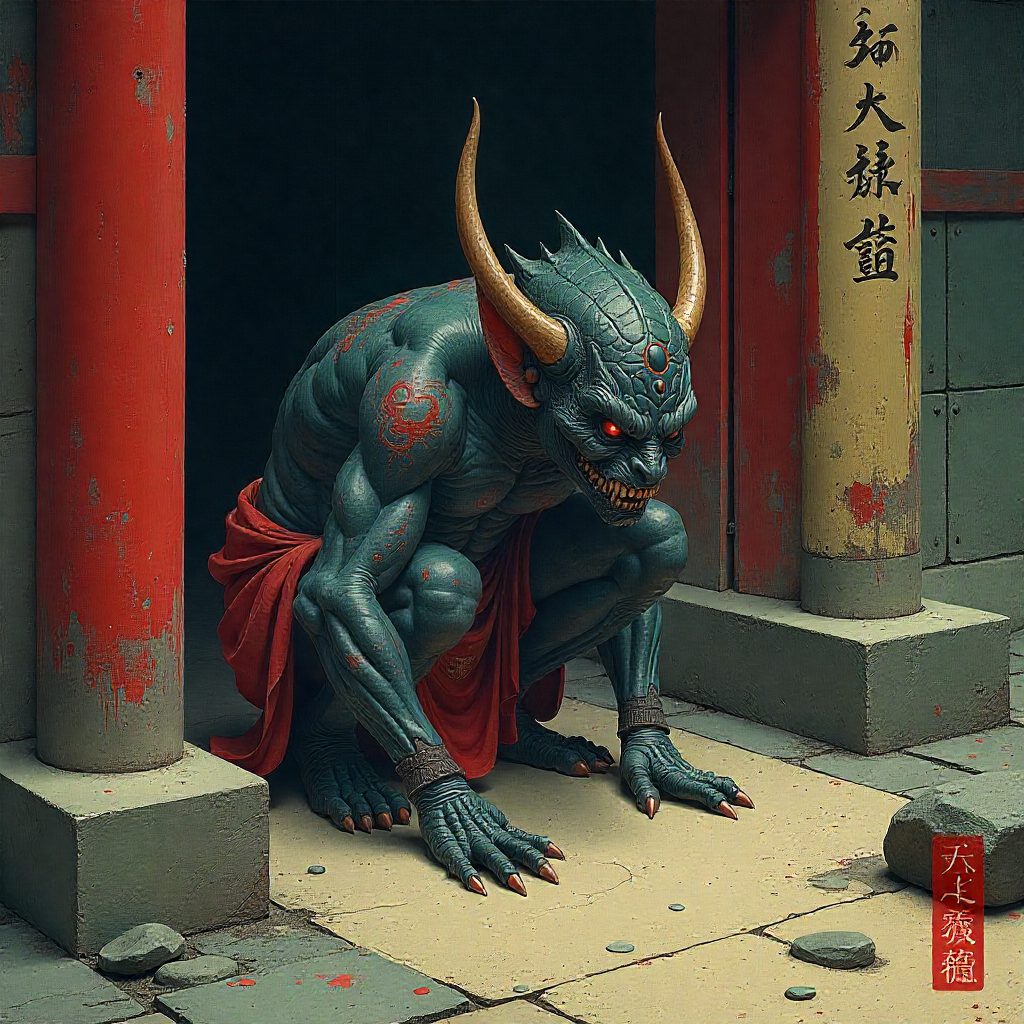
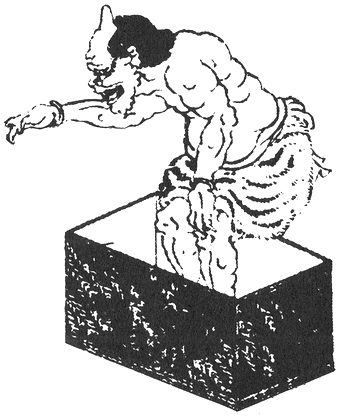
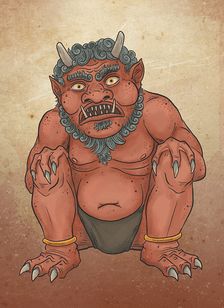
Amanojaku is usually depicted as a small, oni-like creature, deliberately unimpressive in size yet unsettling in appearance. Artistic portrayals often show a hunched humanoid form with sharp teeth, exaggerated facial features, clawed hands, and small horns. Skin tones vary in folklore and temple art, ranging from red and green to dark, earthy hues, reinforcing its demonic identity without elevating it to the status of a great monster.
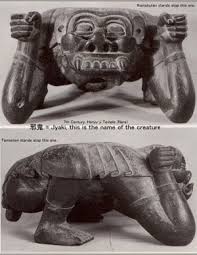
In Buddhist temple iconography, Amanojaku appears crushed beneath the feet of the Four Heavenly Kings (Shitennō), particularly Bishamonten. These images are symbolic rather than literal, illustrating the triumph of discipline and wisdom over corruption and desire. The creature’s physical weakness is intentional; Amanojaku is not meant to dominate through force. Instead, its unsettling presence hints at how something seemingly small can still cause moral collapse if left unchecked.
Family
Unlike major divine figures, Amanojaku does not belong to a clearly defined family structure. It is most often classified as a minor demon or yōkai, existing on the fringes of both the divine and human worlds. This lack of lineage reinforces its narrative role as an outsider—one that does not create order or sustain cosmic balance but instead thrives on disruption.
Some traditions loosely associate Amanojaku with Amanozako, a fearsome demoness born from the rage of the storm god Susanoo. Amanozako is often described as the progenitor of rebellious and contrary spirits, including tengu and similar yōkai. Other interpretations link Amanojaku to Amenosagume, a prophetic figure whose actions led to divine downfall. While these connections vary by source, they consistently frame Amanojaku as born from defiance rather than harmony.
Other names
The name Amanojaku itself reflects layered meanings. Written as 天邪鬼, it combines characters associated with “heaven,” “wickedness,” and “demon,” reinforcing its identity as a corrupted or inverted spiritual force. Regional pronunciations such as Amanjaku appear in folklore collections and historical texts, though the meaning remains consistent.
In some older writings, alternate kanji associate Amanojaku with river or sea spirits, reflecting syncretism with Chinese and Buddhist traditions. These shifting names do not represent separate beings but instead show how its identity adapted across regions and religious systems. Despite these variations, Amanojaku is universally recognised as a symbol of deliberate opposition and moral perversity.
Powers and Abilities
Amanojaku’s abilities are psychological rather than physical, making it uniquely dangerous within folklore. Its most defining power is the ability to read human hearts, identifying suppressed emotions such as jealousy, greed, resentment, and cruelty. Rather than creating evil outright, Amanojaku provokes individuals into acting on impulses that already exist within them.
Folktales frequently depict Amanojaku manipulating people into breaking taboos, betraying loved ones, or violating sacred customs. In the famous tale of Urikohime, the creature deceives and destroys through impersonation, illustrating its reliance on trickery rather than confrontation. Some legends attribute shapeshifting or possession to Amanojaku, further emphasizing its role as a corrupter of identity and intention.
In Buddhist symbolism, Amanojaku represents uncontrolled desire and attachment—forces that must be subdued to achieve spiritual clarity. Its consistent depiction beneath divine feet reinforces the belief that inner discipline, not external power, is the only true defense against its influence.
Modern Day Influence
Amanojaku remains deeply embedded in modern Japanese language and culture. The term “amanojaku” is commonly used to describe someone who is intentionally contrary, argumentative, or resistant to consensus. This everyday usage highlights how the yōkai has transitioned from folklore into psychological metaphor.
In contemporary media, Amanojaku appears in anime, manga, video games, and literature, often reimagined as a trickster, antagonist, or embodiment of inner conflict. These portrayals rarely depict it as purely monstrous; instead, it is framed as a mirror reflecting suppressed human tendencies. Scholars and creators alike continue to reference Amanojaku when exploring themes of rebellion, temptation, and moral ambiguity, ensuring its relevance beyond traditional storytelling.
Related Images


Source
Foster, M. D. (2015). The book of yokai: Mysterious creatures of Japanese folklore. University of California Press.
Kojiki. (712). Records of ancient matters (B. H. Chamberlain, Trans.). Tuttle Publishing (Original work published ca. 712).
Meyer, M. (2013). Yokai attack! The Japanese monster survival guide. Tuttle Publishing.
Nihon Shoki. (720). Chronicles of Japan (W. G. Aston, Trans.). Tuttle Publishing (Original work published 720).
Shulman, D., & Stroumsa, G. G. (Eds.). (2002). Dreams of the night creatures: Japanese yokai tales. Princeton University Press.
The Japan Box. (n.d.). Amanojaku. https://thejapanbox.com/blogs/japanese-mythology/amanojaku
Yokai.com. (2023, January 8). Amanojaku. https://yokai.com/amanojaku/
Yokai.com. (2023, January 8). Amanozako. https://yokai.com/amanozako/
Komatsu, K. (1999). An Introduction to Yōkai Culture: Monsters, Ghosts, and the Supernatural in Japanese Tradition. International Research Center for Japanese Studies.
Reider, N. T. (2010). Japanese Demon Lore: Oni from Ancient Times to the Present. Utah State University Press.
Iwasaka, M., & Toelken, B. (1994). Ghosts and the Japanese: Cultural Experience in Japanese Death Legends. Utah State University Press.
Philippi, D. L. (1969). Kojiki. Princeton University Press.
Frequently Asked Questions
What is Amanojaku in Japanese folklore?
Amanojaku is a yōkai associated with contrariness and temptation, known for provoking humans into acting on suppressed desires rather than using physical force.
Is Amanojaku considered a god or a demon?
Amanojaku is classified as a yōkai or minor demon, sometimes viewed as an evil kami but never as a true god.
Why is Amanojaku shown beneath Buddhist guardian statues?
This imagery symbolizes the defeat of desire and moral corruption by discipline, wisdom, and spiritual strength.
What famous story features Amanojaku?
The folktale of Urikohime prominently features Amanojaku as a deceiver who destroys through impersonation and manipulation.
What does “amanojaku” mean in modern Japanese?
Today, the term describes a person who deliberately contradicts others or resists doing what is expected.