
Capturing the Erymanthian Boar : Hercules’ Most Tactical Challenge
| Description | |
|---|---|
| Origin | Roman Mythology |
| Characters Involved | Hercules, Eurystheus, Hera, Centaurs |
| Objective | Capture the Erymanthian Boar alive |
| Type of Trial | Physical/Strategic Trial |
| Outcome | Success |
Mythlok Perspective
In Mythlok’s View, Capturing the Erymanthian Boar is not about domination but control. The story reframes heroism as the ability to manage chaos rather than destroy it. This aligns with global archetypes where the hero restrains rather than eliminates. Similar themes appear in the trials of Gilgamesh and the discipline of Arjuna. Across cultures, true power lies not in force, but in balance.
Capturing the Erymanthian Boar
Introduction
Capturing the Erymanthian Boar is remembered as one of the most defining moments in the Twelve Labors of Hercules, marking a shift from brute strength to calculated strategy. As the fourth labor assigned by King Eurystheus, this task required the hero to subdue, not kill, a monstrous creature that terrorised the rugged lands of Arcadia. Set around Mount Erymanthus, the story explores how discipline and patience can overcome chaos. More than a simple hunt, it reflects a turning point in Hercules’ journey toward redemption after his divinely induced madness.
Characters Involved
At the centre of Capturing the Erymanthian Boar is Hercules himself, the son of Zeus and a mortal woman, burdened with impossible labors as punishment. Unlike earlier tasks that depended heavily on raw strength, this labor demanded restraint and awareness, revealing a more thoughtful side of the hero.
King Eurystheus serves as the instigator, a ruler driven by fear and insecurity. His role is not heroic but symbolic, representing authority that tests greatness without embodying it. His infamous reaction to the boar highlights this contrast sharply.
The journey also introduces Pholus, a centaur whose hospitality unintentionally triggers conflict. This episode, though secondary to the main labor, reveals how easily strength can spiral into destruction when control is lost. The centaurs themselves become a reflection of chaos parallel to the boar.
The Erymanthian Boar stands as the embodiment of wild, untamed nature. With massive tusks and unstoppable force, it devastates farmlands and threatens human survival, making it more than just a beast. It becomes a symbol of nature’s fury.
Source Texts
The story of Capturing the Erymanthian Boar is preserved across several classical sources, each adding layers to its meaning. Greek traditions, especially in Bibliotheca, provide one of the clearest accounts of how Hercules chased the boar into snow to weaken it. This detail is crucial, as it highlights strategy over violence. Diodorus Siculus expands on the geography and sequence of events, placing emphasis on the Arcadian setting and the tactical approach required. His version helps ground the myth in a more structured narrative.
Roman interpretations, particularly in Metamorphoses, frame the labor as part of Hercules’ broader suffering and eventual transformation. Roman writers focused less on physical struggle and more on symbolic meaning, aligning the story with ideals of endurance and virtue. Additional references appear in Fabulae, ensuring that the tale remained consistent across different cultural retellings while still allowing interpretive flexibility.
Objective
The objective behind Capturing the Erymanthian Boar was deceptively simple yet incredibly demanding. Hercules was ordered to bring the beast back alive. This condition fundamentally changed the nature of the challenge. Unlike earlier labors where killing the creature proved success, here survival of the beast was essential.
The boar had been ravaging the lands around Arcadia, destroying crops and endangering communities. By capturing it alive, Hercules had to demonstrate control over destruction rather than elimination of it. This objective elevated the labor from a test of strength to a test of mastery. In many ways, this task represents a philosophical shift. Hercules was no longer just removing threats. He was learning to manage them, reflecting a deeper progression in his journey.
Challenges
The challenges of Capturing the Erymanthian Boar were both physical and psychological. The terrain itself posed a serious obstacle. The slopes of Mount Erymanthus were steep, forested, and often covered in snow, making pursuit difficult and dangerous.
The boar’s strength and aggression added another layer of difficulty. It was not a creature that could be easily cornered or subdued. Every encounter risked severe injury, forcing Hercules to rethink his usual approach.
The encounter with Pholus and the centaurs introduced an unexpected diversion. What began as a moment of rest turned into chaos when sacred wine attracted other centaurs. Hercules was drawn into conflict, demonstrating how even a hero can be pulled off course. This episode underscores the importance of focus and restraint in achieving the main objective.
The greatest challenge, however, lay in the requirement to capture the boar alive. Hercules needed to exhaust rather than overpower it, a task that demanded patience. By driving the creature into deep snow, he used the environment as an ally, allowing the boar’s own strength to become its weakness.
Outcome
Hercules ultimately succeeded in Capturing the Erymanthian Boar through strategy rather than force. After chasing it into a snowdrift, he bound the exhausted creature and carried it back to Eurystheus. This image of the hero bearing the massive beast on his shoulders became iconic in ancient art.
The reaction of Eurystheus adds a memorable conclusion to the story. Terrified by the sight of the living monster, he hid inside a large bronze jar. This moment highlights the stark difference between true courage and fearful authority.
Some later traditions suggest that the boar was released or met its end elsewhere, but the central narrative remains focused on the act of capture and delivery. The labor was complete, and Hercules moved one step closer to redemption.
Symbolism
Capturing the Erymanthian Boar carries layered symbolism that extends beyond the surface narrative. The boar itself represents uncontrolled natural forces and primal instincts. It is the chaos that threatens order, both externally in the world and internally within individuals.
Hercules’ method of subduing the creature reflects the triumph of intellect over brute strength. By using snow to weaken the boar, he demonstrates that understanding and patience are more powerful than direct confrontation.
The act of carrying the living boar signifies mastery rather than destruction. It suggests that true strength lies in control, not elimination. This aligns with broader Greco Roman ideals where discipline and virtue define heroism.
The centaur episode adds another symbolic layer, representing how distractions and lack of restraint can derail even the strongest individuals. Together, these elements create a narrative about balance between power and control.
Modern Influence
The story of Capturing the Erymanthian Boar continues to influence modern culture in subtle but meaningful ways. In cinema, adaptations like Hercules reinterpret the labors for contemporary audiences, often emphasizing action while retaining core themes. Video games such as Assassin’s Creed Odyssey and Hades II incorporate mythological hunts that echo this labor, blending strategy with combat.
In literature and psychology, the boar has become a metaphor for inner struggles. It represents impulses or challenges that cannot simply be destroyed but must be understood and controlled. This interpretation keeps the myth relevant in modern discussions about discipline and self mastery.
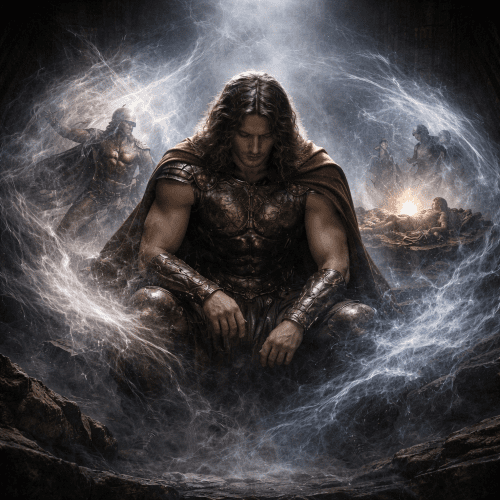
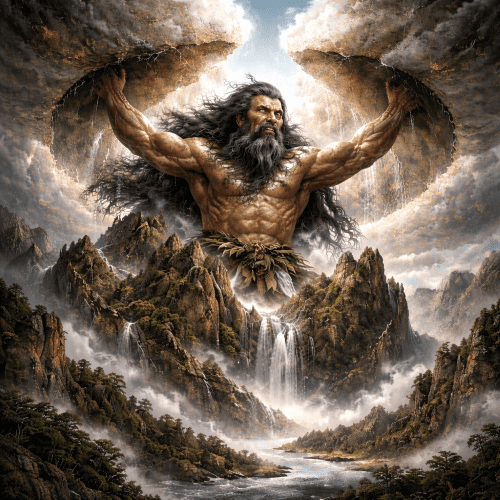
Artistic representations, from ancient pottery to Renaissance paintings, continue to depict the dramatic moment of Hercules presenting the boar. The visual impact of this scene ensures its lasting presence in cultural memory.
Sources
GreekMythology.com. (n.d.). Erymanthian Boar. https://www.greekmythology.com/Myths/Creatures/Erymanthian_Boar/erymanthian_boar.html
Wikipedia. (2023). Erymanthian boar. https://en.wikipedia.org/wiki/Erymanthian_boar
Theoi.com. (n.d.). Ovid, Metamorphoses 9. https://www.theoi.com/Text/OvidMetamorphoses9.html
Mythopedia.com. (2023). Erymanthian Boar. https://mythopedia.com/topics/erymanthian-boar/
Apollodorus. (1921). The library (J. G. Frazer, Trans.). Harvard University Press. (Original work published ca. 100 BCE)
Diodorus Siculus. (1935). Library of history (C. H. Oldfather, Trans., Vol. 2). Harvard University Press. (Original work published 1st c. BCE)
Riordan, J. (1997). The twelve labors of Hercules. Simon & Schuster.
Nabilou, A. (2014). Analyzing the labours of Hercules. American Journal of Educational Research, 2(10), 876-882. https://pubs.sciepub.com/education/2/10/5/index.html
Frequently Asked Questions
What is Capturing the Erymanthian Boar?
It is the fourth labor of Hercules where he captures a destructive giant boar alive using strategy instead of killing it.
Why did Hercules not kill the Erymanthian Boar?
The task required him to capture it alive, testing control and intelligence rather than brute strength.
Where did the Erymanthian Boar live?
The boar lived on Mount Erymanthus in Arcadia, a rugged region known for harsh terrain and dense forests.
How did Hercules capture the boar?
He chased it into deep snow, exhausted it, then bound it and carried it back to Eurystheus.
What does the Erymanthian Boar symbolize?
It represents uncontrolled chaos and primal instincts that must be mastered through discipline and strategy.