Listen
At a glance
| Description | |
|---|---|
| Origin | Dogon Mythology |
| Classification | Spirits |
| Family Members | N/A |
| Region | Mali |
| Associated With | Water, Fertility |
Nommo
Introduction
The Nommo occupy a foundational place in the spiritual worldview of the Dogon people of Mali, representing the moment when chaos was transformed into order. Emerging from the creative will of the supreme being Amma, the Nommo are not merely spirits but cosmic principles made flesh—beings through whom life, language, and balance entered the world. Their stories are preserved through oral tradition, ritual symbolism, and sacred architecture, forming one of the most complex cosmological systems recorded in Africa.
Rather than functioning as distant gods, the Nommo are intimate ancestors. They are understood as both the first beings and the continual sustainers of existence, linking water, speech, fertility, and ethical order into a single sacred system. Through them, the Dogon explain not only how the world began, but how it must continue to remain in harmony.
Physical Traits
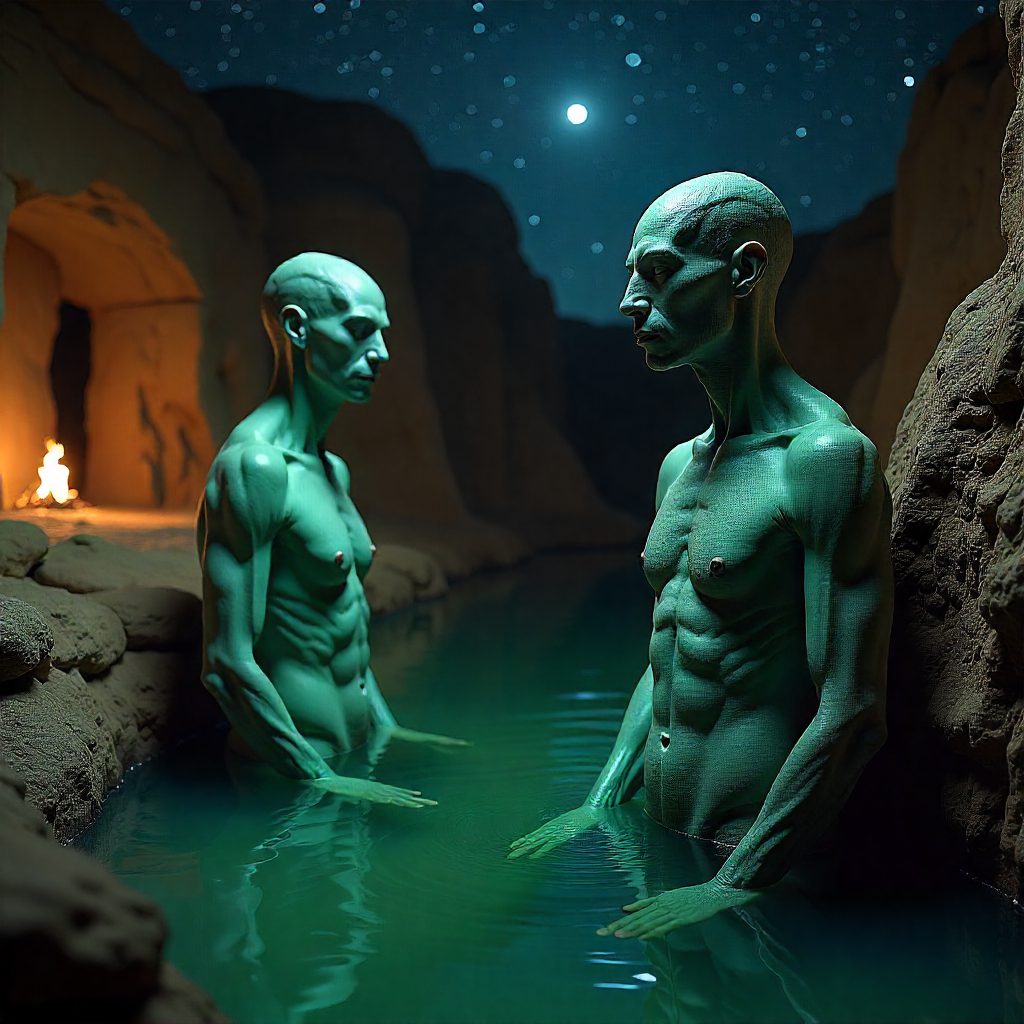
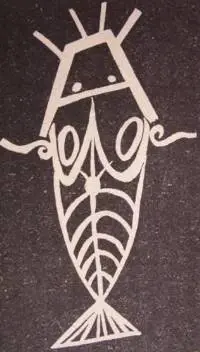
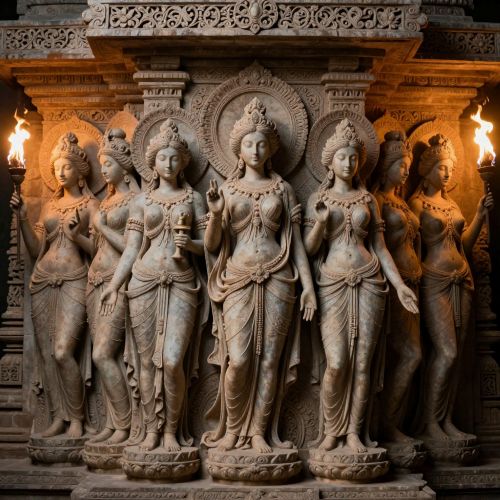
Descriptions of the Nommo consistently emphasize their amphibious nature, reflecting their deep association with water as the source of life. They are envisioned as humanoid beings whose bodies merge human and aquatic features, often with smooth, scaled skin and elongated forms that suggest motion and fluidity rather than solidity. This appearance is not meant to be literal but symbolic, expressing their existence between states—sky and earth, spirit and matter.
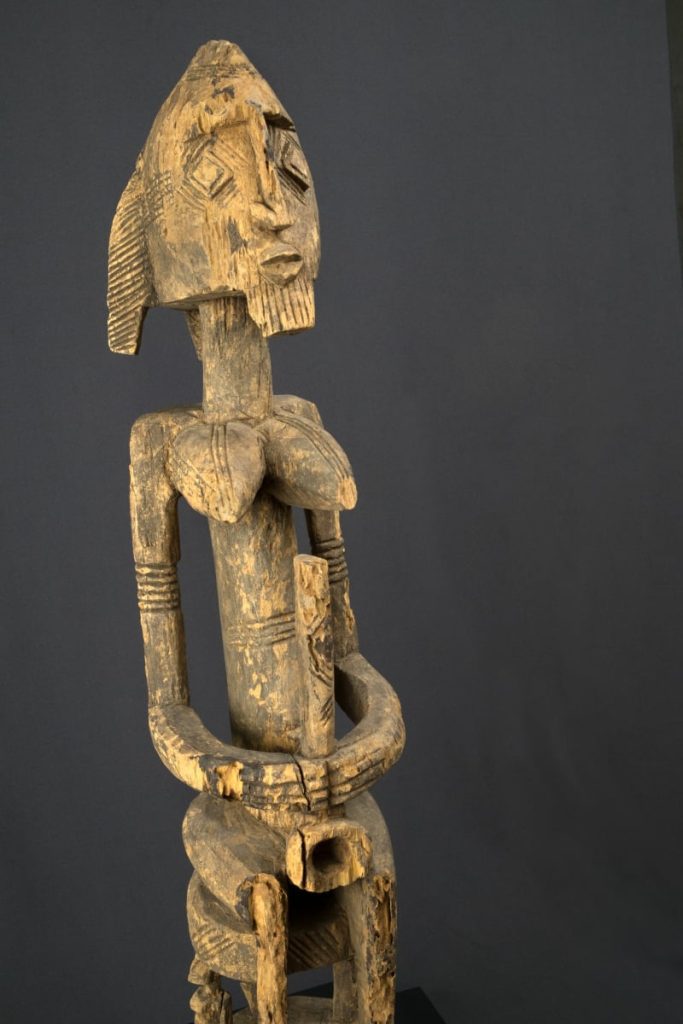
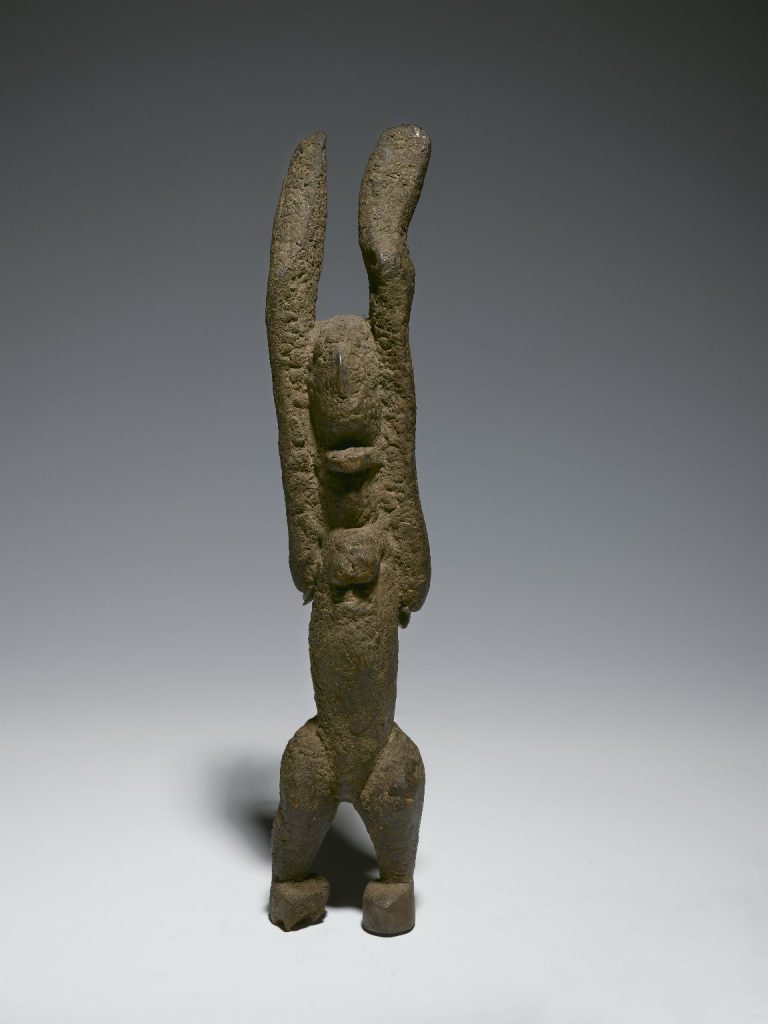
Dogon sculpture and ritual art portray the Nommo with abstracted limbs and symmetrical forms, reinforcing ideas of balance and duality. Their physical ambiguity reflects their role as liminal beings who cannot exist solely on land, just as life itself cannot exist without water. In Dogon thought, to describe the Nommo physically is also to describe the structure of the universe.
Family
The Nommo are brought into being by Amma as a set of primordial twins, eventually forming eight ancestral entities. These beings represent completeness and balance, each pair embodying complementary forces necessary for cosmic stability. Their collective identity matters more than individual distinction, reinforcing the Dogon emphasis on harmony over hierarchy.
A central episode in Nommo tradition involves sacrifice and regeneration. When cosmic order is disrupted by the rebellious being Ogo, one of the Nommo is dismembered so that its essence may be distributed across the earth. This act transforms the land into sacred space and establishes the foundation for ritual shrines. Through this sacrifice, the Nommo become not only ancestors of humanity but the spiritual substance embedded within the world itself.
Other names
The name “Nommo” is closely tied to the concept of giving life through nourishment and speech. In Dogon language, it is associated with the act of making something drink, underscoring the belief that existence itself is sustained through sacred fluidity. This meaning extends beyond water to include sound, breath, and vitality.
They are also referred to through titles that describe their functions rather than personal identities. As masters of water, they govern fertility and renewal. As teachers, they are the source of language, law, and ritual knowledge. These names are not alternatives but layered understandings, each revealing a different aspect of their cosmic role.
Powers and Abilities
The power of the Nommo lies in creation through order. They are credited with structuring the universe after its initial formation, aligning celestial movements with earthly rhythms. Through them, time becomes measurable, seasons become predictable, and society becomes possible.
Language is among their most sacred gifts. The Nommo are believed to have introduced structured speech, transforming raw sound into meaning. This act establishes communication as a divine force rather than a human invention. They also govern fertility through their control of water, ensuring that rain, crops, and human life remain interconnected.
Regeneration is central to their power. The Nommo do not conquer death; they transform it. Through sacrifice, dismemberment, and renewal, they embody the cyclical nature of existence, where loss is never final but a necessary stage of continuation.
Modern Day Influence
The Nommo remain deeply embedded in Dogon ritual life, particularly in ceremonies related to agriculture, initiation, and ancestral remembrance. Masks, dances, and spoken narratives continue to transmit their presence, ensuring that cosmology remains lived rather than archived.
Outside Dogon culture, the Nommo have attracted global attention through anthropological research, especially the work of Marcel Griaule and Germaine Dieterlen. Their documentation introduced the Nommo to academic discourse, though later interpretations—particularly claims about advanced astronomical knowledge—remain debated. Despite controversy, these discussions elevated the Nommo into broader conversations about indigenous knowledge systems.
In contemporary art, philosophy, and speculative fiction, the Nommo symbolize ecological wisdom and ancestral intelligence. They are increasingly referenced in discussions about balance between humanity and nature, standing as reminders that survival depends not on domination, but on harmony.
Related Images

Source
Griaule, M., & Dieterlen, G. (1954). Le renard pâle (Vol. 1). Institut d’Ethnologie.
Temple, R. K. G. (1976). The Sirius mystery: New scientific evidence of alien contact 5,000 years ago. St. Martin’s Press.
van Beek, W. E. A. (1991). Dogon restudied: A field evaluation of the work of Marcel Griaule. Anthropology Today, 7(5), 3-9.
Scranton, L. (2006). The velikovsky heresy: New evidence of the cosmic threat to civilization. Inner Traditions.
Dieterlen, G. (1973). La parole gnomique chez les Dogon. Journal de la Société des Africanistes, 43(1-2), 5-35.
Wikipedia. (2023). Nommo. https://en.wikipedia.org/wiki/Nommo
Crystalinks. (n.d.). Dogon tribe – Nommo. https://www.crystalinks.com/dogon.html
Frequently Asked Questions
Who are the Nommo?
The Nommo are ancestral amphibious spirits created by Amma in Dogon belief, responsible for establishing cosmic order, language, and life itself.
Why are the Nommo associated with water?
Water represents life, renewal, and balance, all of which are central to the Nommo’s role in sustaining the universe.
What is the sacrifice of the Nommo?
One Nommo is dismembered to restore cosmic balance, symbolizing regeneration and the sacred embedding of life force into the earth.
Are the Nommo gods or ancestors?
They function as both, acting as divine beings while also serving as the primordial ancestors of humanity and Dogon society.
Do the Nommo still matter today?
Yes, they remain central to Dogon rituals and continue to influence modern discussions on ecology, ancestral wisdom, and indigenous knowledge.