Listen
At a glance
| Description | |
|---|---|
| Origin | Ijaw Mythology |
| Classification | Gods |
| Family Members | N/A |
| Region | Niger |
| Associated With | Justice, War |
Egbesu
Introduction
Egbesu stands at the heart of Ijaw spirituality as a deity who governs justice, moral order, and the ethical use of force. Originating among the Ijaw people of Nigeria’s Niger Delta, Egbesu is not understood merely as a god of war, but as a spiritual principle that determines when conflict is justified and when restraint is required. Within Ijaw cosmology, violence without moral cause is condemned, and Egbesu’s power is believed to respond only to those who act in alignment with truth, communal protection, and balance.
For centuries, he shaped how Ijaw communities understood warfare, leadership, and resistance. The deity functioned as a moral compass rather than a license for aggression, allowing force solely in self-defense or in response to grave injustice. This philosophy made Egbesu central not only to ritual life but also to governance and conflict resolution. In the late twentieth century, he gained renewed visibility as a symbol of resistance during struggles over environmental degradation and resource exploitation in the Niger Delta, reinforcing its enduring relevance across both spiritual and political spheres.
Physical Traits
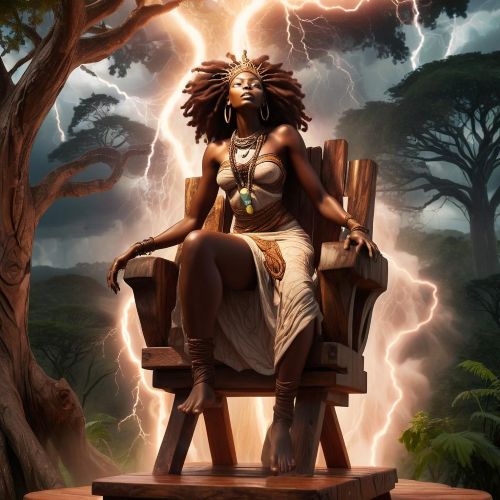
Unlike many deities portrayed in human form, Egbesu has no fixed anthropomorphic appearance. Instead, its presence is conveyed through powerful animal symbolism and ritual embodiment. Among the most sacred symbols associated with him are the leopard, panther, and lion, animals that represent fearlessness, authority, vigilance, and controlled ferocity. These creatures are not worshipped themselves but serve as visual expressions of Egbesu’s nature and expectations.
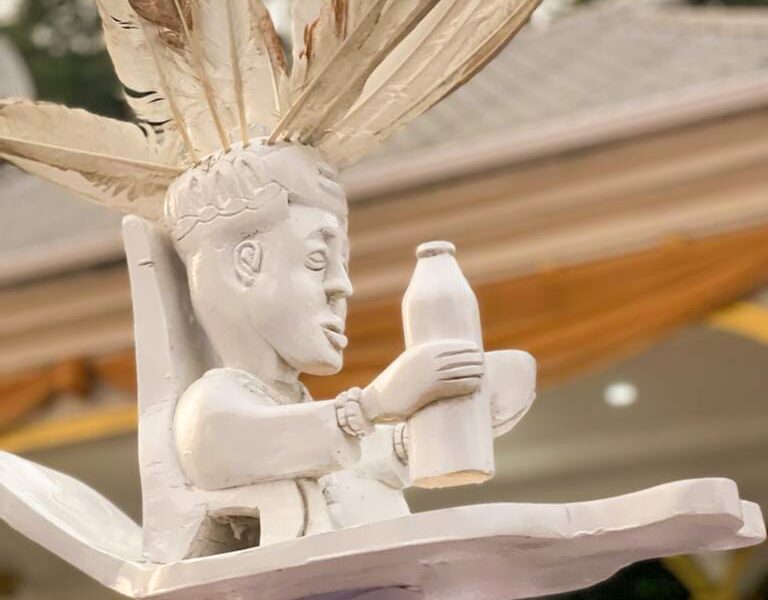
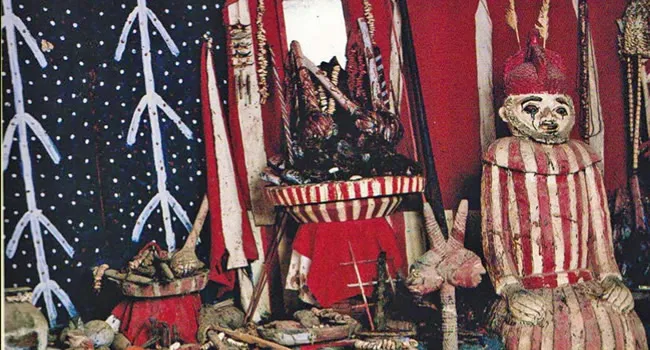
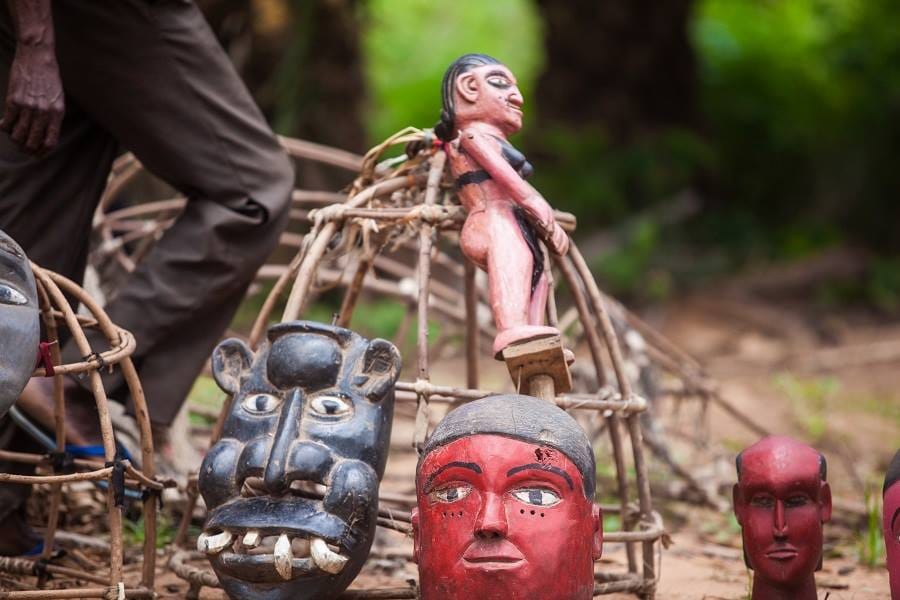
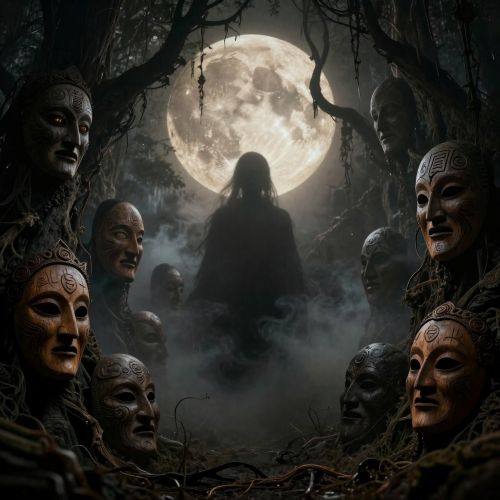
In ritual contexts, he manifests through symbolic materials rather than statues. White chalk markings, palm fronds, carved masks, sacred leaves, and protective charms are commonly used to invoke its presence. Initiates may bear ritual scars or wear concealed amulets believed to carry spiritual potency. This absence of a physical form reinforces Egbesu’s role as a force rather than a personality, emphasizing its transcendence beyond the material world and its alignment with moral law rather than visual identity.
Family
Egbesu does not possess a clearly defined genealogical lineage in the way gods do in Greco-Roman or Norse traditions. Ijaw cosmology prioritizes function and spiritual responsibility over divine family trees. He is generally understood as part of the cosmic order established by Woyengi, the creator deity who governs destiny, creation, and human choice. While Woyengi represents origin and life, Egbesu embodies enforcement, balance, and accountability.
Some regional traditions describe Egbesu as emerging independently or being revealed through ancestral forces rather than divine parentage. This reinforces its status as an autonomous spiritual authority rather than a subordinate deity. He exists alongside river spirits, land guardians, and ancestral entities, cooperating within a broader sacred ecosystem rather than a hierarchical family structure. Its relationship with humanity is therefore more direct, defined by covenant, ritual obligation, and moral alignment.
Other names
Egbesu is known by several regional and contextual variations, reflecting the linguistic diversity of the Ijaw people. Names such as Gbaraun Egbesu, Kolokuma Egbesu, Tarakiri Egbesu, and Egbema Egbesu identify clan-specific manifestations and shrines rather than entirely separate deities. Among these, Egbema Egbesu is often regarded in oral traditions as especially potent, though all forms are believed to draw from the same spiritual source.
In modern discourse, terms like “Egbesu Force” or “Egbesu-Owei” are sometimes used, particularly when the deity’s influence is invoked in socio-political contexts. Oral traditions also describe him using descriptive titles such as “Spirit of Justice” or “Force of Righteous War,” emphasizing its function rather than personal identity. These naming practices demonstrate Egbesu’s adaptability across ritual, philosophical, and contemporary narratives.
Powers and Abilities
Egbesu’s powers are inseparable from moral discipline. The deity is believed to grant protection and strength only to individuals who meet strict ethical and ritual requirements. Confession, purification, and adherence to communal laws are essential before invoking its force. Those who violate oaths or harm innocents are believed to suffer spiritual consequences rather than protection.
In warfare, he is said to provide invulnerability, heightened awareness, courage, and strategic clarity. Oral traditions describe warriors becoming immune to bullets and blades, not as a supernatural guarantee but as a reflection of spiritual alignment. Beyond battle, Egbesu functions as a judge, exposing deception, punishing injustice, and restoring balance within the community. This combination of martial strength and moral enforcement places him closer to a philosophical system than a conventional war god
Modern Day Influence
Egbesu re-emerged prominently during the Niger Delta conflicts of the 1990s, when militant groups invoked the deity as a symbol of resistance against environmental destruction and economic marginalization. Groups such as the Egbesu Boys of Africa and related factions claimed spiritual protection through Egbesu rituals, blending traditional belief systems with modern political struggle.
Beyond militancy, Egbesu remains deeply embedded in Ijaw cultural identity. Festivals, oral storytelling, initiation rites, and scholarly discourse continue to preserve its legacy. Contemporary artists, activists, and cultural historians interpret Egbesu as a symbol of ethical resistance rather than violence, representing the right to defend land, dignity, and community. Today, Egbesu stands as a rare example of an indigenous spiritual force that has successfully adapted to modern realities without losing its philosophical core.
Related Images



Source
Alagoa, E. J. (2003). The Ijaw and their neighbours. Kraft Books.
Golden, R. L. (2012). Masculinities, Egbesu spirits, and violence in the Niger Delta. Africa, 82(2), 278-296. https://search.proquest.com/openview/3c76e2009bae33b04025ab617a9e74b2
Horsfall, P. F. (2017). Caging the Ijaw Egbesu. Vanguard Nigeria. https://www.vanguardngr.com/2017/06/caging-ijaw-egbesu-3/
Niger Delta University Press. (2023). Rejuvenating Ijaw traditional beliefs: The Ijaw Egbesu Brotherhood example. Jalingo Historical Review. https://jhrhds.org.ng/rejuvenating-ijaw-traditional-beliefs-in-the-21st-century-the-ijaw-egbesu-brotherhood-example/
Ogbari, J. (2024). Egbesu deity in Niger Delta conflict: A critical review. Unizik Journal of Human Rights and Development Studies, 1. https://www.uujh.org/rdc_1?article=uujh%2F1pBNn
Wikipedia contributors. (2024). Egbesu. Wikipedia. https://en.wikipedia.org/wiki/Egbesu
Zack-Williams, A. B. (2001). African guerrillas: Raging against the machine. Lynne Rienner Publishers.
Alagoa, E. J. (1972). A history of the Niger Delta. Ibadan University Press.
Horton, R. (1969). Patterns of thought in Africa and the West: Essays on magic, religion and science. Cambridge University Press.
Okaba, B. (2005). Petroleum industry and the paradox of poverty in the Niger Delta. Ethiope Publishing.
Ebiegberi, J. A. (1999). The Ijaw nation in the Niger Delta. University of Port Harcourt Press.
Owonaro, G. (2010). The spiritual dimensions of Niger Delta conflicts: Egbesu and resistance. Journal of African Studies, 34(2), 145–162
Frequently Asked Questions
Who is Egbesu in Ijaw mythology?
Egbesu is the Ijaw deity of justice, moral order, and just warfare, invoked only in defense against injustice or imbalance.
Is Egbesu a war god or a justice deity?
Egbesu embodies both, but warfare is permitted only under strict ethical and spiritual conditions rooted in Ijaw philosophy.
What symbols are associated with Egbesu?
The leopard, panther, and lion symbolize Egbesu’s strength, vigilance, and righteous authority.
Why was Egbesu important in the Niger Delta conflicts?
Egbesu became a symbol of spiritual resistance against environmental exploitation and political marginalization.
Is Egbesu still worshipped today?
Yes, Egbesu remains central to Ijaw rituals, festivals, cultural identity, and modern reinterpretations of justice.