

Huli Daiva : The Tiger Guardian Spirit of Tulu Nadu
Listen
At a glance
| Description | |
|---|---|
| Origin | Indian Mythology |
| Classification | Spirits |
| Family Members | N/A |
| Region | India |
| Associated With | Protections, Forests |
Huli Daiva
Introduction
Huli Daiva, the Tiger Spirit of Tulu Nadu, stands as one of the most commanding guardian deities in the coastal regions of Karnataka. Deeply rooted in the ritualistic world of Bhuta Kola, this Daiva embodies the primal strength, territorial power, and protective force associated with the tiger. Unlike pan-Indian deities tied to large temple cults, Huli Daiva belongs to the indigenous spirit tradition of Tulu Nadu, where ancestral spirits and nature guardians mediate between humans and the divine.
The presence of Huli Daiva is inseparable from the ecological memory of a land once populated by wild tigers. For agrarian communities living near dense forests, the tiger symbolized both terror and guardianship. Over generations, these emotions crystallised into the worship of Huli Daiva, a spirit believed to regulate justice, safeguard settlements, and maintain harmony between human life and the natural world. Even today, his worship reflects the cultural identity and ecological sensibilities of the Tulu people, preserving a living tradition that binds folklore, performance, and community belief.
Physical Traits
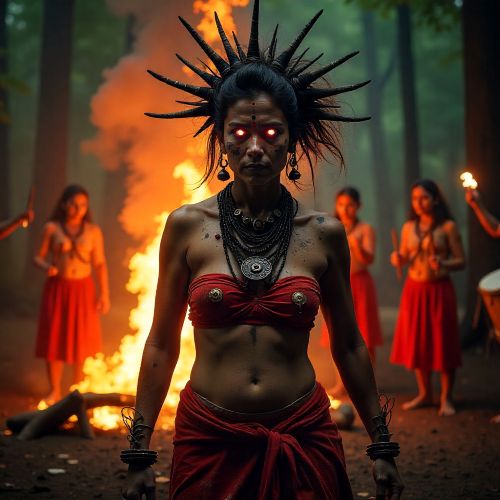
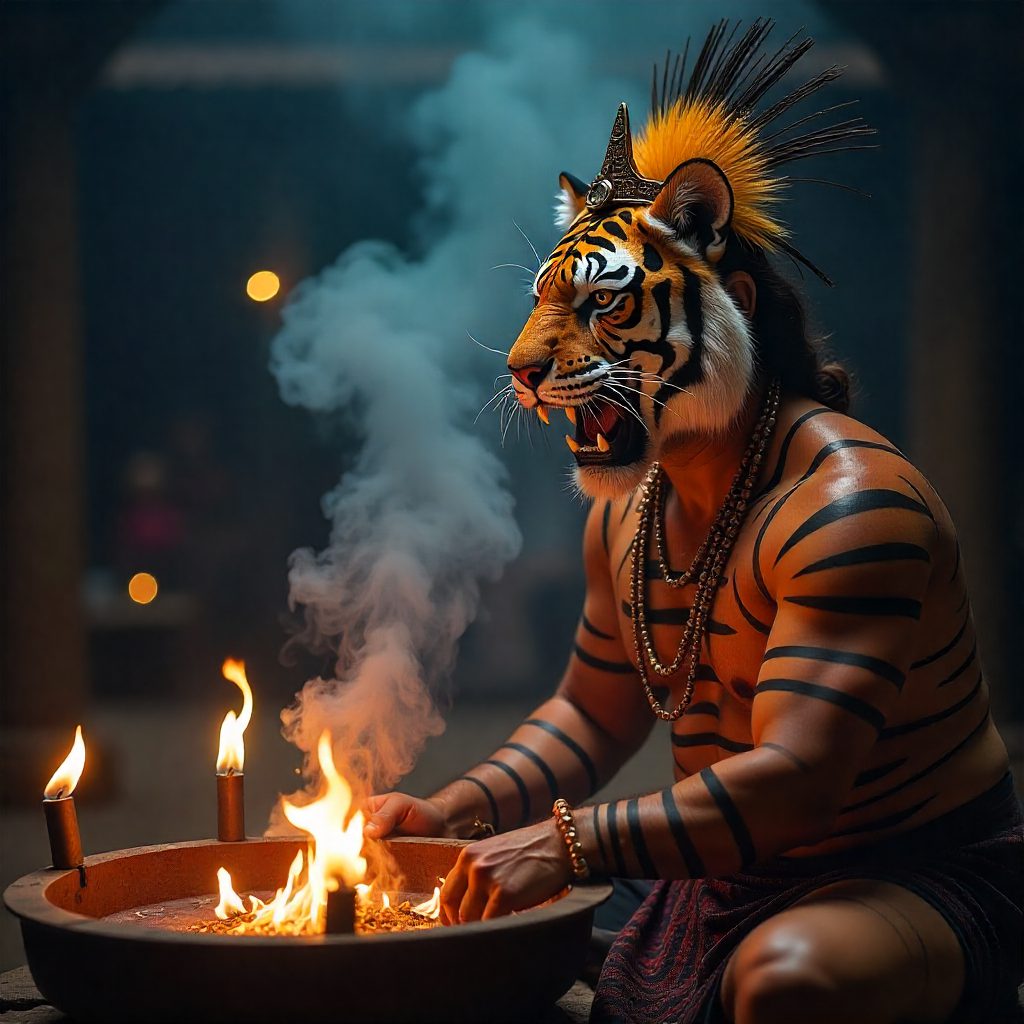
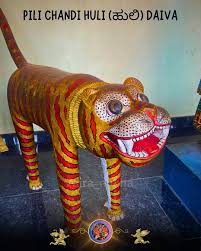
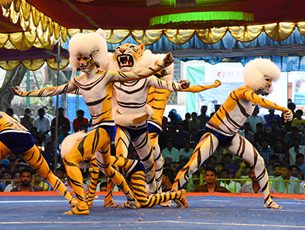
Huli Daiva is rarely depicted through static idols. Instead, his presence comes alive through the body of the Bhuta Kola performer, whose costume and movement embody the tiger’s ferocity. Bright stripes painted across the torso, elaborate headpieces resembling a tiger’s gaping jaws, and rhythmic movements inspired by a tiger’s stealth transform the performer into a living manifestation of the spirit.
The physical portrayal never aims for realism; instead, it conveys temperament—untamed energy, alertness, and explosive power. When the performer enters a trance-like state, devotees believe Huli Daiva himself descends into the ritual space. The roaring chants, swaying torches, and vigorous leaps create an atmosphere where the boundary between human and spirit momentarily dissolves, making the tiger’s presence felt in an intensely visceral manner.
Family
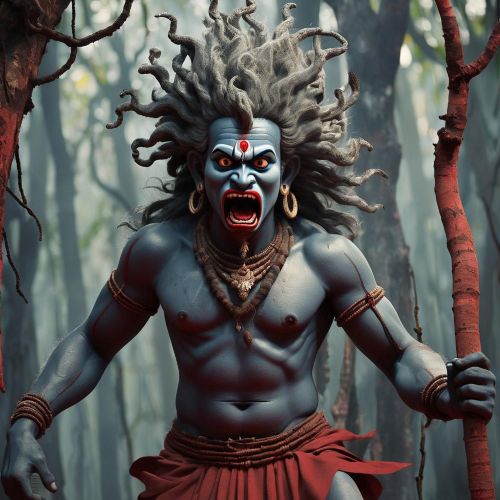
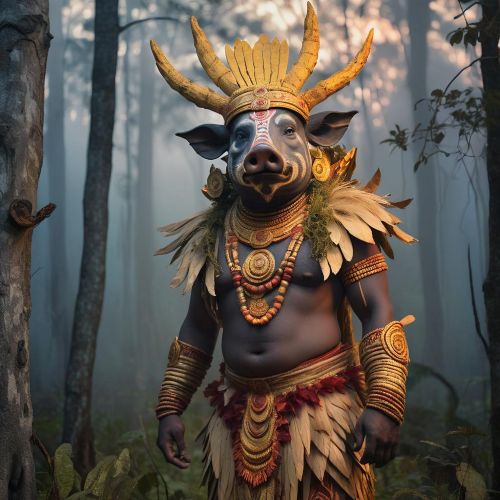
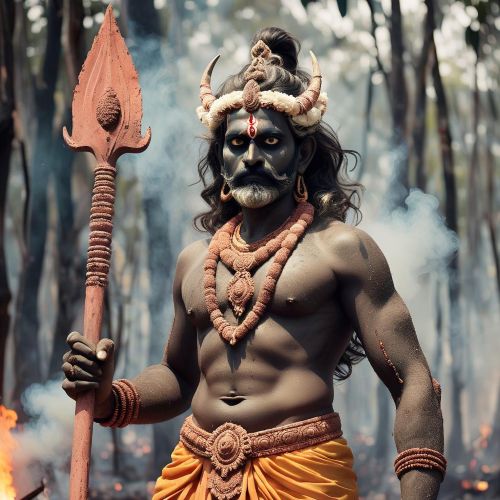
Huli Daiva is part of the Dharmarakshaka Chaturmukha, the four key protective Daivas of Tulu Nadu. His spiritual kin include Panjurli, the boar guardian of land and prosperity; Guliga, the fierce enforcer of justice; and Chavundi, the powerful protector goddess. Within this cosmology, each Daiva embodies a force necessary for preserving social order and ecological balance.
Huli Daiva’s feminine counterpart is often identified as Pilichamundi or Chavundi, a tiger-associated goddess who mirrors his ferocity but wields a distinctly maternal and purificatory power. Their combined presence ensures that the tiger’s raw energy is balanced between masculine guardianship and feminine wrath. This interconnected spiritual family reveals how Tulu Nadu’s worldview merges nature, morality, and divinity into a unified system of protection.
Other names
Across villages and shrines, Huli Daiva is known by several names that reflect linguistic diversity and regional ritual styles. In Tulu, he is often called Pili Daiva or Pili Bhoota, with “Pili” meaning tiger. In some traditions, he is associated with or invoked alongside Pilichamundi, though they remain distinct in identity and ritual function.
These names do not alter the essence of the spirit; instead, they highlight his adaptability across communities. Whether called Huli, Pili, or Tiger Spirit, the Daiva remains a symbol of courage, vigilance, and protection. The variations also reflect local oral histories, allowing each region to interpret the spirit through its own cultural lens.
Powers and Abilities
Huli Daiva’s powers arise from the attributes traditionally associated with the tiger: strength, speed, territorial dominance, and fearlessness. Devotees believe the spirit protects farmlands, livestock, and forest paths, offering guidance and intervention in moments of danger. His protective energy is invoked to ward off malevolent spirits, resolve disputes, and restore justice within the community.
During Bhuta Kola, villagers approach the possessed medium to seek solutions, confessions, blessings, or warnings. It is believed that Huli Daiva speaks through the performer, offering divine insight into matters of moral conduct or communal harmony. The Daiva also symbolizes ecological balance, embodying the role of a top predator that maintains the natural order. This association reinforces the idea that human survival is interconnected with respecting the environment and its creatures.
Modern Day Influence
Huli Daiva continues to shape the cultural and spiritual landscape of Tulu Nadu, even as modern influences reshape the region. Bhuta Kola rituals dedicated to the Tiger Spirit attract thousands, reaffirming community identity and strengthening intergenerational links to ancestral traditions. Younger audiences, inspired by local folklore and cinema, increasingly engage with these rituals to understand their roots.
The global popularity of the Kannada film “Kantara”, which portrayed Daiva traditions and forest guardian spirits, has also sparked renewed interest in lesser-known Daivas like Huli Daiva. Although the film focuses on Panjurli and Guliga, it has created a broader curiosity about Tulu spirit worship as a whole.
Environmentalists have likewise embraced Huli Daiva as a cultural symbol of wildlife conservation, especially as tiger populations remain endangered. For many, the mythological Tiger Spirit becomes a reminder that the forests are sacred spaces deserving protection. Through rituals, stories, and modern reinterpretations, Huli Daiva continues to bridge ancient ecological wisdom with contemporary cultural expression.
Related Images



Source
Akhil Pillai. (2025, October 1). The Spirit World of Kantara Chapter 1: A Thematic Study. https://akhilpillai.com/the-spirit-world-of-kantara-chapter-1-a-thematic-study/
Wikipedia contributors. (2006, April 23). Buta Kola. In Wikipedia. https://en.wikipedia.org/wiki/Buta_Kola
Spooklorepedia. (2025, October 26). Guliga Daiva: The Fierce Guardian Spirit of Tulu Nadu. https://spooklorepedia.com/vault/gods-among-us/guliga-daiva/
Vishal Babukadri. (2025, July 4). Story of Guliga. https://vishalbabukadri.blogspot.com/2020/07/story-of-guliga.html
Freeman, J. R. (1998). Performing Possession: Ritual, Culture, and Power in Tulu Nadu. Oxford University Press.
Babb, L. A. (1975). The Divine Hierarchy: Popular Hinduism in Central India. Columbia University Press.
Assayag, J. (2004). At the Confluence of Two Rivers: Mythology and History in South India. Manohar Publishers.
Rao, S. (2010). Folk Deities of South India: A Study of Bhoota Worship in Karnataka. Institute of Asian Studies.
Thapar, R. (2009). The Penguin History of Early India: From the Origins to AD 1300. Penguin Books.
Frequently Asked Questions
Who is Huli Daiva in Tulu mythology?
Huli Daiva is the Tiger Spirit worshipped in Tulu Nadu, revered as a fierce protector of people, land, and nature through Bhuta Kola rituals.
What is the significance of the tiger in Huli Daiva worship?
The tiger symbolizes strength, territorial protection, and justice, which are core attributes associated with the Daiva’s divine role.
Is Huli Daiva the same as Pilichamundi?
They are related but distinct spirits; Pilichamundi is a tiger-associated goddess, while Huli Daiva represents the male guardian tiger spirit.
How is Huli Daiva represented during Bhuta Kola?
The spirit is embodied by a costumed performer painted with tiger stripes, who enters a trance to convey the Daiva’s presence and messages.
Does Huli Daiva influence modern culture?
Yes, Huli Daiva continues to inspire festivals, artistic traditions, and even environmental conservation movements that highlight the importance of wildlife and forests.